
About GINZA NOA CLINIC
This is the international patient information site of GINZA NOA CLINIC, a regenerative medicine clinic in Ginza, Tokyo. It sets out what the clinic offers, what treatment involves, what it costs, and what the published evidence does and does not support.
Who We Are
Information and coordination, not treatment
This site exists so that international patients can prepare for a consultation with a clear picture: what the clinic offers, what treatment involves, what it costs, and what the published evidence does and does not support.
GINZA NOA CLINIC is a medical institution in Ginza, Tokyo, registered for gynaecology, internal medicine, dermatology, orthopaedic surgery and pain management, and it runs its own cell processing centre. Diagnosis, prescriptions, procedures and decisions about eligibility are made by our physicians at the clinic, in person — not through this website.
Hospitals, clinics, physicians, laboratories, screening centers, cell processing facilities, and other healthcare providers mentioned or introduced through our service operate independently unless expressly stated otherwise. Medical decisions are made by the relevant licensed healthcare professionals.
What We Do
Practical support for international patients
Medical information
General information about healthcare, screening, regenerative medicine, and other medical services available in Japan.
Appointment coordination
Administrative support for hospital and clinic appointment requests, subject to provider acceptance and availability.
Medical record organization
Help organizing and transmitting records to an appropriate medical institution when the patient authorizes us to do so.
Communication support
Coordination of communication, translation, or interpretation between international patients and Japanese medical institutions.
Administrative guidance
Explanation of requested documents, scheduling steps, and other non-clinical procedures.
Practical travel information
General planning information relevant to international patients traveling to Japan for medical care.
What We Do Not Do
Clinical decisions remain with medical professionals
A website cannot diagnose. Assessment happens at the clinic, in person, after a physician has reviewed your records and examined you.
Nothing on this site is a prescription, or an instruction to start, stop or change any medication. Those decisions belong to the physician treating you.
Only the clinic’s physicians decide whether a treatment is suitable for you — after reviewing your records and examining you. Nothing you read here decides that.
Examinations, injections, infusions and cell processing are carried out at the clinic in Ginza, under the treating physician. This website does not treat anyone.
No treatment outcome is guaranteed. Where the evidence is early-stage or mixed, the relevant page says so rather than implying certainty.
Our website, WhatsApp, and LINE are not emergency medical services.
How Decisions Are Made
The provider makes the medical decision
Record review
A receiving medical institution may review records to decide whether it can evaluate the inquiry or whether more information is needed.
Clinical judgment
The physician or medical institution may recommend further testing, another department, a different treatment approach, or no treatment.
Independent consent
If care proceeds, the provider is responsible for its own medical explanation, informed-consent process, treatment plan, and follow-up.
How We Present Medical Content
Evidence should be understandable
Our Commitment
Clearer information before important decisions
Clarity
We aim to explain what the clinic can and cannot do before you share records, travel, or commit to significant medical expenses.
Transparency
Where a material commercial relationship with a provider may be relevant to a patient’s decision, our policy is to disclose it appropriately.
Patient autonomy
Patients remain free to seek another provider, obtain a second opinion, or decline a treatment or service.
Where Treatment Is Provided
GINZA NOA CLINIC, Ginza, Tokyo


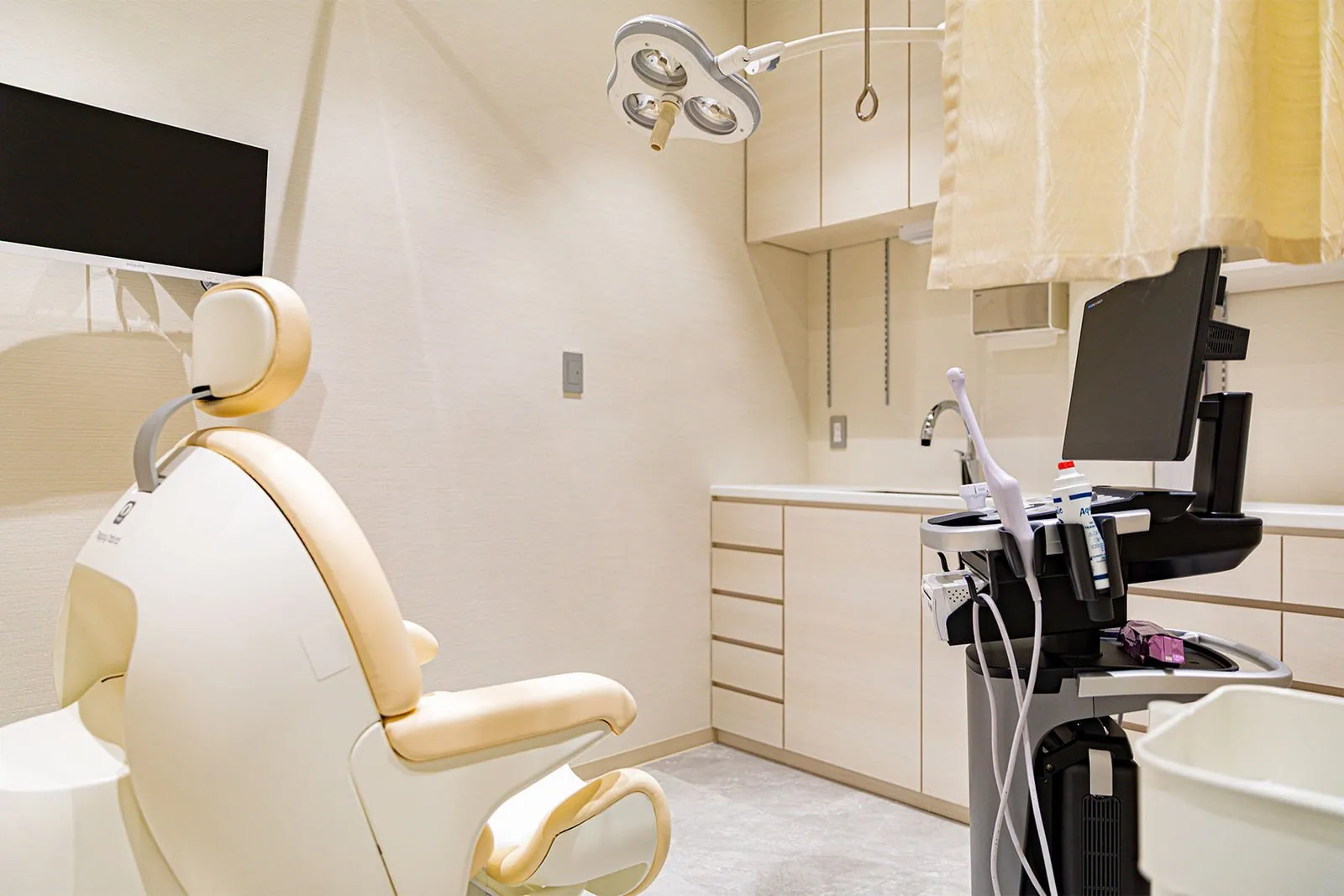
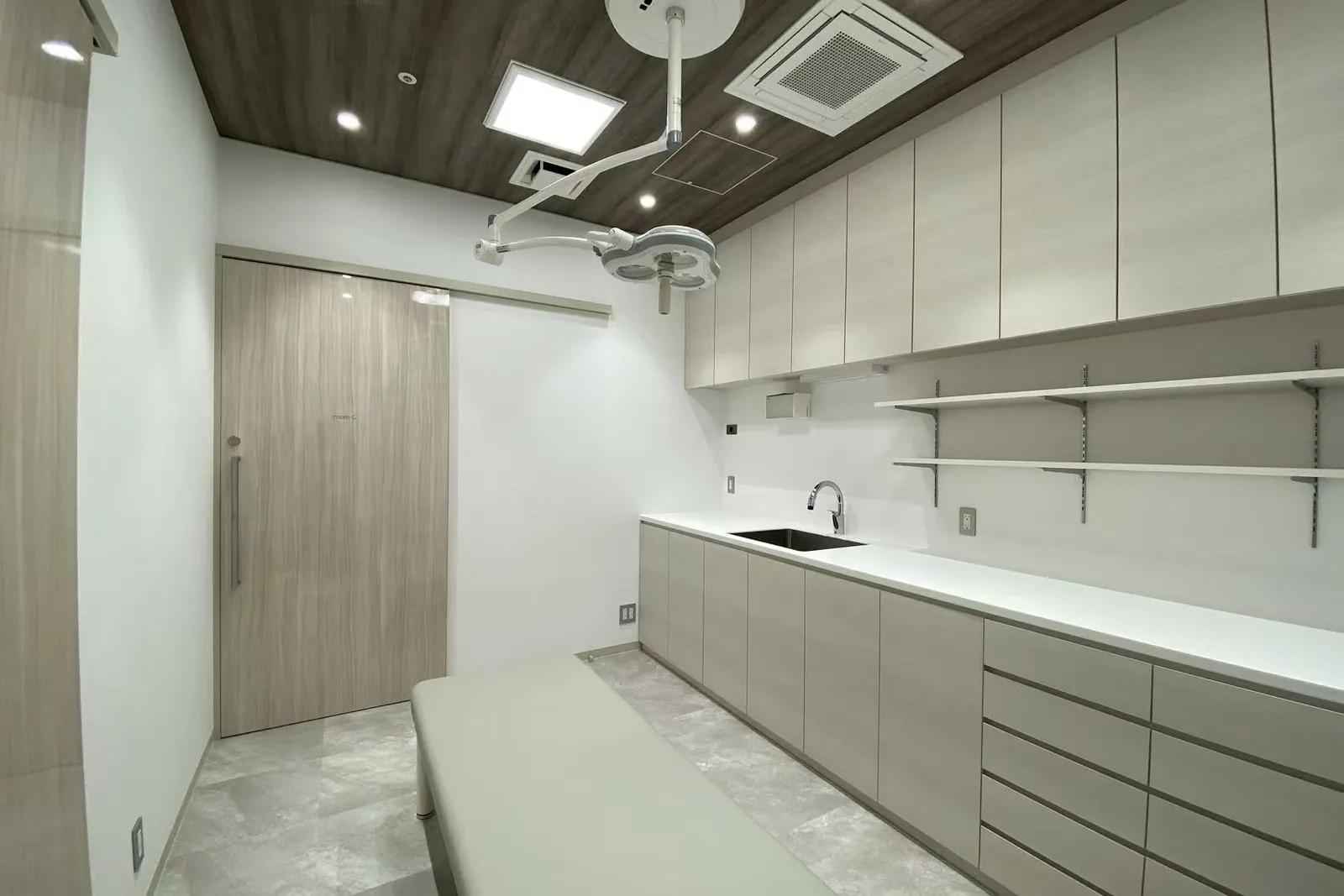
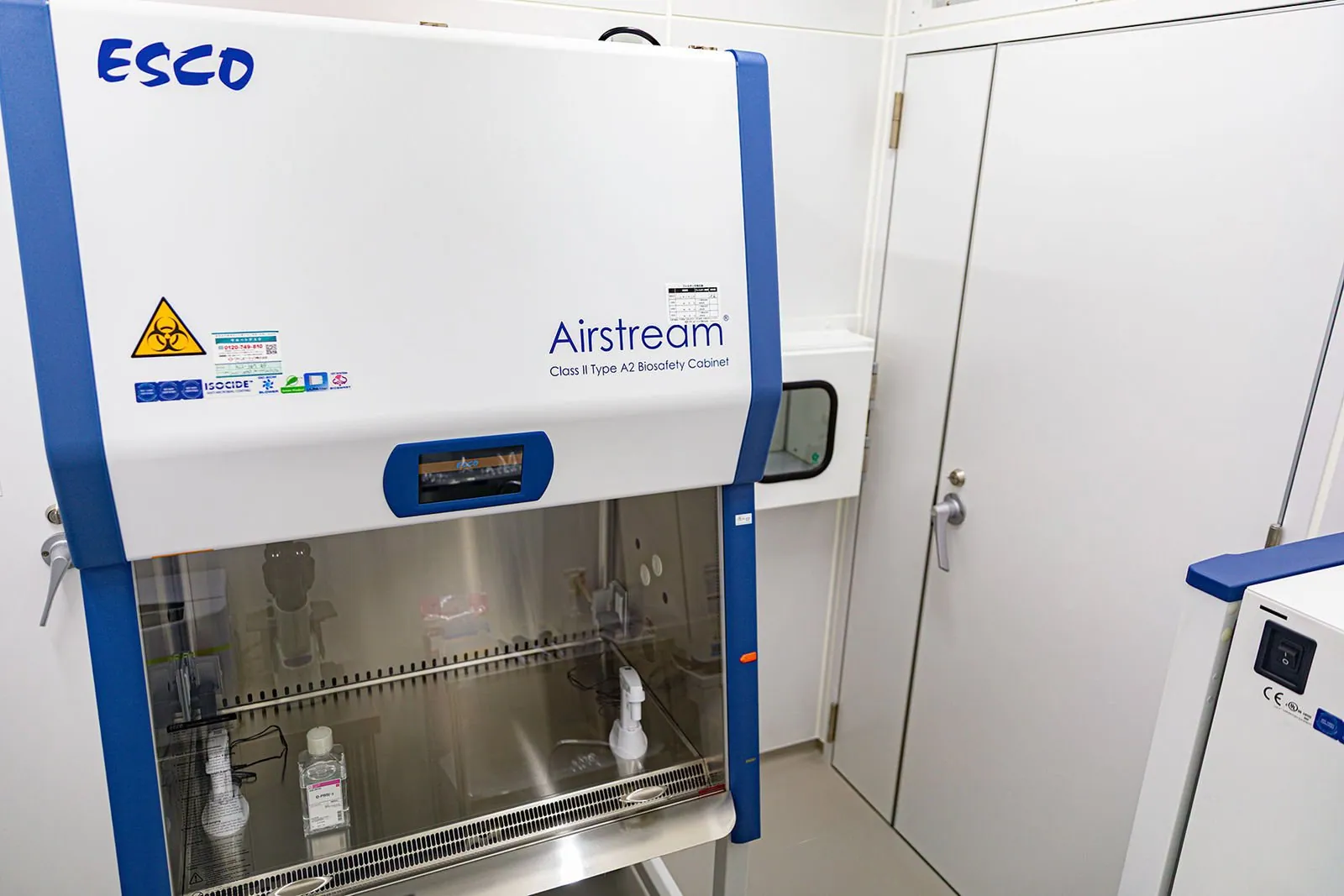




Royal Crystal Ginza 3F, 5-4-6 Ginza, Chuo-ku, Tokyo 104-0061, Japan
3 minutes on foot from Tokyo Metro Ginza Station (Exit B6); 5 minutes from JR Yurakucho Station (Ginza Exit)
Monday to Saturday, 11:00–19:00. Closed Sundays and public holidays.
In-house CPC, facility number FC3250034 under the Act on the Safety of Regenerative Medicine
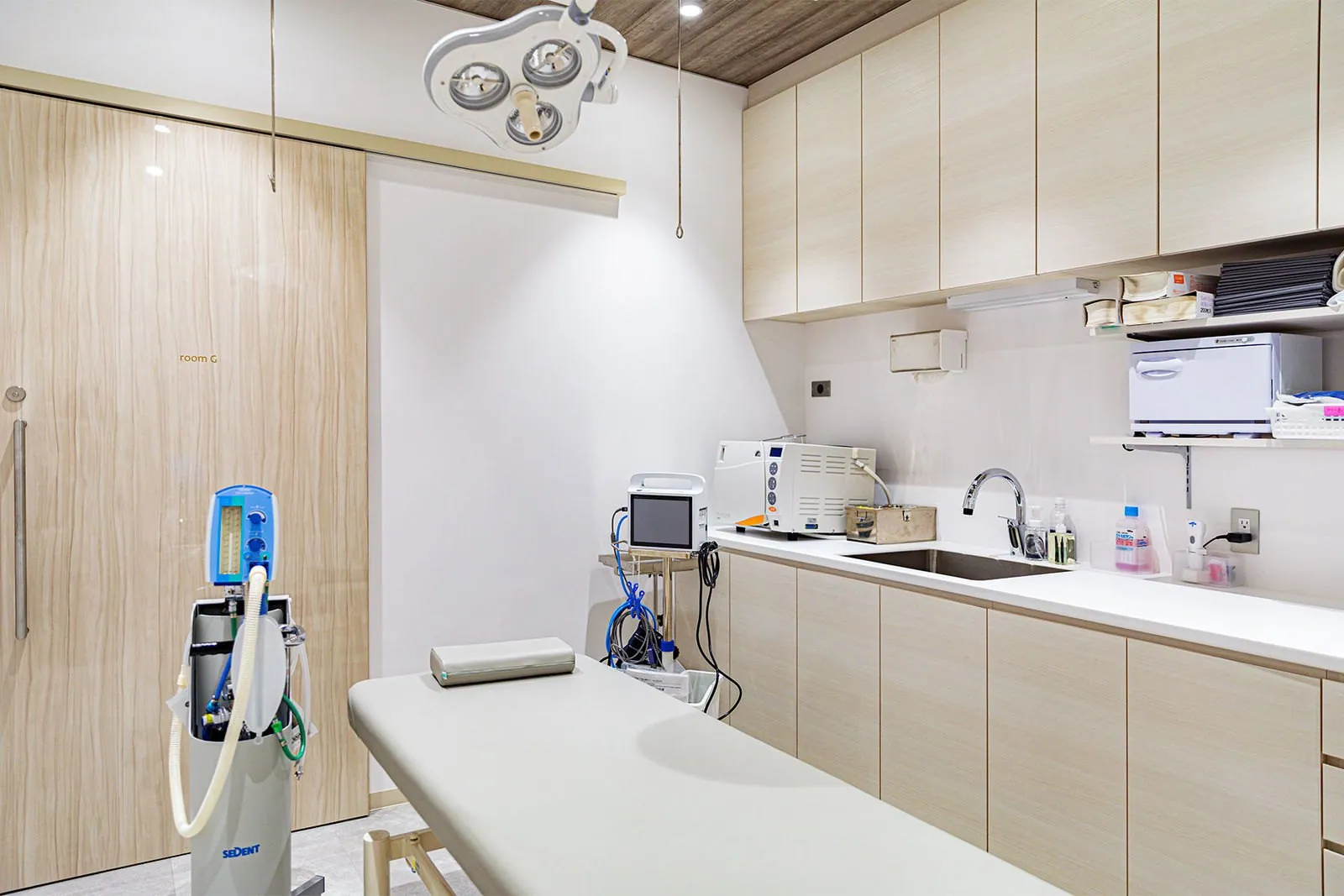
Every photograph on this page was taken inside GINZA NOA CLINIC.
Registration and Credentials
What is filed — and where to check it
GINZA NOA CLINIC is operated by 一般社団法人 创生会 (Soumeikai). Under Japan’s Act on the Safety of Regenerative Medicine, a clinic must classify each technique by risk, have it reviewed by a certified committee, and file a provision plan with the Ministry of Health, Labour and Welfare. Only after a plan number is issued may the treatment be provided. The numbers below are the clinic’s.
Soumeikai — the general incorporated association that operates the clinic.
Clinic name on the establishment notification filed with Chuo City Public Health Centre, Tokyo.
Autologous adipose-derived mesenchymal stem cells for endometrial hypoplasia. Class II.
Autologous adipose-derived stem cells for chronic pain. Class II.
Autologous adipose-derived stem cells for osteoarthritis. Class II.
Autologous adipose-derived stem cells for age-related skin changes such as wrinkles and laxity. Class II.
Natural killer (NK) cell therapy for cancer prevention. Class III.
Facility number for the in-house cell processing centre, assigned by the Minister of Health, Labour and Welfare.
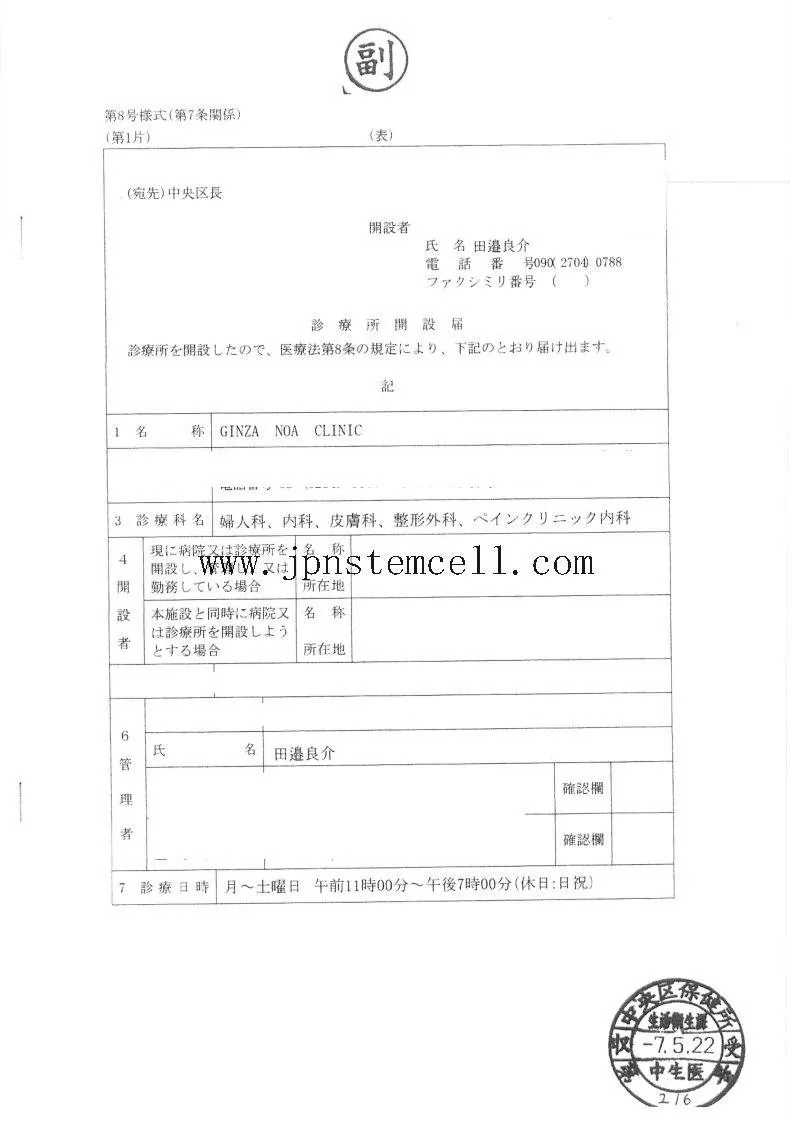
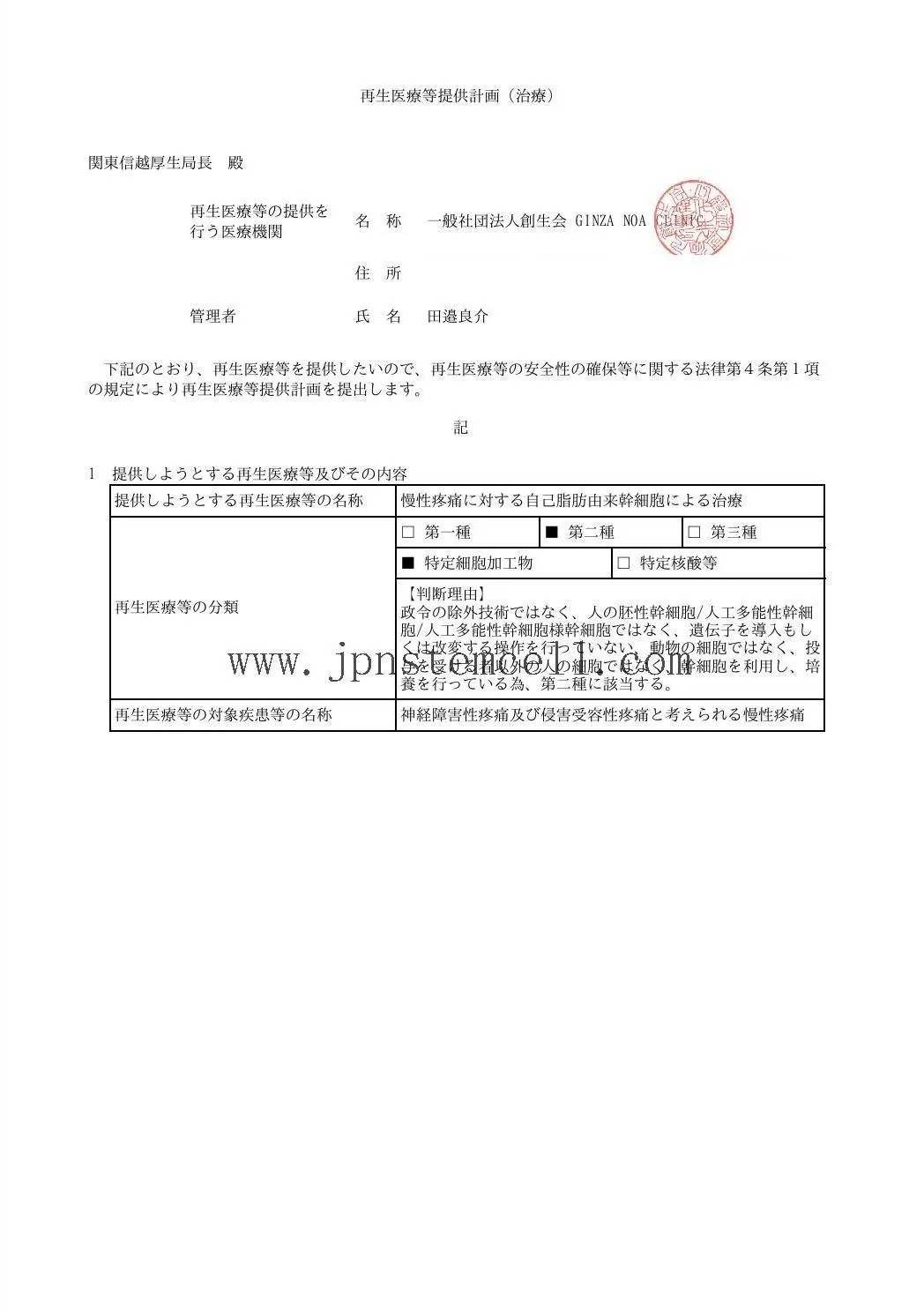
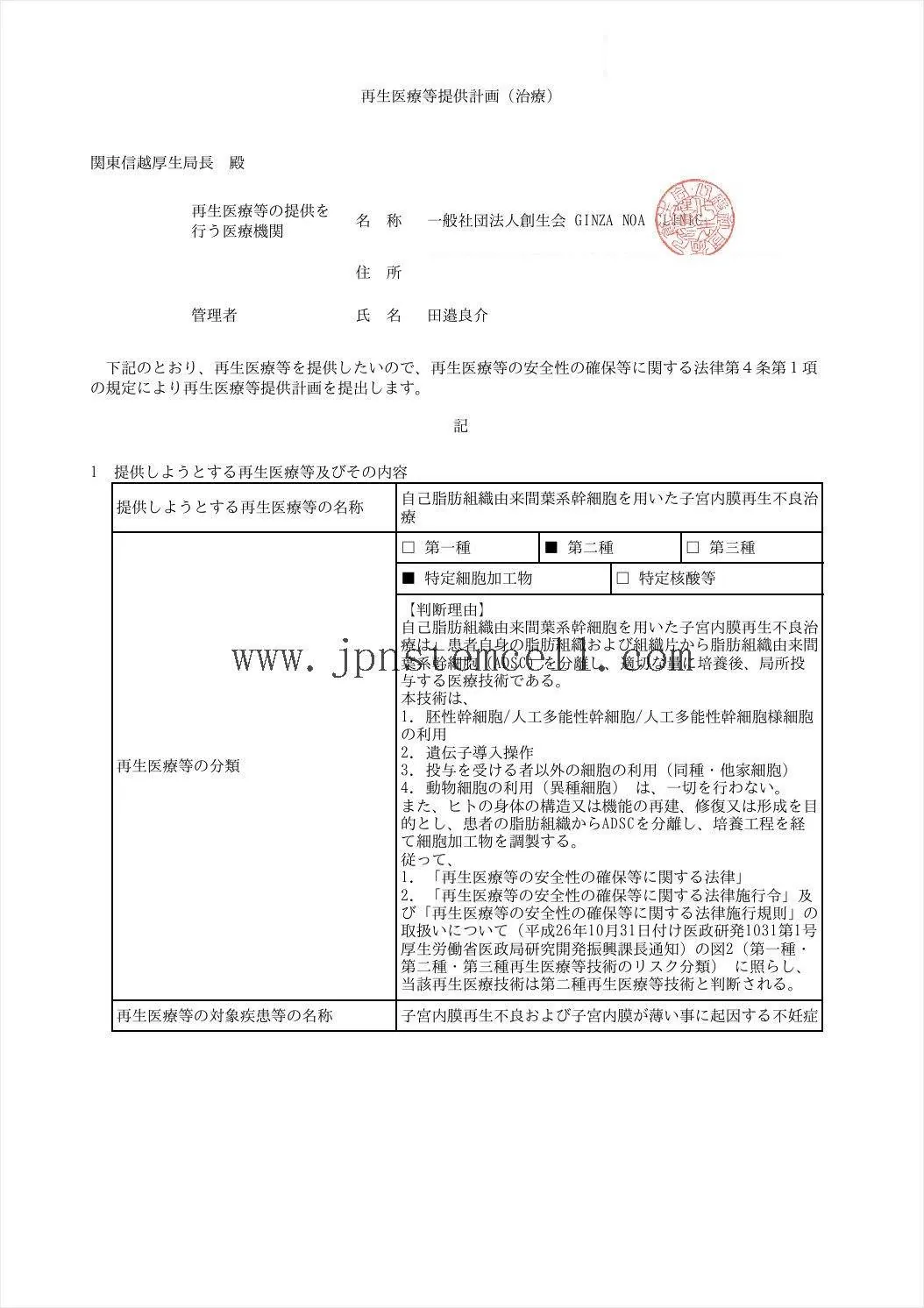
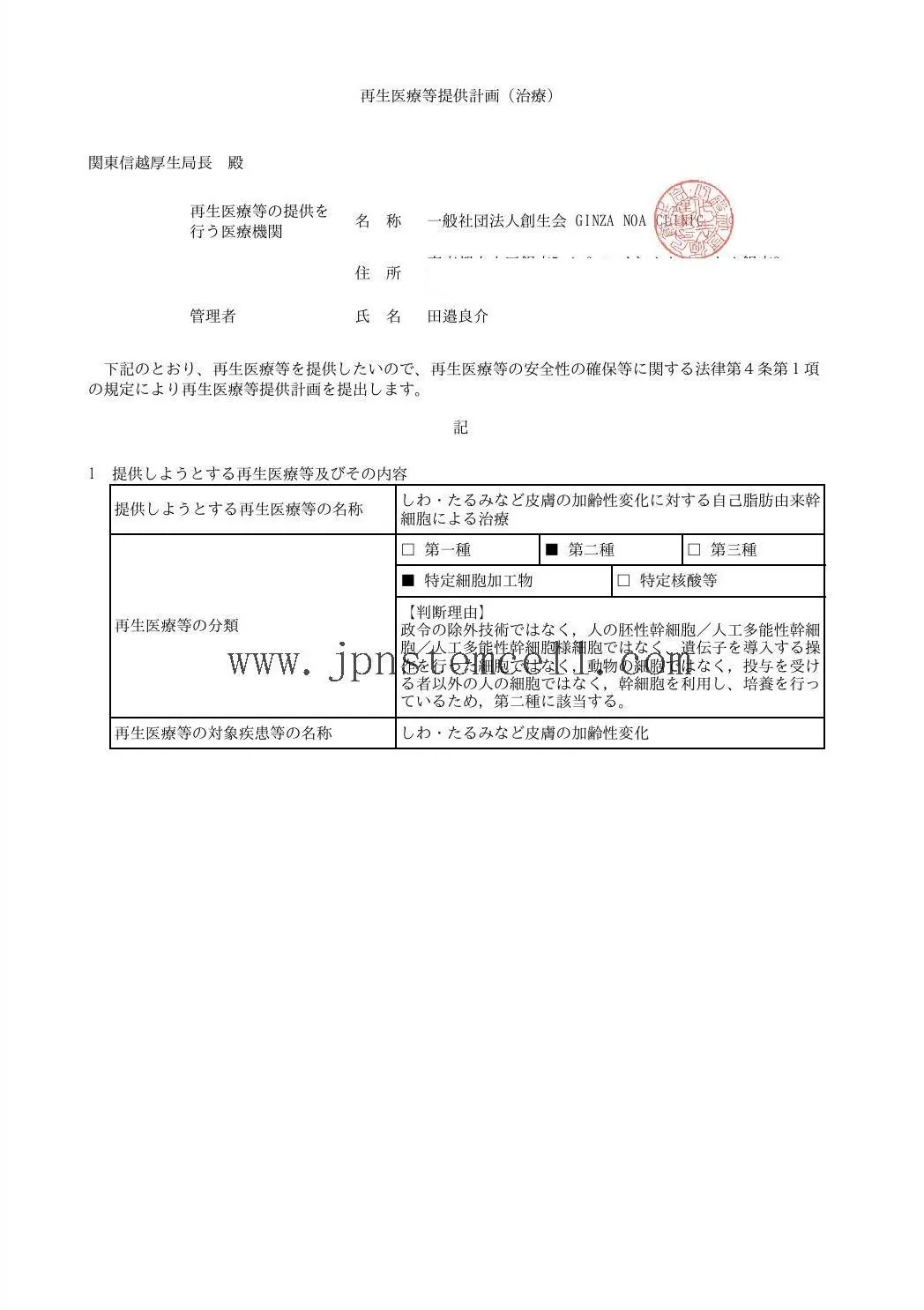
The scanned filings above are shown in Japanese, as filed. Provision plan numbers can be checked against the MHLW published-plan database. Filing a provision plan is not a product approval — a regenerative medical product needs separate marketing authorisation under the Pharmaceuticals and Medical Devices Act, and these treatments are provided as self-pay care. How the two routes differ →
Who Is Responsible
The doctors behind the clinic

Ryosuke Tanabe, MD
Director · Obstetrician and gynaecologist
Dr Tanabe graduated from Kansai Medical University and trained at the University of Tokyo Hospital, Tokyo Kita Medical Center and the National Center for Global Health and Medicine. He opened Shinjuku Ekimae Sakura Ladies’ Clinic before leading GINZA NOA CLINIC.
- Specialist in Obstetrics and Gynaecology, Japan Society of Obstetrics and Gynaecology
- Designated physician under the Maternal Protection Act
- Member, Japan Society for Reproductive Medicine
- Member, Japanese Society for Sexually Transmitted Infections
Medically reviews the content on this site.
Kotaro Yoshimura, MD, PhD
Technical Advisor · Professor of Plastic Surgery, Jichi Medical University
Dr Yoshimura is one of the researchers who established adipose-derived stem cell science. He graduated from the University of Tokyo in 1985, completed a PhD in medicine there in 1994, and held a research fellowship at the University of Michigan before becoming Professor of Plastic Surgery at Jichi Medical University in 2015.
- President (2019), International Federation for Adipose Therapeutics and Science (IFATS)
- Board member, Japan Society of Plastic and Reconstructive Surgery (JSPRS)
- Board member, Japan Society for Aesthetic Plastic Surgery (JSAPS)
- Expert committee member, Pharmaceuticals and Medical Devices Agency (PMDA)
- National Secretary for Japan, ISAPS
Adipose-derived stem cell research.
Contact GINZA NOA CLINIC
Need to contact GINZA NOA CLINIC?
For administrative questions, appointment coordination, or questions about our role, contact us through WhatsApp or LINE.
Message Us on WhatsAppWho Writes and Reviews This Content
How our content is written and reviewed
Where the evidence comes from
Every page is built from primary sources: PMDA review reports, MHLW records, jRCT trial entries, peer-reviewed literature, and the clinic’s own published price list. Each figure is recorded with the source it came from and the month it was verified.
Reviewed by our director
Drafts are checked by Ryosuke Tanabe, MD, Director of GINZA NOA CLINIC. The review asks two things: whether our description of a treatment’s evidence matches what the cited study actually measured, and whether the limits of that evidence sit on the same page as the benefit.
What a review does not do
A content review is not a medical assessment of you. It does not replace a consultation, and it does not decide whether a treatment is right for your case — that still requires your records, an examination and a physician’s judgment.
What to do with it
Use these pages to prepare questions, learn the terminology, see what treatment costs and check regulatory status before you book. They cannot tell you whether a treatment suits you — only an examination at the clinic can do that.
Corrections
Treatment availability, regulatory status and prices change. When we find a material factual error, we correct it as soon as reasonably practicable. To report a problem with a page, contact us through the channels on our contact page.