
The newest human trial gave 10 women with advanced osteoporosis a single intravenous infusion, with a 2-year mandated evaluation and more than 3 further years of monitoring. Fragility fractures fell markedly, and no serious adverse events occurred[1].
The 10-patient study had no concurrent control, and participants continued standard osteoporosis medication. Its findings are preliminary: a reduction from a patient’s earlier fracture history cannot establish that the cells caused the change. Patient counts must not be divided by numbers of registered studies to estimate an evidence share.
The International Osteoporosis Foundation estimates that osteoporosis affects about 500 million people worldwide. Its estimate of approximately 70 fragility fractures per minute illustrates disease burden; it does not indicate demand for, or effectiveness of, stem cell treatment. IOF report
Japan separates provision of regenerative medical procedures from marketing approval of a cell product. Cultured autologous mesenchymal stromal cells generally fall within Class II, requiring review by a specially certified committee and submission of a provision plan. Filing is not proof of clinical benefit. PMDA product approval information
For postmenopausal women and men aged 50 or older, a DXA T-score of −2.5 or lower can establish densitometric osteoporosis. Fragility fractures and overall fracture risk also guide treatment. Standard drug treatment is individualized and often lasts several years; 12–24 months is not a universal course. Cell therapy remains investigational for osteoporosis. NOGG clinical guideline
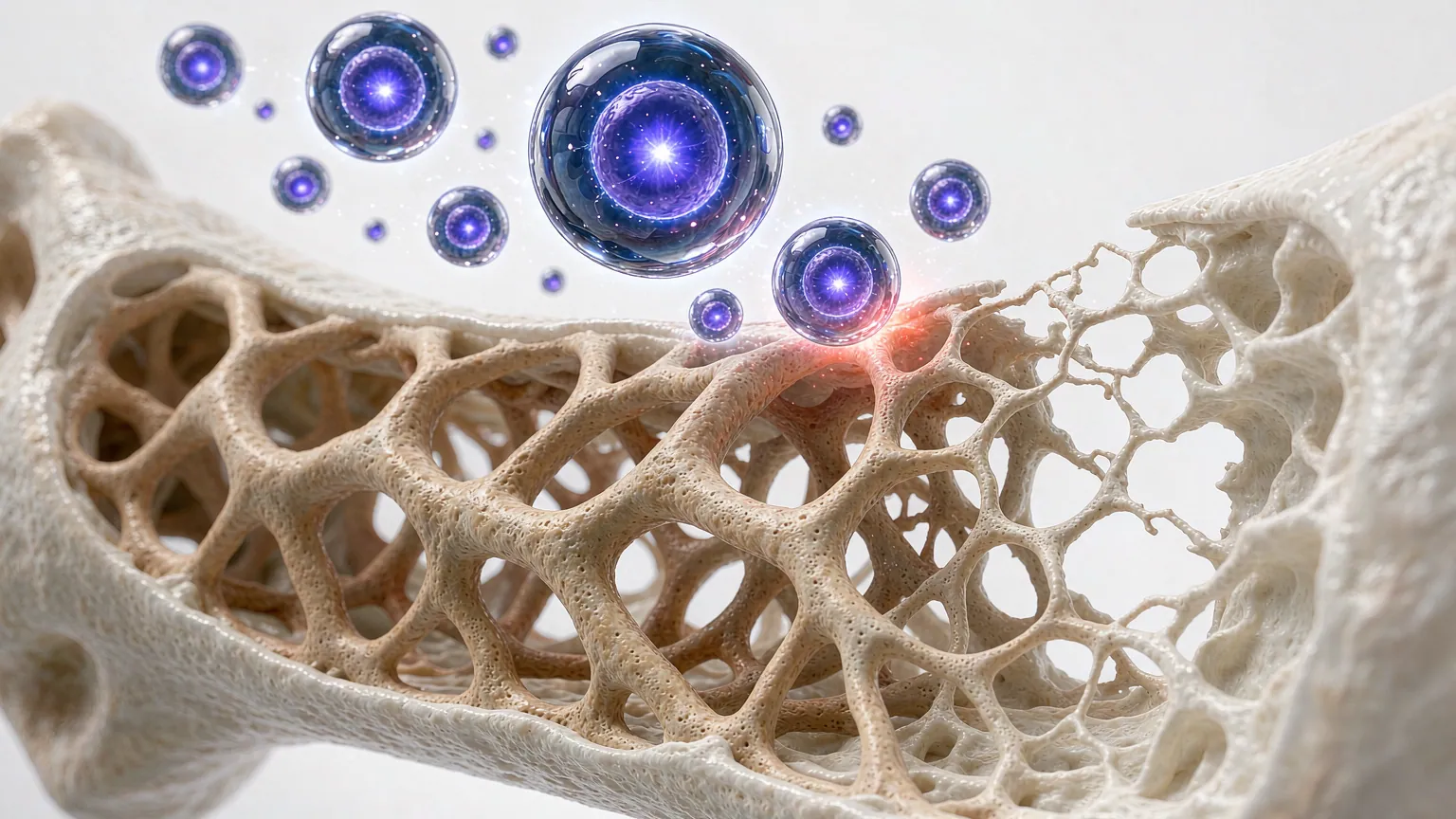
What the research shows
Animal experiments and small early human studies cannot substitute for adequately powered controlled trials of fracture prevention. Sample size requirements depend on baseline fracture risk, expected effect, follow-up and study design.
Results in animal models
Ovariectomised rats are the standard model, and bone loss appears 8 to 12 weeks after surgery. One meta-analysis searched 6 databases to 5 October 2018 and pooled 5 rat studies across 3 outcome measures[4].
Animal studies can improve bone-density and structural measures, but local implantation, scaffolds and intravenous delivery produce different exposure. Animal results do not establish fracture prevention in humans.
Results in human trials
Wharton’s jelly mesenchymal stem cells plus teriparatide give the most complete published design. Twenty patients with osteoporotic vertebral compression fractures were randomised 10 to 10 and received 40 million cells into the fractured vertebra plus 200 million intravenously 7 days later[5].
The 20-patient randomized study compared cells plus teriparatide with teriparatide alone. Giving both groups the same background drug allows an estimate of the added cell-treatment effect; the main limitations are the small sample, open-label design and limited follow-up, rather than an inability to compare the groups. Study search at PubMed
A separate systematic review screened 10,091 papers and kept 14 human studies covering 138 patients, a selection rate of 0.14%. Those 138 patients had local bone defects, so the result does not transfer to systemic osteoporosis[6].
How many patients have been treated
The table below contains five illustrative international registry records, not an exhaustive list of osteoporosis trials in Japan. Registry search totals change with the date, synonyms and filters; they should not be presented as a current count without a reproducible search. Open each record for current recruitment and enrolment.
The five listed records include completed, terminated, withdrawn and uncertain-status studies. Planned enrolment and actual enrolment are different, and a withdrawn study with zero participants should not be included as a treated cohort.
| Registry ID | Cell source and delivery | Phase | Planned | Status |
|---|---|---|---|---|
| NCT02566655[9] | Bone marrow, autologous, fucosylated, intravenous | 1 | 10 | Completed |
| NCT01532076[10] | Adipose tissue, autologous, local application | 2 | 8 | Terminated |
| NCT04501354[11] | Umbilical cord, allogeneic, local implant | 2 | 5 | Status unknown |
| NCT05152381[8] | Allogeneic cord cells, intravenous | 1 | 0 | Withdrawn |
| NCT06949137[12] | Cord HMM910, allogeneic, intravenous | 1 | 9 | Active |
These records illustrate early-phase investigation. A registry phase designation does not itself establish that results exist or that the intervention prevents fractures.
What the trials measure
DXA measures areal bone mineral density. In the populations for whom T-score criteria apply, osteoporosis is defined by a T-score ≤−2.5 and low bone mass by a score below −1.0 but above −2.5. Serial changes should be judged against the facility’s measured least significant change, not a universal 1–2% error. ISCD adult positions
Fracture outcomes need prospective, adequately powered comparison. There is no universal requirement of 1,000–1,609 controls or exactly three years: statistical power depends on fracture incidence and the treatment effect.
| Readout | Method | Shows | Cannot show |
|---|---|---|---|
| Areal bone density | DXA | Change in mineral content per area | Trabecular structure, bone strength |
| Volumetric bone density | QCT or HR-pQCT | Change in three-dimensional density | Whether fractures become less frequent |
| Bone turnover markers | Serum assay | Direction of formation and resorption | Size of any fracture risk reduction |
| Fragility fracture rate | Long-term registry follow-up | The clinical endpoint itself | Requires an adequately powered prospective comparison |
| Pain and function scores | Questionnaires | Change at the symptom level | Link to change in bone mass |
Small studies may detect common short-term problems but cannot establish uncommon or delayed harms. A required evaluation period and extended safety monitoring must be reported separately.
One marker each for formation and resorption indicates direction. The right direction does not raise bone mass or lower fracture counts.
Why bone is harder than joints
A knee capsule is a closed space, so injected cells tend to stay where they land. One injection takes 10 to 15 minutes in an outpatient visit, and regenerative medicine for knee osteoarthritis in Japan arrived first partly because the delivery route is simple. Osteoporosis offers no such cavity.
Intravenously infused cells do not distribute evenly through circulating blood; many are initially trapped in the lungs. Dividing an infused dose by blood volume does not estimate the dose reaching bone.
The cited local dose of 40 million cells and intravenous dose of 200 million cells use different routes. They should not be treated as interchangeable dose options or converted into an equivalent bone exposure.
Osteoporosis changes both bone turnover and the marrow environment. Animal and early human findings do not establish that infused cells reliably engraft in bone or restore systemic skeletal strength.
Where the limits sit
- Long-term safety remains uncertain despite a two-year evaluation and more than three additional years of monitoring in the cited 10-person study. With zero events among 10 recipients, the approximate rule-of-three upper 95% bound is 30%; rare harms cannot be excluded.
- There is no established osteoporosis cell dose. The cited 40-million local and 200-million intravenous administrations are distinct components of one protocol, not interchangeable ends of a recommended dose range.
- Endpoints do not agree, and the 5 registered studies spread their readouts across areal density, volumetric density, turnover markers and function scores, 4 separate categories.
- Distinguish single-arm studies from randomized active-treatment comparisons. A concurrent teriparatide control can assess added benefit, although lack of blinding and small samples still limit inference.
Three questions decide whether a clinic’s claims can be checked at all: the cell source and how it was processed, which readout was used, and whether a concurrent control existed. A claim missing any one of the 3 cannot be verified.
How to choose a stem cell hospital in Japan starts with those 3 questions.
| Item | Stem cells for osteoporosis | Approved osteoporosis drugs |
|---|---|---|
| Regulatory status | Investigational; verify indication-specific authorization in the relevant country | Approved and written into guidelines |
| Highest evidence level | Phase 1 and 2, mostly single-arm and open label | Randomised, double-blind, phase 3 |
| Reported endpoints | Bone density, turnover markers, safety | Vertebral and non-vertebral fracture rates |
| Patients enrolled | Tens per site | Often thousands per trial |
| Delivery | Intravenous, local injection or implant | Oral, subcutaneous or intravenous |
| Main uncertainty | Ectopic tissue formation, unknown long-term safety | Listed on the label and bounded by population |
How many people need treatment
Japan has an estimated 13 million people with osteoporosis, about 10% of its 126 million population, or 1 in 10. Around 240,000 hip fractures occur each year, which is 658 a day and 1 for every 54 patients[15].
In China, 19.2% of people over 50 have osteoporosis, including 6.0% of men and 32.1% of women, so women are affected 5.3 times as often. Above age 65 the rate reaches 32.0%, with 10.7% of men and 51.6% of women, a gap of 40.9 points and a ratio of 4.8 to 1[16].
Low bone mass outruns diagnosed disease. Among people aged 40 to 49 the low bone mass rate reaches 32.9%, and above age 50 it reaches 46.4%, a difference of 13.5 points[16].
Awareness above age 20 reaches 11.7%, which is fewer than 12 people in every 100; only 2.8% have had a bone density scan, and above age 50 the figure reaches 3.7%[16].
Bone density testing after a fracture reaches 22.3% of hip fracture patients, 43.6% of vertebral fracture patients and 28.1% of mixed fracture patients[15].
Treatment within 12 months of the fracture reaches 31.9%, 61.7% and 46.6% respectively, a gap of 29.8 points between vertebral and hip patients[15].
Those figures come from 7 years of Japanese health insurance claims running from April 2012 to March 2019. Japan introduced separate reimbursement for fracture liaison services in 2022, when 43 services existed nationwide[15].
93 services exist now, a net gain of 50, of which 19 hold gold and 24 hold silver status, and 1,900 acute care hospitals have applied[15].
An individual who has already had one fragility fracture is highly vulnerable to further fractures, with a five times greater risk of another fracture within the first year. Yet approximately 80% of these patients are neither identified nor treated for the underlying cause, osteoporosis.
Among hip fracture survivors, 40% cannot walk independently, 60% still need assistance a year later and 33% enter a nursing home or become fully dependent within 12 months[17].
How Japan regulates this
Japan has run a dual track since 2014. Medical technology falls under Japan’s registration and compliance rules for regenerative medicine, while cell products fall under the Pharmaceuticals and Medical Devices Act[3].
Regenerative medicine is classified into type 1, type 2 and type 3 according to its potential impact on human life and health. Type 1 covers iPS cells, ES cells, gene-modified cells and xenogeneic cells, type 2 covers somatic stem cells, and type 3 covers somatic cells.
A type 2 provision plan may be implemented only after the opinion of a specially certified committee for regenerative medicine has been obtained and the plan has been submitted to the Minister of Health, Labour and Welfare.
Cultured autologous mesenchymal stem cells fall under type 2, reviewed by a certified committee and then notified and published by the Ministry of Health, Labour and Welfare. Cell processing centres and cell quality are licensed separately.
All applicable risk classes require committee review and a provision-plan submission. Class I and II require specially certified committees; Class I has additional national review requirements. Review addresses safety and scientific justification but is not equivalent to marketing authorization or proven efficacy.
Enforcement does happen. In 2017 the Ministry inspected 11 clinics, and 6 people were arrested for infusing patients with umbilical cord blood for cosmetic and anti-ageing purposes without approval[18].
Cell products follow a separate PMD Act pathway. Japan can grant conditional, time-limited approval to qualifying regenerative products on preliminary evidence; a completed phase III trial is not an absolute prerequisite in every case. PMDA approval information
What a patient is actually offered
A clinic’s offer must be checked against its exact provision plan, cell type, indication and evidence. This article does not establish how many Japanese clinics offer cell treatment for osteoporosis or whether such treatment is appropriate for an individual.
Whether Japanese health insurance covers foreign patients varies with it, and what regenerative medicine in Japan covers sits on a public list.
Planned registry enrolment is not actual treatment exposure, and international registry totals are not Japanese participant counts. Population-to-trial ratios do not measure an individual’s access or likelihood of benefit.
Indications and contraindications for stem cell therapy exclude active infection, active cancer and severe organ failure at most providers.
Approved drugs remain the standard route, and each one rests on phase 3 randomised data, with dosing intervals running from once a day to once a year[17].
- Bisphosphonates, with alendronate taken orally weekly (70 mg in many countries; Japanese approved dosing can differ) and zoledronic acid 5 mg infused once a year.
- Denosumab, a RANKL inhibitor, given as 60 mg subcutaneously every 6 months.
- Romosozumab, a sclerostin inhibitor, given as 210 mg subcutaneously each month for 12 months.
- Teriparatide, a parathyroid hormone analogue, given as 20 micrograms subcutaneously each day with duration determined by the local label and fracture risk, commonly around 24 months.
- Raloxifene, a selective oestrogen receptor modulator, taken as 60 mg orally once a day to prevent vertebral fractures after menopause.
Common questions
Can stem cells bring bone density back to normal
Published human data have not shown that. The 10 patient trial ran 2 years and reported higher volumetric bone density[9], while the 20 patient trial ran 12 months and reported improved vertebral density[5].
Has Japan approved stem cell therapy for osteoporosis
The sources cited here do not establish an approved Japanese cell product for osteoporosis. Confirm the exact indication against PMDA information; a Class II provision plan is not a product authorization. PMDA approved regenerative products
What are the risks
Across the 138 patient pool no treatment related serious adverse events were reported, and short-term events were mostly mild[6].
Ectopic ossification, ectopic tissue formation and delayed tumourigenic change need years of follow-up to exclude, and the longest observation so far covers 2 years of mandated evaluation, 3 further years of monitoring and 10 patients[9].
Whether stem cell therapy in Japan is safe also depends on provider licensing and adverse event reporting.
What can I do without stem cells
A prior bone-density testing rate and osteoporosis prevalence have different denominators and cannot be divided to estimate the proportion of disease detected. Discuss assessment after a fragility fracture or when clinical risk factors warrant it.
A T-score and a fracture history give a basis for discussing drug treatment.
Where the numbers come from
The article cites 19 sources, numbered in order of first appearance. Official figures and published data carry a superscript at the end of the sentence, so any reader can open the original.
Animal models showing bone loss at 8 to 12 weeks, culture times of 3 to 4 weeks and outpatient injections of 10 to 15 minutes are common industry ranges without a source.
The 22.3% DXA-testing and 31.9% treatment rates refer to hip-fracture patients in the cited Japanese claims study, not all 13 million people estimated to have osteoporosis. They cannot be extrapolated into a nationwide scan count.
Arithmetic examples are illustrative only. The clinical meaning depends on matched populations, routes, outcomes and observation periods.
The listed ClinicalTrials.gov records are international examples, not 19 Japanese trials. Recruitment and eligibility must be confirmed with the named study site before any travel or payment. A registry listing is not an offer of treatment.
Send your records for a written assessment
Sources
- Moraleda JM, et al. Glycocalyx-edited mesenchymal stem/stromal cell therapy in advanced osteoporosis. Cell, 2026. DOI 10.1016/j.cell.2026.08.017. doi.org
- International Osteoporosis Foundation. Addressing a hidden crisis: the global neglect of bone health. osteoporosis.foundation
- Brief summary of the regulatory frameworks of regenerative medicine therapies. Regenerative Therapy, 2025. pmc.ncbi.nlm.nih.gov
- Jin Z, Chen J, Shu B, Xiao Y, Tang D. Bone mesenchymal stem cell therapy for ovariectomized osteoporotic rats: a systematic review and meta-analysis. BMC Musculoskeletal Disorders, 2019. pmc.ncbi.nlm.nih.gov
- Safety and efficacy of Wharton’s jelly-derived mesenchymal stem cells with teriparatide for osteoporotic vertebral fractures: a phase I/IIa study in 20 patients. Stem Cells Translational Medicine, 2021. pmc.ncbi.nlm.nih.gov
- Theodosaki AM, Tzemi M, Galanis N, et al. Bone regeneration with mesenchymal stem cells in scaffolds: systematic review of human clinical trials. Stem Cell Reviews and Reports, 2024, 20(4): 938-966. pmc.ncbi.nlm.nih.gov
- U.S. National Library of Medicine. ClinicalTrials.gov search: stem cell AND osteoporosis. clinicaltrials.gov
- ClinicalTrials.gov. NCT05152381, Safety of cultured allogeneic adult umbilical cord derived mesenchymal stem cell intravenous infusion for osteoporosis (phase 1, withdrawn, n=0). clinicaltrials.gov
- ClinicalTrials.gov. NCT02566655, Intravenous infusion of fucosylated bone marrow mesenchymal cells in patients with osteoporosis (phase 1, completed, n=10). clinicaltrials.gov
- ClinicalTrials.gov. NCT01532076, Effectiveness of adipose tissue derived mesenchymal stem cells as osteogenic (phase 2, terminated, n=8). clinicaltrials.gov
- ClinicalTrials.gov. NCT04501354, Evaluation of clinical and bone density improvement after implantation of allogeneic mesenchymal stem cell from umbilical cord (phase 2, status unknown, n=5). clinicaltrials.gov
- ClinicalTrials.gov. NCT06949137, Intravenous infusion of human mesenchymal stem cells (HMM910) in postmenopausal women with osteoporosis at high risk of fracture (phase 1, active, n=9). clinicaltrials.gov
- Key mediators of the efficacy of mesenchymal stem cells on in vivo disease models. Inflammation and Regeneration, 2025. pmc.ncbi.nlm.nih.gov
- Jiang Y, Zhang P, Zhang X, Lv L, Zhou Y. Advances in mesenchymal stem cell transplantation for the treatment of osteoporosis. Cell Proliferation, 2021. pmc.ncbi.nlm.nih.gov
- International Osteoporosis Foundation, Capture the Fracture. In Japan, multistakeholder advocacy leads to real improvements in secondary fracture prevention. Japan: about 13 million people with osteoporosis, about 240,000 hip fractures a year. www.capturethefracture.org
- National Health Commission of China. Online interview on osteoporosis, including the first national Chinese epidemiological survey of osteoporosis, 19.2% prevalence above age 50 [in Chinese]. www.nhc.gov.cn
- International Osteoporosis Foundation. A fracture every 3 seconds worldwide. www.osteoporosis.foundation
- Yano K, Yamato M. Compassionate use and hospital exemption for regenerative medicine. Regenerative Therapy, 2018. pmc.ncbi.nlm.nih.gov
- Pharmaceuticals and Medical Devices Agency (Japan). Review services and regulatory information. www.pmda.go.jp
Where treatment is provided
GINZA NOA CLINIC, Ginza, Tokyo
Clinic information supplied by this website. Facility photographs and contact details do not establish the effectiveness of a treatment described in this article.

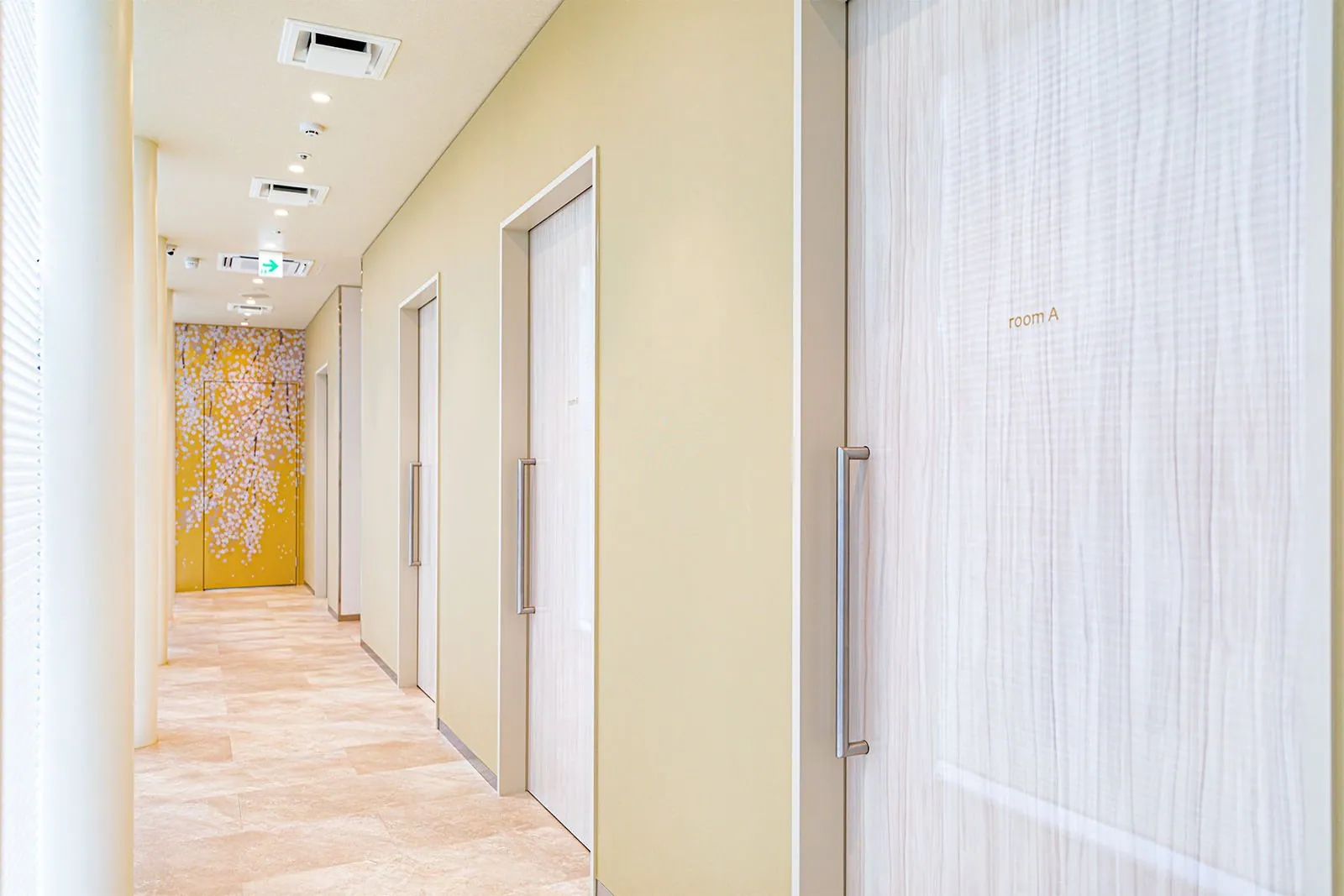
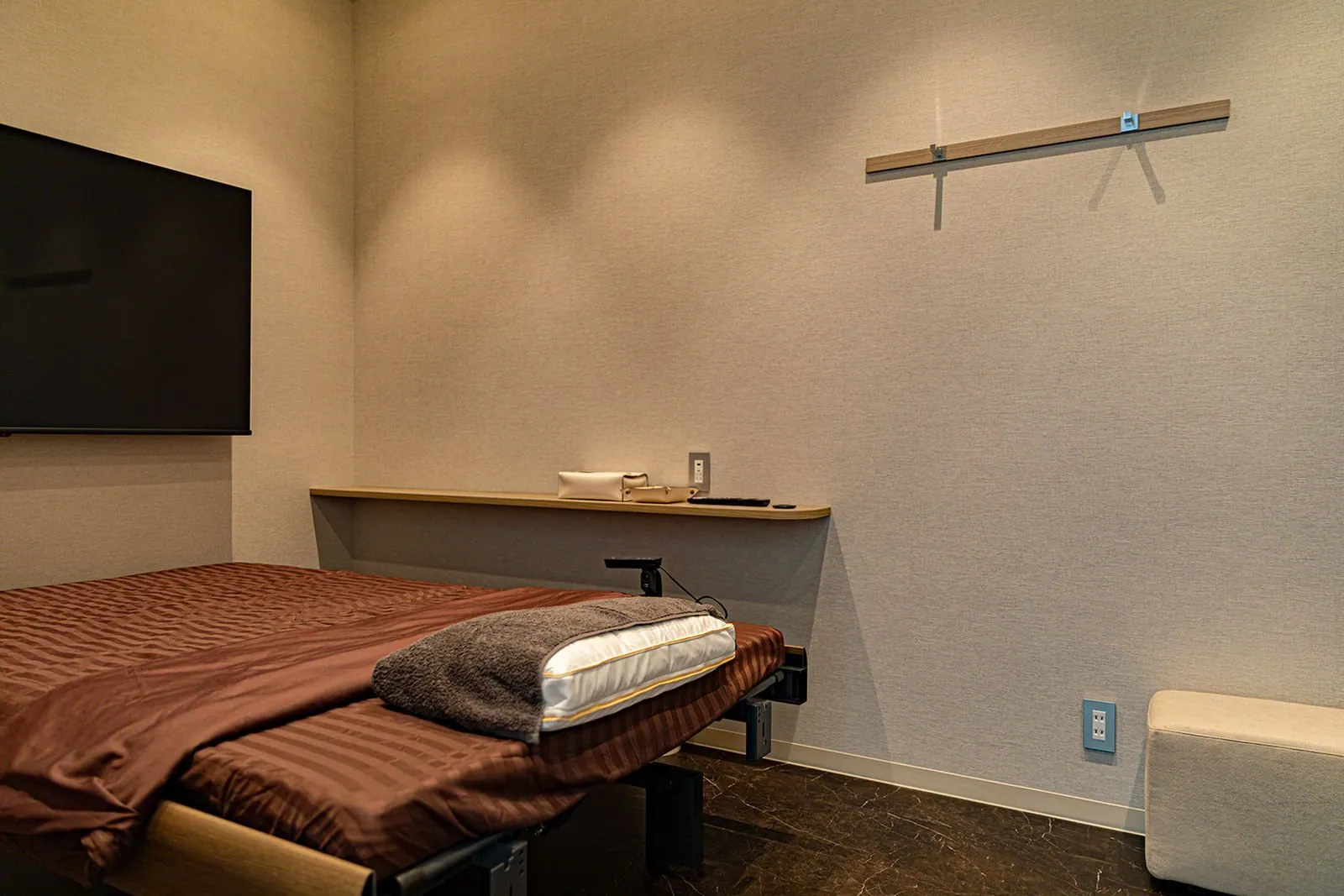
Royal Crystal Ginza 3F, 5-4-6 Ginza, Chuo-ku, Tokyo 104-0061
3 min from Tokyo Metro Ginza Station (Exit B6); 5 min from JR Yurakucho Station
In-house CPC, facility number FC3250034
WhatsApp +81-8070161366 · LINE +81-8075357788
The previous page version named clinical reviewers and a review date of 30 September 2026. Their approval of this revised text has not been verified; a new specialist review is pending. Every treatment carries risks — ask what they mean for your case at the consultation. Registration and credentials · How we review content