
Yes. Stem cell treatment can lead to infection if a cell product is contaminated, germs enter during a procedure, or treatment weakens your immune defenses. The risk is not the same for a blood stem cell transplant and a clinic injection. Transplant conditioning increases infection risk Stem cell transplant. Contaminated injections can also cause serious illness: in a 2018 U.S. outbreak, 12 patients who received unapproved cord-blood-derived products developed infections, and all were hospitalized Mm6750a5.htm.
There is no reliable single infection rate for everything sold as “stem cell therapy.” Your product, route of administration, immune status, and the safeguards around treatment matter. If you already have fever, worsening pain, or other concerning symptoms after treatment, seek medical advice promptly rather than trying to estimate your risk from a study.
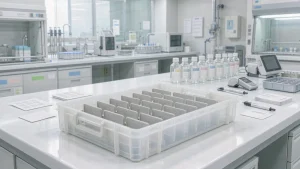
How Treatment Can Lead to Infection
An infection after treatment does not always mean the cells carried germs. There are several possible pathways:
- Contamination of the product. Bacteria or other microbes can enter during collection or processing. The FDA lists bacterial infections, including life-threatening bloodstream infections, among the reported harms of unapproved regenerative products. It also warns about cross-contamination with bacteria, viruses, or mold Important patient and consumer information about regenerative medicine therapies.
- The procedure itself. Needles, wounds, and catheters provide possible entry points for germs. The CDC outbreak included bloodstream infections, joint infections, and abscesses near the spine Mm6750a5.htm.
- Weakened immunity. Chemotherapy or radiation used before a blood stem cell transplant can reduce your ability to fight infection. Graft-versus-host disease (GVHD), in which donor immune cells attack the recipient’s tissues, may require further immune-suppressing treatment Stem cell transplant.
The CDC found bacteria in unopened vials during its investigation. This shows that contamination can occur before an injection is given, even when the problem becomes apparent only afterward. The outbreak demonstrates a real hazard, but it does not tell us how often infection occurs across all cell treatments Mm6750a5.htm.
Why the Treatment Type Matters
| Treatment setting | How to interpret infection risk |
|---|---|
| Blood stem cell transplant for cancer | Infection is a recognized treatment risk, particularly because of conditioning and immune suppression. This is not equivalent to a joint injection Stem cell transplant. |
| A specifically approved cell product | Approval applies to a named product and indication, not every treatment described as stem cell therapy. For example, U.S. approval of Ryoncil covers steroid-refractory acute GVHD in children aged 2 months and older. That indication does not establish safety or effectiveness for unrelated clinic services Ryoncil. |
| An authorized clinical trial | Read the results for the exact cell source, route, population, and outcome. A trial registration number alone is not evidence that treatment works or that infection cannot occur. |
| An unapproved clinic injection or infusion | Ask for documented product identity, infectious-disease screening, processing controls, and follow-up. FDA reports and the CDC outbreak show why these cannot be assumed Mm6750a5.htm Important patient and consumer information about regenerative medicine therapies. |
For certain regenerative treatments in Japan, providers must submit a provision plan under the Act on the Safety of Regenerative Medicine. This is a safety and procedural framework, not the same as product marketing approval or proof that a treatment works for your condition Index.
Can Sterility Testing Remove All Risk?
No. Living cell products generally cannot undergo the terminal sterilization used for some other medical products without damaging the cells. Japan’s 2026 microbiological safety guideline therefore emphasizes contamination prevention throughout collection, processing, transport, storage, and administration. Testing is one part of that system, not a replacement for it 001711275.pdf.
The guideline treats administration route and volume as relevant to contamination risk. Its risk-based framework places intrathecal administration, into the spinal fluid, and several intravenous routes above subcutaneous injection. This is guidance for microbiological safeguards, not a measured infection rate or proof that one route is safe in every setting 001711275.pdf.
Using your own cells does not remove the need for contamination controls. Collection and handling still take place. Ask what testing and release procedures apply to your specific product rather than accepting “autologous” as a guarantee of sterility 001711275.pdf.
What Human Studies Actually Show
Umbilical Cord MSC Infusions
A 2026 systematic review included 42 randomized trials with 2,280 adults receiving intravascular umbilical-cord-derived mesenchymal stromal cells (MSCs). Only 10 trials, involving 613 participants, reported infection outcomes. Their pooled infection relative risk was 0.73 compared with control groups, with a 95% confidence interval of 0.32–1.66. The authors found no signal of increased infection, but this wide interval does not rule out an increase in risk PMC13237491.
Fever within 24 hours was reported in a different subset: 15 trials with 954 participants. Fever was more common with MSCs, with a relative risk of 2.34 (95% CI 1.02–5.35). That is a relative comparison, not a 2.34% infection rate, and fever was a separate outcome from infection PMC13237491.
The trials differed in diseases, doses, products, and follow-up. Their results cannot be transferred to every MSC product, another administration route, or a clinic injection sold outside those trial conditions. The infection analysis also does not provide a personalized absolute risk for an individual patient PMC13237491.
Knee Injections
A separate systematic review included 48 studies and 1,924 patients receiving stem-cell-based injections for knee osteoarthritis. It reported transient adverse events in 12.3%, most often pain and swelling at the injection site. No infections were reported in the included studies PMC11572451.
The 12.3% figure is not an infection rate. The studies included randomized trials, prospective studies, and retrospective studies, with different products, additional treatments, and follow-up periods. The absence of reported infection does not establish zero risk, and the review called for further long-term safety research PMC11572451.
When to Seek Medical Help
Fever after an infusion is not automatically an infection, but a trial finding cannot tell you what is causing your symptoms. Worsening pain, swelling, spreading redness, drainage, fever, or chills after a procedure warrant prompt contact with the treating team. Do not dismiss worsening symptoms as an expected reaction without assessment.
Seek emergency care for possible sepsis. Confusion, difficulty breathing, clammy skin, a fast heart rate or low blood pressure, severe body pain, and very little urine can be warning signs. Sepsis is life-threatening organ dysfunction caused by an extreme response to infection. Call emergency services or go to an emergency department if these signs develop; do not wait for a clinic callback Sepsis.
After a blood stem cell transplant, follow your transplant team’s fever instructions and contact them immediately at their specified threshold. For example, Memorial Sloan Kettering’s instructions for patients leaving hospital after an allogeneic transplant say to call right away for a temperature of 100.4°F (38.0°C) or higher. This is transplant-specific guidance, not a universal threshold for every cell injection Leaving hospital after your allogeneic transplant.
If Symptoms Start After You Go Home
If you are home after an injection and the treated area is becoming more painful or swollen, tell the treating team when it was given, where it was injected, the product name if known, and how the symptoms have changed. Have your temperature reading and medication list ready. These are practical details to communicate, not a way to diagnose yourself.
Do not use “I felt fine immediately afterward” as reassurance. The MHLW guideline notes that contamination-related symptoms can appear after a delay and requires arrangements for monitoring after administration, including instructions for patients who have returned home 001711275.pdf.
Questions That Help You Check the Safeguards
Before arranging treatment in Japan, or receiving treatment elsewhere, ask for answers in writing. A plan number or a general claim that a facility is “clean” does not answer these product-specific questions.
| Ask the provider | What you need to clarify |
|---|---|
| What exactly am I receiving? | Cell source, product name, dose, administration route, and whether it is approved for your condition, investigational, or provided through another legal route. |
| Where are the cells processed? | Identify the cell-processing facility and who is responsible for collection, handling, transport, and storage 001711275.pdf. |
| What microbiological checks apply? | Ask about sterility and mycoplasma testing, environmental monitoring, and what happens if a result fails or becomes available after administration 001711275.pdf. |
| If these are donor cells, what screening was performed? | Ask for the infectious-disease screening relevant to donor-derived treatment. The FDA warns that some unapproved products have not been tested for infectious diseases Important patient and consumer information about regenerative medicine therapies. |
| What does the safety evidence actually measure? | Look for infection outcomes, the number of patients reporting that outcome, a comparison group where available, and follow-up duration, not just the total size of a review. |
| Who handles a possible infection afterward? | Get an after-hours contact, written warning signs, and an emergency-care plan, including what to do if you are traveling home 001711275.pdf. |
Tell the team about a current or recent infection and medicines that suppress immunity so they can decide whether treatment should proceed. During and after treatment, follow the team’s specific instructions for wound or catheter care and any prescribed preventive medicines. Do not start leftover antibiotics or change treatment on your own.
Claims of “zero infection risk,” refusal to identify the product or processing facility, and lack of an after-hours plan are reasons to pause and ask for clarification. A negative test result or a provision-plan number cannot guarantee that infection will not occur.
The Bottom Line
Yes, stem cell therapy can lead to infection, but there is no single rate that applies to every transplant, trial, or clinic injection. Human studies have not shown an increased infection signal for some specific MSC interventions, while contaminated products have caused serious outbreaks. These are different settings, not contradictory findings Mm6750a5.htm PMC13237491.
Before treatment, check the exact product, its safeguards, and the follow-up plan. After treatment, worsening symptoms need medical assessment, not reassurance based on an average from a different procedure.
This article provides general information, not a diagnosis or an individual treatment recommendation. Personal infection risk requires assessment by the treating team.
For non-urgent questions about arranging care in Japan, contact us with the proposed product name and treatment route. For symptoms after treatment, contact your treating team or emergency services instead.
References
- National Cancer Institute. Stem Cell Transplants in Cancer Treatment. U.S. patient information. Accessed 24 October 2026; rechecked 27 October 2026.
- Perkins KM, Spoto S, Rankin DA, et al. Infections After Receipt of Bacterially Contaminated Umbilical Cord Blood-Derived Stem Cell Products — United States, 2018. MMWR. 2018;67:1397–1399. doi:10.15585/mmwr.mm6750a5. Accessed 24 October 2026; rechecked 27 October 2026.
- U.S. Food and Drug Administration. Important Patient and Consumer Information About Regenerative Medicine Therapies. 3 June 2021. Accessed 24 October 2026.
- U.S. Food and Drug Administration. Ryoncil (remestemcel-L-rknd). U.S. approved indication. Accessed 24 October 2026.
- Japan Ministry of Health, Labour and Welfare. Regenerative and Cell Medicine and Gene Therapy. Japanese regulatory information. Accessed 24 October 2026.
- Japan Ministry of Health, Labour and Welfare. Guideline on Microbiological Safety of Specified Processed Cells, Second Edition. 12 June 2026. Japanese-language guidance. Accessed 24 October 2026; rechecked 27 October 2026.
- Hum C, Poliwoda J, Lalu M, et al. Safety of intravascular administration of umbilical-cord-derived mesenchymal stromal cells: an updated systematic review and meta-analysis. Stem Cells Translational Medicine. 2026;15(6):szag029. doi:10.1093/stcltm/szag029. Accessed 24 October 2026; rechecked 27 October 2026.
- Riggle C, McLellan M, Bohlen H, Wang D. Complications of Stem Cell-Based Injections for Knee Osteoarthritis: A Systematic Review. HSS Journal. 2025;21(4):476–484. First published online 16 August 2024. doi:10.1177/15563316241271058. Accessed 24 October 2026; rechecked 27 October 2026.
- World Health Organization. Sepsis. Global patient information. Accessed 24 October 2026; rechecked 27 October 2026.
- Memorial Sloan Kettering Cancer Center. Leaving the Hospital After Your Allogeneic Stem Cell Transplant. U.S. hospital discharge instructions. Accessed 27 October 2026.




