
Yes, some clinics can review your MRI before you travel. The important part is making sure the review is actually done by a doctor, not just by a coordinator checking that your files arrived.
A physician may look at your MRI, the radiology report, your symptoms, past treatment and medical history before you book a flight to Japan. That can help answer a basic question: is there enough information to justify an in-person consultation?
It is still a preliminary review. The doctor may need to examine you, order more imaging or run blood tests after you arrive. A pre-travel opinion should not be treated as a guarantee that treatment will go ahead.
If you are planning medical travel for stem cell treatment in Japan, try to settle the medical questions before you start paying for flights, hotels and treatment deposits.

First, Find Out Who Will Actually Review Your MRI
Clinics use the word “review” in different ways. It may mean nothing more than a staff member checking that your files can be opened. At another clinic, it may mean a physician has gone through the images and your medical history.
In practice, you may come across three kinds of review:
- Administrative screening: A coordinator checks your documents, file format, translation needs and whether the clinic generally treats your condition. This is not a medical opinion.
- Physician record review: A doctor reviews the scan, radiology report, symptoms and treatment history and gives an initial medical opinion.
- Remote consultation: You speak with the doctor by video or phone. This gives the physician a chance to ask about pain, walking, movement, previous treatment and recent changes.
A simple question usually clears this up: “Will a physician personally review my complete MRI before I travel?”
MRI review is only one part of the stem cell treatment process in Japan. Examination, testing, consent, cell preparation and follow-up may still be needed later.
Send the Doctor the Right Information
For many joint, tendon and spine problems, a doctor can usually begin with five things:
- The complete MRI study
- The written radiology report
- A short description of your symptoms
- Your previous treatment history
- Your medicines and important medical conditions
Older X-rays, MRI scans, CT scans, surgery records and blood tests can also help when they relate to the same problem. Older imaging is especially useful when the doctor wants to see whether something has changed over time. It may also save you from repeating a scan that is still usable.[3]

Send the Full DICOM Study, Not a Few Photos
If possible, ask the imaging center for the complete DICOM study. DICOM is the standard format used to store and exchange medical images.[4]
An MRI is not just one picture. Depending on the scan, it may contain dozens or hundreds of images. The doctor may need to scroll through the slices, compare different sequences, look at the same area from several directions and zoom in on a particular structure.
A few phone photos of the monitor are rarely enough for that.
Ask your imaging center for:
- The complete DICOM files
- The radiology report
- The date of the scan
- Older scans of the same area, if you have them
After uploading the files, check that the clinic can open the whole study. Large imaging transfers sometimes arrive incomplete, so it is worth confirming this before the doctor begins the review.
Include the Radiology Report Too
The written report is useful because it records the radiologist’s interpretation of the scan. Radiologists are physicians trained to read medical imaging and prepare these reports.[5]
Depending on the body part, the report may describe findings such as:
- Cartilage loss
- Meniscus tears
- Ligament injuries
- Tendon damage
- Joint fluid
- Bone changes
- Disc problems
- Narrowing around a spinal nerve
The report and the original images serve different purposes. The report gives the radiologist’s written interpretation. The full scan lets the reviewing doctor inspect the images directly. Sending both gives the doctor more to work with.
Describe What the Problem Is Like in Daily Life
“My knee is very bad” does not tell a doctor much. Numbers and everyday limits are usually more helpful.
For example:
Main problem: Right knee pain
Started: March 2025
Pain location: Inner side of the knee
Pain at rest: 3/10
Pain on stairs: 7/10
Walking limit: About 20 minutes before pain increases
Swelling: Several times per month after activity
Locking: No
Instability: Occasional
Previous treatment: Physical therapy, anti-inflammatory medicine and one steroid injection
Previous surgery: Meniscus surgery in 2021
“I can walk for about 20 minutes before the pain makes me stop” is much more useful than “I cannot walk very far.”
Explain What You Have Already Tried
Your treatment history helps the doctor understand where you are now. Include roughly when each treatment was done and whether it helped.
- Physical therapy
- Strength training
- Weight management
- Anti-inflammatory medicine
- Pain medicine
- Steroid injections
- Hyaluronic acid injections
- PRP
- Previous cell-based treatment
- Arthroscopy
- Ligament surgery
- Joint replacement consultation
You do not need a long history for every item. A sentence such as “Three months of physical therapy improved my strength but did not reduce the pain I get when walking” is usually enough to make the point.
This part matters because treatment choices are different for someone who has barely started standard care and someone who still has significant symptoms after months of appropriate treatment.
List Your Medicines and Important Health Problems
Tell the doctor about prescription medicines, especially blood thinners, steroids, immune-suppressing drugs, diabetes medicines and regular pain medicines.
Important medical conditions may include:
- Diabetes
- Heart disease
- Previous blood clots
- Active or recent infection
- Cancer history
- Autoimmune disease
- Bleeding problems
- Liver disease
- Kidney disease
These conditions may change the risks of a procedure or lead the doctor to request extra tests. Eligibility depends on the treatment being considered, so stem cell indications and contraindications are better understood in the context of a specific procedure and patient.
Do not stop prescription medicine because a coordinator casually suggested it in a message. Medication changes should come from a qualified clinician who knows why you take the drug and what may happen if you stop it.
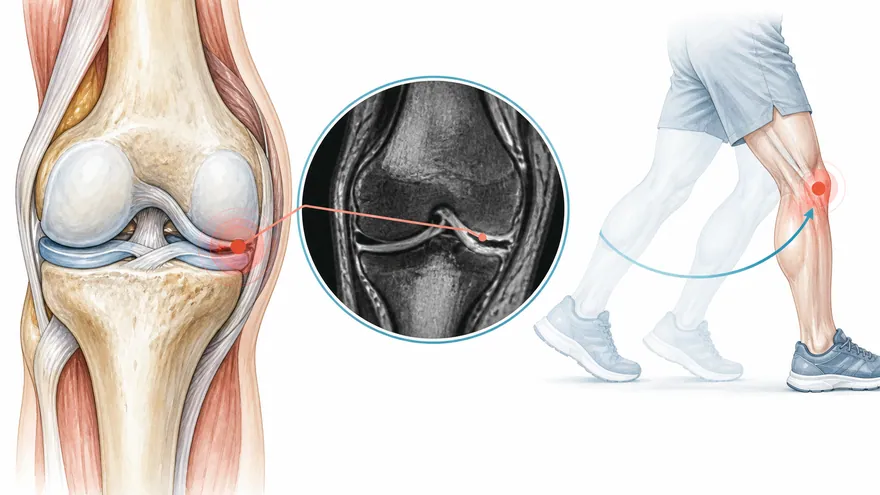
The MRI Finding Should Match the Symptoms
An abnormal MRI does not always explain the pain.
A knee scan, for example, may show cartilage wear even though the main pain is coming from a tendon. A spine MRI may show disc degeneration that does not match the side or location of the symptoms. Sometimes several abnormalities appear on the same scan, but only one is causing the current problem.
A useful question for the doctor is: “Which finding on my MRI do you think is causing my symptoms, and what makes you think so?”
“Your MRI is abnormal” is not enough. You want to know whether the abnormality actually fits the problem you are trying to treat.
More Damage Does Not Always Mean a Better Stem Cell Candidate
The amount of damage on a scan is only part of the picture.
With milder disease, rehabilitation, exercise, weight management or another established treatment may still be worth trying.
With advanced disease, severe joint destruction or deformity may make a surgical opinion more important.
With a mechanical problem, such as major ligament instability, severe misalignment, a large tendon tear or a locked joint, the structure itself may need to be corrected.
For knee problems, information focused on knee osteoarthritis and regenerative medicine is usually more useful than broad claims about stem cells in general.
An MRI Cannot Tell You What Your Final Result Will Be
An MRI can show anatomy. It cannot reliably predict exactly how you will feel after treatment.
It cannot tell you with certainty:
- How much your pain will improve
- Whether you will be able to walk farther
- Whether you will return to sport
- Whether cartilage will regrow
- How long any improvement will last
- Whether you will eventually need surgery
- Whether a proposed procedure is safe for you personally
A scan can look better without producing the improvement a patient actually wants. In everyday life, people usually care more about pain, walking, stairs, work and normal activity.
The ISSCR advises patients to look closely at the evidence, risks and realistic expected outcomes of stem-cell interventions rather than relying on promotional claims.[6]
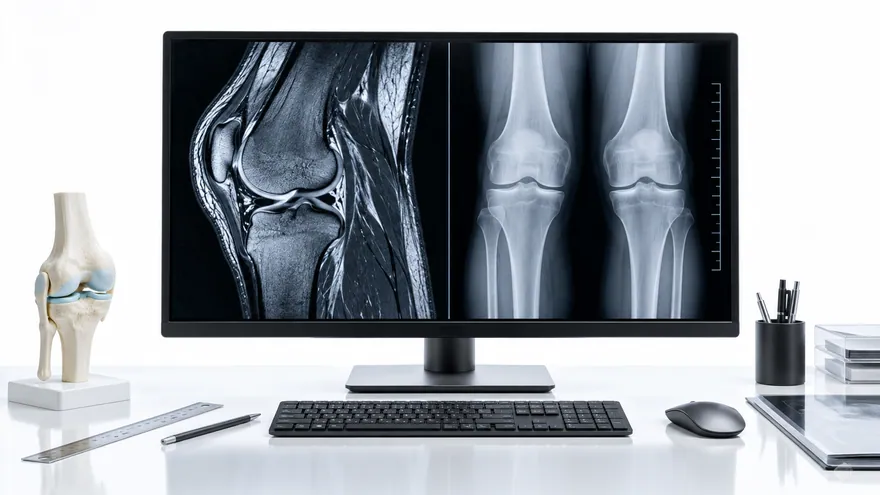
Knee Patients May Still Need X-Rays
If the problem is chronic knee pain, an MRI may not be the only useful image.
The American College of Radiology rates standard knee X-rays as the usual first imaging test for chronic knee pain. MRI becomes useful in selected situations after that first assessment.[7]
Standing X-rays can show things that may be harder to judge on a routine MRI performed while lying down, including:
- Joint-space narrowing under body weight
- Bow-legged alignment
- Knock-kneed alignment
- Bone changes from arthritis
So if a knee clinic requests both an MRI and standing X-rays, that does not necessarily mean one of the scans is unnecessary. They may be looking for different information.
Your MRI Does Not Automatically Expire After 6 or 12 Months
There is no universal rule saying that every MRI becomes unusable after six months or one year.
An older MRI may still be suitable for an initial review when:
- Your symptoms have stayed about the same
- You have had no new injury
- You have had no surgery since the scan
- The scan quality is good
- The correct body area was examined
A newer scan may make more sense when:
- Your symptoms have changed significantly
- You have had another injury
- You had surgery after the previous MRI
- The old scan is incomplete or poor quality
- The doctor needs different MRI sequences
- You have developed new neurological symptoms
If you already have an MRI, send the date to the clinic first. A practical question is: “Can you use my MRI from [month/year] for the first review, or do you need a new scan?”

What Should Come Out of the Pre-Travel Review?
You do not need a dramatic yes-or-no answer. You do need to know what the next sensible step is.
Sometimes the records are clear enough for the doctor to recommend an in-person consultation. In other cases, the clinic may want standing X-rays, a newer MRI, blood tests, surgery records or another specialist’s opinion first.
The doctor may also feel that another treatment should come before regenerative medicine. That might mean more rehabilitation, a surgical opinion or a neurological assessment.
And sometimes travel should simply wait because another health problem needs attention first.
The value of reviewing records before a medical trip is that you may discover these issues while you are still at home, rather than after you have crossed the world and paid for a hotel.

Ask for the Medical Opinion in Writing
A short written summary is useful after a pre-travel review. It should make clear what the doctor thinks is going on and what is still uncertain.
Useful points include:
- The likely diagnosis
- The important MRI findings
- Missing information
- Tests still needed
- The treatment being considered
- Other reasonable options
- Whether the plan is provisional or final
This is also useful if you want to show the opinion to your own doctor at home. It is much easier to discuss a written medical summary than a short message passed along by a coordinator.
When a Clinic Sends You a Research Paper
A published paper can be useful, but first check whether it really matches the treatment being offered to you.
Look at:
- Disease: Were the patients being treated for the same condition?
- Severity: Was their disease at a similar stage?
- Cells: Were the same type and source of cells used?
- Procedure: Were the cells given in the same way?
- Comparison: Was there a placebo, standard-care or other comparison group?
- Follow-up: How long were patients followed?
- Results: Did the study report pain, function and complications, or mainly changes on imaging?
A study using a different cell source or treating a different disease is not direct evidence for the procedure you are considering. The regenerative medicine evidence overview explains why results from one treatment cannot simply be carried over to another.
Check the Japanese Regulatory Status of the Exact Treatment
Japan’s Act on the Safety of Regenerative Medicine uses three risk classes: Class I, Class II and Class III.[8]
The amended framework currently in force took effect on May 31, 2025.[9]
If a treatment is being provided under this system, find out:
- The exact treatment name
- The risk class
- The medical institution
- The provision-plan details
- The reviewing committee
Japan’s Ministry of Health, Labour and Welfare operates a public database for regenerative medicine provision plans. It includes information such as the medical institution, treatment name, administrator and reviewing committee.[10]
When checking Japan regenerative medicine registration and compliance, search for the actual treatment being proposed, not just the clinic name.
Be Careful With the Word “Approved”
“Approved in Japan” can sound reassuring, but it is too vague on its own.
These statements have different meanings:
- “The clinic has a regenerative medicine provision plan.”
- “The treatment is registered in Japan.”
- “The product has Japanese marketing approval.”
The PMD Act separately regulates regenerative medical products, and PMDA publishes information about this product category.[11]
PMDA also publishes review reports for named regenerative medical products that have received marketing approval.[12]
If a clinic says something is approved, ask for the exact name. Then ask what condition it is approved for and whether that is the same product and use being offered to you.
If the treatment is described as clinical research, ask for the jRCT number and check it in Japan’s official clinical research database.[13]
Find Out Exactly What Cells Are Being Proposed
“Stem cell therapy” is too broad a label to tell you what you are actually receiving.
Ask the clinic to identify:
- The type of cells
- Where the cells come from
- Whether they are your own cells or donor cells
- Whether they are cultured or expanded
- Where they are processed
- How they are administered
- How many treatments are planned
- Why that schedule was chosen
Autologous cells come from your own body. Allogeneic cells come from another person.
Do not judge a treatment by the cell number alone. A bigger number is not automatically better. The more useful question is whether the cell type, dose, route and schedule have evidence for your condition.
Ask Where the Cells Are Processed
Japan’s official regenerative medicine plan form includes information about cell source, processing, quality management, processing facilities, administration and how the cells are judged suitable for use.[14]
If your cells will be processed or cultured, it is reasonable to ask:
- Where are the cells processed?
- How is my sample identified during processing?
- What contamination testing is performed?
- What quality checks are completed before treatment?
- What happens if the cells fail those checks?
- What happens to my payment if processing fails?
A Cell Processing Center in Japan can tell you something about how the cells are handled. It does not, by itself, tell you whether the treatment works.
Think About Risk in Separate Parts
Asking “Is stem cell therapy safe?” is too broad. The risks depend on what is being collected, processed and administered, as well as on your own health.
Collection risk: If tissue is taken from your body, the collection procedure may cause pain, bleeding, infection or other complications.
Processing risk: Cultured or processed cells raise questions about contamination control, identification and quality checks.
Administration risk: An injection or other delivery procedure can cause infection, bleeding, pain, swelling and other procedure-specific problems.
Personal risk: Diabetes, infection, blood thinners, immune problems and other medical conditions may change your individual risk.
A better question for the doctor is: “What complications have you seen with this exact procedure, and how often do they occur?”
The ISSCR says patients should receive understandable information about the treatment, risks, alternatives and responsibilities before agreeing to a stem-cell-based intervention.[15]
The risks discussed in stem cell therapy safety information for Japan make more sense when they are matched to the actual procedure rather than to the word “stem cells” alone.
Ask Whether Waiting Could Cause a Problem
There is another question people sometimes forget while planning an overseas treatment: what happens if you wait?
Ask your local specialist: “Could delaying treatment for several weeks or months make my condition harder to treat?”
That question is especially important if there is a chance you may need:
- Surgical repair
- Joint replacement
- Treatment for infection
- Treatment for serious nerve compression
- Further investigation of an unexplained abnormality
The cost of the wrong medical trip is not always just money. Sometimes the bigger problem is losing time while a condition that needs ordinary medical care is left untreated.
Some Symptoms Should Not Wait for an Overseas Review
With back or spinal symptoms, new bladder or bowel problems, numbness around the inner thighs or genital area, or rapidly worsening leg weakness can be warning signs of serious nerve compression. These symptoms need urgent medical assessment.[16]
A suddenly very painful, hot and swollen joint, especially with fever or feeling unwell, also needs prompt assessment because septic arthritis may require urgent treatment.[17]
In situations like these, local urgent care comes first. An elective overseas MRI review can wait.
Get a Full Cost Breakdown Before Booking
Ask for an itemized quote rather than one large headline price.
Find out whether the price includes:
- MRI or record review
- Doctor consultation
- Blood tests
- Additional imaging
- Cell collection
- Cell processing
- Storage, if needed
- Administration
- Medicines
- Follow-up
- Translation or interpretation
- Repeat visits
Then work out the travel costs separately: flights, hotel, local transport and time away from work can add up quickly.
Self-pay prices vary because clinics may be offering very different treatments. Cell source, processing, administration route and number of sessions can all change the total. The stem cell treatment cost breakdown for Japan is most useful when you compare those individual items rather than one advertised number.
Before paying a deposit, get a clear answer to one practical question: “If the doctor examines me in Japan and decides not to proceed, which fees are refundable and which are not?”
Keep that answer in writing.
Make Sure You Can Understand the Medical Discussion
Language matters when you are discussing risks, alternatives and consent.
Confirm:
- Whether you can speak directly with the doctor
- Whether an interpreter is available
- Whether the consent form is available in a language you understand
- Whether you can ask questions before signing
- Whether you will receive a copy of the signed consent form
A coordinator can be very helpful with appointments, translation and travel arrangements. The medical explanation, however, should come from a doctor who can discuss the benefits, risks and alternatives with you.
Pay Attention to How the Clinic Explains Its Decision
The wording of the reply can tell you quite a lot.
A very thin answer might be:
“Your MRI shows cartilage damage. You qualify for stem cell treatment. Please book your treatment date.”
A more useful medical answer would be something like:
“Your MRI shows cartilage loss mainly on the inner side of the knee. We still need standing X-rays to assess joint-space narrowing and alignment. Your records support an in-person orthopedic assessment, but we cannot finalize the treatment plan until those findings are reviewed.”
The difference is simple. The second answer tells you what the doctor sees, what is still missing and why another test is needed. It also makes clear that the final decision has not been made yet.
Questions Worth Answering Before You Book
- Which doctor reviewed my MRI?
- What does the doctor think is causing my symptoms?
- Do the MRI findings fit those symptoms?
- Is my current MRI good enough for the review?
- What additional tests are needed?
- What exact cells or product are being proposed?
- Where do the cells come from?
- How are they processed and administered?
- What human evidence supports this exact treatment?
- What result is the treatment intended to improve?
- What are the main risks and standard alternatives?
- What Japanese regulatory status applies to this treatment?
- What could cause the treatment plan to change after I arrive?
- What is the full cost, and which fees are non-refundable?
- Who handles follow-up after I return home?
You do not need every answer to be perfect before traveling. You should, however, understand what is known, what is still uncertain and what might change after the doctor examines you in person.
Arrange Follow-Up Before You Leave Japan
Follow-up is easier when the plan is agreed on before treatment rather than worked out after you get home.
Your instructions should cover:
- The date of the first follow-up
- Whether follow-up can be done remotely
- What symptoms are expected after treatment
- Which warning signs require urgent care
- Whether repeat imaging or blood tests are needed
- Who your local doctor can contact in Japan
Before flying home, ask for a treatment record that includes the final diagnosis, treatment date, procedure, cell type and source when relevant, administration route, medicines, important test results, follow-up plan and clinic contact details.
Finally
A useful pre-travel MRI review should give you more than a quick “yes, you qualify.” A physician should have enough information to explain what the scan shows, whether it fits your symptoms and what still needs to be checked.
Send the full DICOM study, the radiology report and a clear medical history. If your MRI is older, ask whether it can still be used before paying for another one. And before you commit to treatment, make sure you understand the exact cells being proposed, the Japanese regulatory status, the evidence, the risks, the total cost and the follow-up plan.
Medical disclaimer: This information is for general education and is not personal medical advice, diagnosis or a treatment recommendation. Treatment decisions require assessment by an appropriately qualified medical professional. Do not delay urgent or necessary care because of information on this page. The full medical disclaimer explains these limits.
Where treatment is provided
GINZA NOA CLINIC, Ginza, Tokyo
This article was written and medically reviewed at GINZA NOA CLINIC. The photographs below were taken inside the clinic in Chuo-ku, Tokyo.



Royal Crystal Ginza 3F, 5-4-6 Ginza, Chuo-ku, Tokyo 104-0061
3 min from Tokyo Metro Ginza Station (Exit B6); 5 min from JR Yurakucho Station
In-house CPC, facility number FC3250034
WhatsApp +81-8070161366 · LINE +81-8075357788
Medically reviewed by Ryosuke Tanabe, MD (Director, GINZA NOA CLINIC) with Kotaro Yoshimura, MD, PhD (Professor of Plastic Surgery, Jichi Medical University) as technical advisor. Last reviewed 30 September 2026. Every treatment carries risks — ask what they mean for your case at the consultation. Registration and credentials · How we review content