
“Stem cell therapy” can mean very different things. COPD studies have tested bone-marrow-derived mesenchymal stromal cells (MSCs), adipose-derived cells, donor cells, mixed cell products, and lung progenitor cells. The cell source, processing method, dose, and delivery route matter. A result from one protocol cannot simply be applied to another. The same issue comes up across regenerative medicine.
What Do Human COPD Studies Show?
A 2022 systematic review and meta-analysis looked at 11 studies involving 371 patients with COPD. The pooled change in FEV1 was +71.45 mL (95% CI -1.91 to +144.81 mL; p=0.056). That result did not reach statistical significance.[1]
Six-minute walk distance increased by 52.63 meters (95% CI 18.42–86.83 m). The problem is that the studies produced very different results, with heterogeneity of about I²=78%. They also used different cell types and study designs, and some compared patients with their own baseline while others used control groups. So a 52-meter gain should not be treated as the expected result for one patient.[1]
For hospitalization related to acute COPD exacerbations, the pooled relative risk was 0.77 (95% CI 0.40–1.49). The confidence interval was wide, and the reduction was not statistically significant.[1]
| Outcome | Reported Result | Interpretation |
|---|---|---|
| Patients analyzed | 371 across 11 studies | Human evidence is still limited |
| FEV1 | +71.45 mL | Not statistically significant |
| FEV1 95% CI | -1.91 to +144.81 mL | Includes almost no change |
| 6-minute walk distance | +52.63 m | Improved, but results varied widely |
| Hospitalization from exacerbations | RR 0.77 | No statistically confirmed reduction |
Compare any treatment claim with your own lung data.
For a COPD case review, prepare your latest spirometry, FEV1 % predicted, FEV1/FVC, DLCO if available, CT report, current inhalers, oxygen use, and recent exacerbation history. GINZA NOA CLINIC can organize these records and coordinate communication with licensed medical providers in Japan.
What Does “Improved Lung Function” Mean?
GOLD 2026 confirms persistent airflow obstruction when the post-bronchodilator FEV1/FVC ratio is below 0.70 in the right clinical setting.[4]
| GOLD Spirometric Grade | FEV1 |
|---|---|
| GOLD 1 | ≥80% predicted |
| GOLD 2 | 50–79% predicted |
| GOLD 3 | 30–49% predicted |
| GOLD 4 | <30% predicted |
FEV1 tells us about expiratory airflow. DLCO looks at gas transfer. Six-minute walk distance shows functional exercise capacity. Exacerbation frequency tells us how unstable the disease has been. These measurements are related, but they are not the same thing.
If a treatment claims to improve lung function, look for the starting value, the absolute change, the control-group result, and the length of follow-up.
Is a 71 mL Increase in FEV1 Clinically Meaningful?
About 100 mL in trough FEV1 has been suggested as a rough population-level threshold for a clinically noticeable treatment effect in COPD trials. There is no universally accepted minimum clinically important difference for FEV1.[5]
The pooled stem-cell estimate was +71.45 mL, and its confidence interval stretched down to almost no change. So current evidence does not establish a dependable FEV1 benefit from stem-cell treatment.[1]
What Did the 62-Patient Randomized Trial Find?
A double-blind multicenter trial enrolled 62 patients with moderate-to-severe COPD across six sites. Patients received donor-derived MSCs or placebo. The treatment group received 100 million cells per infusion, once a month for four months, with follow-up lasting up to two years. The trial was designed mainly to assess safety and exploratory efficacy, rather than to prove a specific efficacy endpoint.[2]
Overall, MSCs did not outperform placebo in FEV1, FVC, FEV1/FVC, DLCO, six-minute walk distance, dyspnea, quality-of-life measures, or COPD exacerbations.[2]
All 62 patients completed the four planned infusions. 46 of 62 patients, about 74%, completed the full two-year protocol. Serious adverse events occurred in both groups. Five fatal adverse events occurred: three in the MSC group and two in the placebo group. All five deaths were respiratory, and investigators did not judge any of them to be caused by MSC administration.[2]
What About COPD Patients With High CRP?
The randomized trial did not show overall efficacy. A later post-hoc analysis looked specifically at patients whose baseline C-reactive protein (CRP) was at least 4 mg/L. That subgroup included 12 MSC-treated patients and 17 placebo patients.[8]
At day 120, the high-CRP MSC group showed improvements in FEV1, FVC, and six-minute walk distance from baseline, with reported treatment differences versus placebo. The same overall pattern was not seen in patients with lower CRP.[8]
That sounds interesting, but the subgroup had only 29 patients and was analyzed after the original trial. It is a signal worth studying, not proof that CRP can identify which COPD patients will respond to MSC therapy.
Can Stem Cells Improve Walking Ability?
The pooled analysis found a 52.63-meter increase in six-minute walk distance. In another study of 75 patients with stable COPD, roughly 25 meters was estimated as a minimal important difference for the six-minute walk test.[6]
The pooled stem-cell result is larger than that reference value. Still, the studies varied a lot. Walking distance can change because of muscle conditioning, cardiovascular fitness, body weight, pulmonary rehabilitation, or breathlessness. A longer walk does not show that alveoli regenerated.
What About DLCO?
DLCO measures how well gases move from the lungs into the blood. Emphysema can reduce DLCO because it destroys alveolar walls and pulmonary capillary surface area.
A 2024 early-stage study used autologous P63-positive lung progenitor cells. This was not standard intravenous MSC therapy. Airway cells were collected by bronchoscopy, expanded for about 3–5 weeks, and then delivered back into the lungs at doses of roughly 0.7–5.2 million cells/kg.[7]
The study enrolled 28 patients with stage II–IV COPD. Only 20 were evaluable at the end: 17 treated patients and 3 controls. At 24 weeks, DLCO changed by about +18.2% from baseline in treated patients versus -17.4% in controls (p=0.008). Treated patients also improved six-minute walk distance by more than 30 meters.[7]
Three evaluable controls is a very small comparison group. The protocol also used lung progenitor cells delivered through bronchoscopy. Those results cannot simply be used to support an intravenous MSC product.
Can Stem Cells Rebuild Lungs Damaged by Emphysema?
No controlled human trial has shown reliable reconstruction of substantial amounts of lung tissue destroyed by emphysema.
Emphysema can destroy alveolar walls, reduce elastic recoil and gas-exchange area, collapse small airways, cause hyperinflation, and change the pulmonary blood vessels. A lower CRP, higher FEV1, better DLCO, or longer walking distance measures one part of lung or body function. None of those findings alone proves that destroyed alveoli grew back.
Why Do Stem Cell Studies Produce Different Results?
- Different patients: people with similar FEV1 values may still have very different disease patterns, including emphysema, chronic bronchitis, frequent exacerbations, or systemic inflammation.
- Different cells: bone-marrow MSCs, adipose-derived cells, donor cells, mixed cell products, and lung progenitor cells are different products.
- Different manufacturing: isolation, expansion, storage, viability, sterility testing, and release criteria all affect the final product. These are practical things to check when reviewing a cell processing center.
- Different delivery: intravenous infusion and bronchoscopic delivery are not the same procedure and do not carry the same risks.
- Different follow-up: a short-term change tells us very little about whether an effect lasts.
Does Stem Cell Therapy Reduce COPD Exacerbations?
Current pooled evidence does not show a significant reduction in hospitalization from acute COPD exacerbations. The 62-patient randomized trial also found no significant difference in exacerbation frequency between MSC and placebo groups.[1][2]
Is Stem Cell Therapy for COPD FDA-Approved?
No regenerative medicine therapy is FDA-approved for COPD or emphysema. The FDA specifically lists pulmonary diseases, including COPD and emphysema, among conditions for which regenerative medicine therapies have not been approved.[3]
A treatment being listed on ClinicalTrials.gov does not make it FDA-approved. The same goes for a treatment handled by an FDA-registered establishment.[3]
What Does “Available in Japan” Mean?
Japan uses separate regulatory routes for regenerative medicine. The Act on the Safety of Regenerative Medicine regulates the provision of regenerative medicine through risk-based Class I, II, and III pathways. The PMD Act governs marketing authorization of regenerative medical products.[9][10]
A regenerative medicine provision plan filed under the Safety Act is not the same thing as PMDA marketing approval for a COPD product. The site’s Japan regenerative medicine registration and compliance guide explains how the two routes differ and what public records to check.
PMDA approval applies to a specific product and a specific indication. One approved regenerative medical product does not prove that an unrelated MSC or cell infusion is approved or effective for COPD.[10]
Already have a COPD stem-cell proposal from Japan?
Send the treatment name, cell source, dose, administration route, number of sessions, regulatory description, and written quote. GINZA NOA CLINIC can organize the details, check public information, and coordinate questions for a licensed medical provider before you commit to travel or payment.
What Are the Safety Risks?
Safety findings from one clinical trial apply to the product and protocol that were actually tested. Change the tissue source, manufacturing process, dose, storage method, or administration route, and the risk profile may change too.
The FDA has warned that unapproved regenerative medicine products have been linked with serious infections, immune and inflammatory reactions, abnormal tissue growth, tumors, and contamination-related harm.[3]
Before comparing options, ask about the tissue source, whether the cells are donor-derived or autologous, the processing facility, sterility and release testing, dose, administration route, adverse-event plan, and follow-up. The Japan stem cell safety guide goes through these product- and procedure-specific checks.
What COPD Treatments Have Stronger Evidence?
Smoking cessation: The Lung Health Study followed 3,926 smokers with mild-to-moderate airway obstruction. People who successfully quit gained about 47 mL of FEV1 in the first year. After that, sustained quitters lost around 31 mL/year, compared with 62 mL/year among people who continued smoking.[11]
Pulmonary rehabilitation: The American Thoracic Society strongly recommends pulmonary rehabilitation for adults with stable COPD and for patients after hospitalization for a COPD exacerbation, based on moderate-quality evidence.[12]
Inhaled therapy: GOLD uses long-acting bronchodilators and, for selected patients, inhaled corticosteroid-containing regimens. Treatment is adjusted according to symptoms, previous exacerbations, blood eosinophils, and response to earlier therapy.[4]
Long-term oxygen: GOLD 2026 defines severe arterial hypoxemia as PaO2 ≤55 mmHg or SaO2 <88%, or PaO2 above 55 but below 60 mmHg when pulmonary hypertension, congestive heart failure, or erythrocytosis with hematocrit >55% is present. Oxygen is titrated to keep SaO2 at least 90%, with reassessment after 60–90 days.[4]
Some patients with advanced emphysema may also be assessed for bronchoscopic lung-volume reduction, surgery, noninvasive ventilation, or lung transplantation. Decisions depend on anatomy, hyperinflation, gas exchange, exercise capacity, exacerbations, and other medical conditions. FEV1 alone is not enough.[4]
How Should You Check a COPD Stem Cell Offer?
Ask for the full protocol in writing. At minimum, it should identify:
- exact cell type and tissue source;
- autologous or donor-derived status;
- processing and expansion method;
- cell viability, sterility, and release testing;
- dose per administration;
- number and interval of administrations;
- intravenous, bronchoscopic, or another delivery route;
- published COPD evidence using a comparable product and route;
- number of patients and whether the study had a control group;
- baseline and follow-up FEV1;
- DLCO and six-minute walk changes;
- exacerbation and hospitalization rates;
- serious adverse events;
- follow-up duration.
“Most patients improve” means very little on its own. You need the patient count, the definition of improvement, the comparison group, and the follow-up period.
A study is useful only when the disease stage, cell source, processing, dose, administration route, and outcome measures are reasonably close to the treatment being offered.
Clinical Trial and Commercial Treatment Are Not the Same
A clinical trial sets its protocol, eligibility criteria, outcome measures, adverse-event reporting, and follow-up before patients are enrolled.
A commercial program may quote research that used a different product or a completely different protocol. Look at the actual intervention instead of broad phrases such as “clinically studied” or “research-backed.”
For treatment in Japan, confirm the protocol, regulatory route, required testing, follow-up, and total cost before booking travel. The site’s stem cell treatment process explains the usual sequence from medical-record review to treatment planning and follow-up.
An itemized quote should cover screening, collection when required, cell processing and treatment costs, administration, repeat sessions, tests, follow-up, and any separate travel expenses.
What Medical Records Should a COPD Patient Prepare?
- recent specialist summary or confirmed COPD diagnosis;
- latest post-bronchodilator spirometry;
- FEV1 in liters and % predicted;
- FEV1/FVC ratio;
- DLCO if available;
- recent chest CT report and key image files;
- resting oxygen saturation;
- arterial blood gas results if available;
- current oxygen prescription;
- current inhalers and other medicines;
- smoking history;
- number of exacerbations during the previous 12 months;
- COPD-related hospital admissions;
- pulmonary rehabilitation history;
- major cardiovascular, kidney, liver, infection, or cancer history.
These records are best reviewed before treatment travel is booked. The medical travel guide for stem cell treatment in Japan covers records, treatment verification, costs, timing, and follow-up planning.
Start with the records that define your COPD.
Send your recent specialist summary, spirometry, CT report, medicine list, oxygen status, and any treatment proposal you have received. GINZA NOA CLINIC can organize the documents, spot missing information, and coordinate what is needed for physician review in Japan.
Finally
Stem cell therapy has not been proven to restore lung function in COPD. Human studies show possible signals in walking distance, selected physiological measures, and a small high-CRP subgroup, but randomized evidence has not shown a reliable overall FEV1 benefit. No regenerative medicine therapy is FDA-approved for COPD. Until larger controlled trials show durable clinical benefit, stem-cell treatment for COPD remains experimental.
This article provides general medical information. This page does not diagnose COPD, determine treatment eligibility or prescribe treatment. It is general information, not a consultation. GINZA NOA CLINIC treats patients in Ginza, Tokyo, and eligibility is decided by our physicians after reviewing your records and examining you.
Where treatment is provided
GINZA NOA CLINIC, Ginza, Tokyo
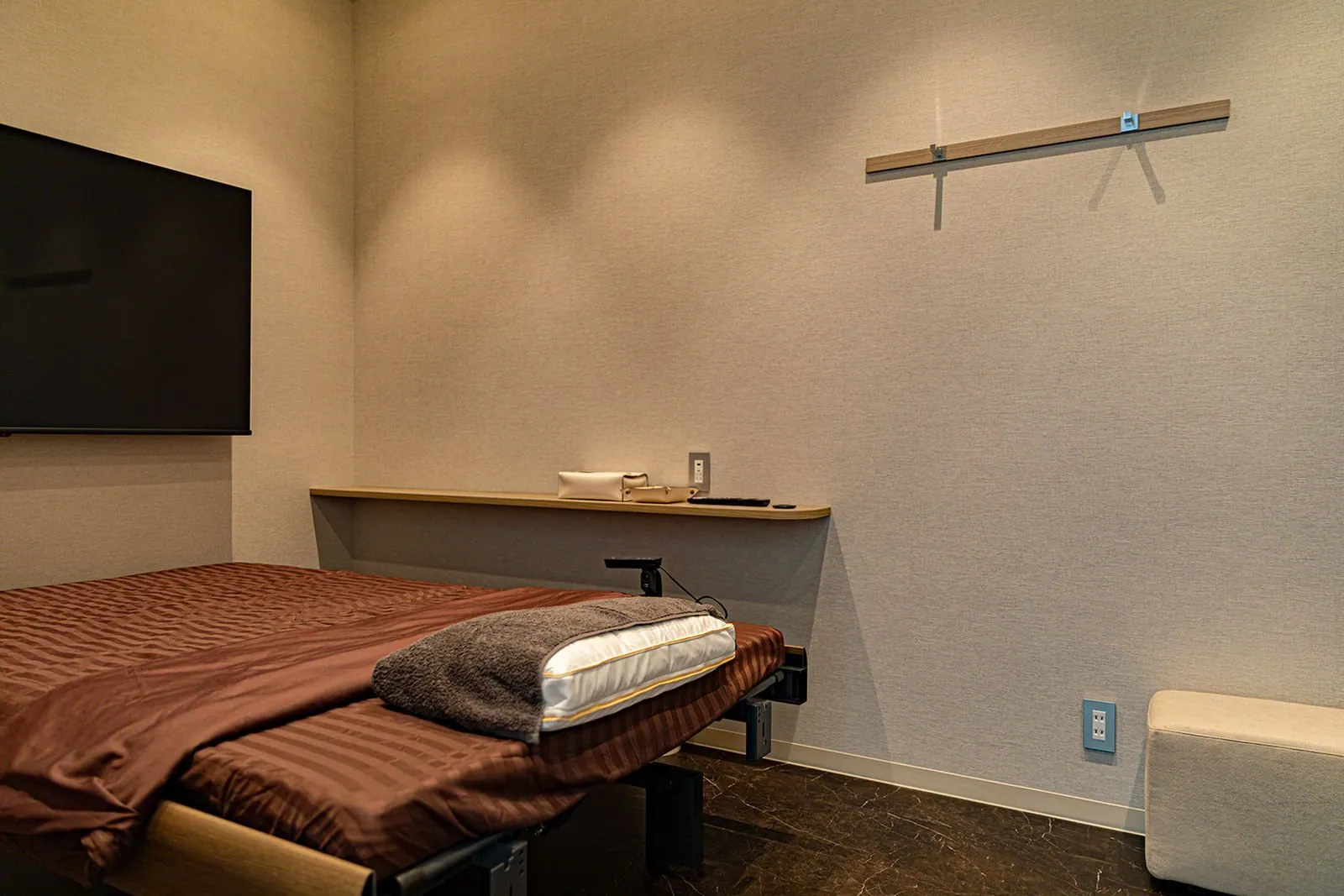
This article was written and medically reviewed at GINZA NOA CLINIC. The photographs below were taken inside the clinic in Chuo-ku, Tokyo.


Royal Crystal Ginza 3F, 5-4-6 Ginza, Chuo-ku, Tokyo 104-0061
3 min from Tokyo Metro Ginza Station (Exit B6); 5 min from JR Yurakucho Station
In-house CPC, facility number FC3250034
WhatsApp +81-8070161366 · LINE +81-8075357788
Medically reviewed by Ryosuke Tanabe, MD (Director, GINZA NOA CLINIC) with Kotaro Yoshimura, MD, PhD (Professor of Plastic Surgery, Jichi Medical University) as technical advisor. Last reviewed 30 September 2026. Every treatment carries risks — ask what they mean for your case at the consultation. Registration and credentials · How we review content