Yes, frozen stem cells can be used safely for specific medical indications, but they are not risk-free. The important questions are which cells you will receive, whether they remain suitable after thawing, what else is in the infusion, and whether the treatment is supported for your condition. In the United States, examples include CORDCYTE, a frozen cord-blood product for certain blood-forming stem-cell transplants, and Ryoncil, a frozen mesenchymal stromal-cell product for steroid-refractory acute graft-versus-host disease in children aged 2 months and older. Their approvals do not extend to other products or uses DrugInfo.cfm?setid=a2d89045 a178 4732 bc2d 0c27f934e538 DrugInfo.cfm?setid=a4e0918f 7444 4694 adeb d38d98345659.
What Freezing Changes
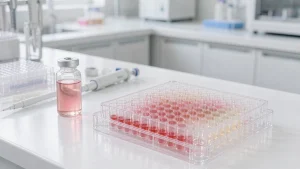
Frozen, or cryopreserved, describes storage—not a cell type or an approval status. Freezing and thawing can reduce cell survival and affect cell function. Dimethyl sulfoxide (DMSO), a commonly used cryoprotectant, helps protect cells during freezing but can contribute to reactions when the product is infused. The freezing method, formulation, storage conditions, and thawing procedure all matter PMC8474714.
The numbers on a label need context. Each CORDCYTE unit contains at least 500 million total nucleated cells, including at least 1.25 million viable CD34-positive cells, at cryopreservation. Its recommended minimum transplant dose is 25 million nucleated cells per kilogram at cryopreservation. These are product-specific measures—not a universal dose for stem-cell treatment, and not a measurement of your batch after thawing DrugInfo.cfm?setid=a2d89045 a178 4732 bc2d 0c27f934e538.
When Use Is Supported
An approved product must be considered within its own indication and instructions. CORDCYTE is used in unrelated-donor transplantation to restore blood-forming and immune function in specified disorders of the hematopoietic system. Ryoncil contains donor bone-marrow-derived mesenchymal stromal cells, which are different from the blood-forming cells in cord blood. Its pediatric graft-versus-host disease indication does not establish benefits for arthritis, diabetes, or anti-aging DrugInfo.cfm?setid=a2d89045 a178 4732 bc2d 0c27f934e538 DrugInfo.cfm?setid=a4e0918f 7444 4694 adeb d38d98345659.
For an experimental intervention, ask what remains uncertain, what oversight applies, and how adverse events will be managed. Ethics review and trial registration do not turn an investigational treatment into an established one. A private clinic’s service description is not a substitute for product- and disease-specific clinical evidence.
In Japan, a provision plan under the Act on the Safety of Regenerative Medicine involves a statutory submission process and prior opinions from a certified committee. This is separate from marketing authorization for a regenerative medical product under the PMD Act. A filing is not evidence that a treatment works and should not be described as product approval En 0003.
Freezing to Infusion
| Step | What to check |
|---|---|
| Freezing | The validated method and cryoprotectant formulation for that product. CORDCYTE contains 10% DMSO and 1% Dextran 40 at cryopreservation; this is not a recipe for every cell product DrugInfo.cfm?setid=a2d89045 a178 4732 bc2d 0c27f934e538. |
| Storage | The product’s temperature requirements and storage records. CORDCYTE specifies storage at or below −150°C; Ryoncil specifies at or below −135°C in liquid-nitrogen vapor. Do not substitute a generic freezer temperature DrugInfo.cfm?setid=a2d89045 a178 4732 bc2d 0c27f934e538 DrugInfo.cfm?setid=a4e0918f 7444 4694 adeb d38d98345659. |
| Thawing | The exact preparation method and expiry time. CORDCYTE allows up to 2 hours after washing to remove DMSO, at 19–25°C or 4°C. Its label provides no stability data without DMSO removal. Ryoncil has different instructions, including preparation with Plasma-Lyte A DrugInfo.cfm?setid=a2d89045 a178 4732 bc2d 0c27f934e538 DrugInfo.cfm?setid=a4e0918f 7444 4694 adeb d38d98345659. |
| Release and identity | The product and patient identifiers, donor screening, relevant microbial testing, and the team’s criteria for using or rejecting the prepared product. Ask which cell counts were measured before freezing and which results apply after thawing DrugInfo.cfm?setid=a2d89045 a178 4732 bc2d 0c27f934e538 DrugInfo.cfm?setid=a4e0918f 7444 4694 adeb d38d98345659. |
Main Safety Risks
Infusion Reactions
A 2017 single-center observational study recorded adverse events in 480 of 1,269 infusions (37.8%) among 1,191 adults undergoing autologous transplantation. These were cryopreserved blood-forming cells collected by apheresis, not cord-blood units or outpatient stromal-cell injections. The analysis covered first-day transplant infusions given between 2009 and 2014. Common events included flushing, nausea or vomiting, hypoxia requiring oxygen, and chest tightness 28301051.
Larger infusion volume per kilogram was associated with more events, and the authors attributed many toxicities to DMSO. The study does not provide a universal risk rate, prove that DMSO caused every event, or compare frozen with fresh cells 28301051.
CORDCYTE’s label recommends limiting intravenous DMSO to no more than 1 gram per kilogram per day. This is not a guarantee of safety below that amount: serious reactions can still occur, and the label requires monitoring and ready access to emergency medication DrugInfo.cfm?setid=a2d89045 a178 4732 bc2d 0c27f934e538.
Ryoncil’s label also warns of serious hypersensitivity, including anaphylaxis, related to DMSO and trace porcine or bovine proteins. It requires premedication and close monitoring. Known hypersensitivity to these components is a contraindication DrugInfo.cfm?setid=a4e0918f 7444 4694 adeb d38d98345659.
Cell Survival and Function
A high viability percentage tells you how many cells meet the test’s definition of living cells. It does not, by itself, establish that a treatment will work for your disease. Cryopreservation studies assess different cell sources, protocols, and laboratory functions, so their results cannot be treated as interchangeable clinical outcomes PMC8474714.
A 2024 meta-analysis of seven studies of autologous peripheral-blood stem-cell transplantation for hematologic malignancies found greater post-thaw CD34-positive cell viability and fewer adverse effects with 5% versus 10% DMSO, with minimal impact on initial engraftment. However, outcome reporting varied substantially, and all included studies had potential bias. This is not a reason to change another product’s approved preparation method 38416086.
Contamination and Traceability
Freezing does not replace infection screening or controlled processing. A 1991 study found positive bacterial cultures in 17 of 134 cryopreserved autologous marrow products; one recipient developed sepsis with the same organism. This is historical evidence, not a current contamination rate. Its fresh-marrow comparison group received allogeneic rather than autologous marrow, so it was not a like-for-like test of freezing alone 1853447.
For a proposed treatment in Japan, ask for the cell-processing center’s records, batch identification, and release documentation. Testing reduces risk but does not eliminate it: Ryoncil’s label explicitly warns that infectious agents may still be transmitted despite donor screening and product testing DrugInfo.cfm?setid=a4e0918f 7444 4694 adeb d38d98345659.
Risks Beyond Freezing
Blood-forming stem-cell transplantation carries risks such as graft failure and graft-versus-host disease, which are not simply freeze-thaw complications. Ryoncil has a different risk profile, including a warning about ectopic tissue formation—tissue developing where it does not belong. Neither a good post-thaw count nor an approved indication removes the need for an individual benefit–risk assessment DrugInfo.cfm?setid=a2d89045 a178 4732 bc2d 0c27f934e538 DrugInfo.cfm?setid=a4e0918f 7444 4694 adeb d38d98345659.
Fresh Versus Frozen
There is no single answer to whether fresh or frozen cells are safer. Approval of a frozen product does not prove equivalence to a fresh one. Laboratory differences in survival or function also do not establish which treatment produces better patient outcomes. A useful comparison must match the disease, cell source, manufacturing method, dose, and administration route, and report clinical outcomes and harms PMC8474714.
| Aspect | Frozen cells | Fresh cells |
|---|---|---|
| Processing | Require a validated freeze-thaw process and checks on recovered cells PMC8474714. | Avoid freeze-thaw injury, but still require appropriate handling and quality controls. |
| Ingredients | May contain residual cryoprotectant. CORDCYTE and Ryoncil contain DMSO before preparation DrugInfo.cfm?setid=a2d89045 a178 4732 bc2d 0c27f934e538 DrugInfo.cfm?setid=a4e0918f 7444 4694 adeb d38d98345659. | Do not require a freezing cryoprotectant; other ingredients depend on the product. |
| Clinical evidence | Must support the exact product and intended use. | The same evidence standard applies; “fresh” is not proof of safety. |
Reading the Documents
A practical example comes directly from CORDCYTE’s label: “total nucleated cells” and “viable CD34+ cells” are separate measures, and both listed minimum counts refer to cryopreservation. When reviewing an offer, ask: “Does this number describe all cells before freezing, or the viable cells available after preparation?” Request the batch-specific answer, not just a copy of a generic label DrugInfo.cfm?setid=a2d89045 a178 4732 bc2d 0c27f934e538.
| Document or question | What to look for |
|---|---|
| Product identity | A named cell type, donor source, manufacturer or processing facility, and batch identifier. |
| Dose and testing | Units, measurement time, viability result, and the treating team’s release criteria. |
| Clinical evidence | Studies of the same condition and product, including participant numbers, comparison group, route, outcomes, follow-up, and adverse events. |
| Preparation and monitoring | A written thaw-to-infusion time limit, DMSO exposure where applicable, observation plan, and emergency response arrangements. |
Who Needs Extra Caution
Tell the treating team about previous infusion reactions and allergies to DMSO, dextran, or animal-derived proteins. Ask them to check the exact product’s contraindications. Heart or kidney disease and difficulty tolerating fluid loads also warrant discussion before infusion; CORDCYTE’s label specifically addresses fluid tolerance and renal monitoring DrugInfo.cfm?setid=a2d89045 a178 4732 bc2d 0c27f934e538 DrugInfo.cfm?setid=a4e0918f 7444 4694 adeb d38d98345659.
If a clinic offers cells for joint pain, diabetes, or cosmetic use, ask for evidence for that exact intervention rather than relying on the transplant examples above. During treatment planning and consent, request a clear explanation of whether the proposal is an approved product use, a clinical study, or a private clinical service, and what legal route applies. A registry entry alone does not demonstrate benefit.
Before You Agree
- Get the product name, cell source, intended use, and regulatory status in writing.
- Ask which results describe cells before freezing and which describe the prepared infusion.
- Confirm the cryoprotectant, final infusion volume, and DMSO exposure if applicable.
- Ask what happens if testing, identity checks, or the preparation time limit are not met.
- Request the relevant adverse-reaction information and an explanation of how it applies to you.
- Confirm monitoring, emergency treatment, follow-up, and an after-hours contact.
- Discuss alternatives with your own physician, including standard care or no intervention.
- Take time to review the documents; do not consent because you feel pressured.
During or after an infusion, report fever, breathing difficulty, dizziness, or other new symptoms promptly. Seek emergency help for severe breathing difficulty, throat swelling, chest pain, or collapse rather than waiting for an online reply DrugInfo.cfm?setid=a2d89045 a178 4732 bc2d 0c27f934e538 DrugInfo.cfm?setid=a4e0918f 7444 4694 adeb d38d98345659.
Bottom Line
Frozen stem cells are not automatically unsafe, and fresh cells are not automatically safer. The decision depends on the exact product, its evidence, preparation, and your medical risks. CORDCYTE’s 10% DMSO formulation and conditional 2-hour post-wash window illustrate why instructions cannot be transferred from one product to another. Ask for documented answers before deciding whether a proposed treatment is appropriate for you DrugInfo.cfm?setid=a2d89045 a178 4732 bc2d 0c27f934e538.
This article is educational, not personal medical advice. Discuss treatment choices and individual risks with your own physician and the treating transplant or cell-therapy team.
Need help arranging an appointment or organizing questions? Contact the patient support team. Suitability and risk assessment require a clinician.
References
DrugInfo.cfm?setid=a2d89045 a178 4732 bc2d 0c27f934e538 CORDCYTE prescribing information. NIH/NLM DailyMed; LifeSouth Community Blood Centers. Sections 1–5, 10, 16, and preparation instructions. United States. Accessed October 31, 2026.
DrugInfo.cfm?setid=a4e0918f 7444 4694 adeb d38d98345659 RYONCIL prescribing information, revised September 2025. NIH/NLM DailyMed. Sections 1–5, 11, and 16. United States; pediatric steroid-refractory acute graft-versus-host disease. Accessed October 31, 2026.
PMC8474714 Effects of storage media, supplements and cryopreservation methods on quality of stem cells. Review, 2021. NIH/NLM PubMed Central; laboratory and transplantation literature, not a universal clinical safety estimate. Accessed October 31, 2026.
En Act on the Safety of Regenerative Medicine, Article 4. Ministry of Justice Japanese Law Translation Database. Japan; provision-plan submission and certified-committee opinions. Accessed October 31, 2026.
0003 Pharmaceuticals and Medical Devices Agency. Regenerative Medical Products, Regulatory Framework. Japan; distinction between the ASRM and PMD Act routes. Accessed October 31, 2026.
28301051 Otrock et al. Adverse events of cryopreserved hematopoietic stem cell infusions in adults: a single-center observational study. Transfusion, 2017. United States; adult autologous transplantation. Accessed October 31, 2026.
38416086 Bennett et al. Impact of lower concentrations of dimethyl sulfoxide on cryopreservation of autologous hematopoietic stem cells: a systematic review and meta-analysis of controlled clinical studies. Cytotherapy, 2024;26:482–489. Autologous peripheral-blood transplantation for hematologic malignancies. Accessed October 31, 2026.
1853447 Stroncek et al. Adverse reactions in patients transfused with cryopreserved marrow. Transfusion, 1991. Historical comparison of cryopreserved autologous and fresh allogeneic marrow. Accessed October 31, 2026.