
Short answer: Before treatment, record the vital signs your team measures, requested laboratory results, condition-specific pain and function, and symptoms affecting sleep or daily activity. Give each result a date, unit or scale, and measurement conditions. Keep these alongside your diagnosis and affected site, medicines and allergies, relevant imaging, and a written follow-up plan. The exact tests depend on your condition and proposed treatment; the checklist below is not a universal test panel.
This article is general information, not personal medical advice. Do not change medicines, order tests, or travel for treatment based on this page alone. Discuss your case with your own doctor.
What a baseline is
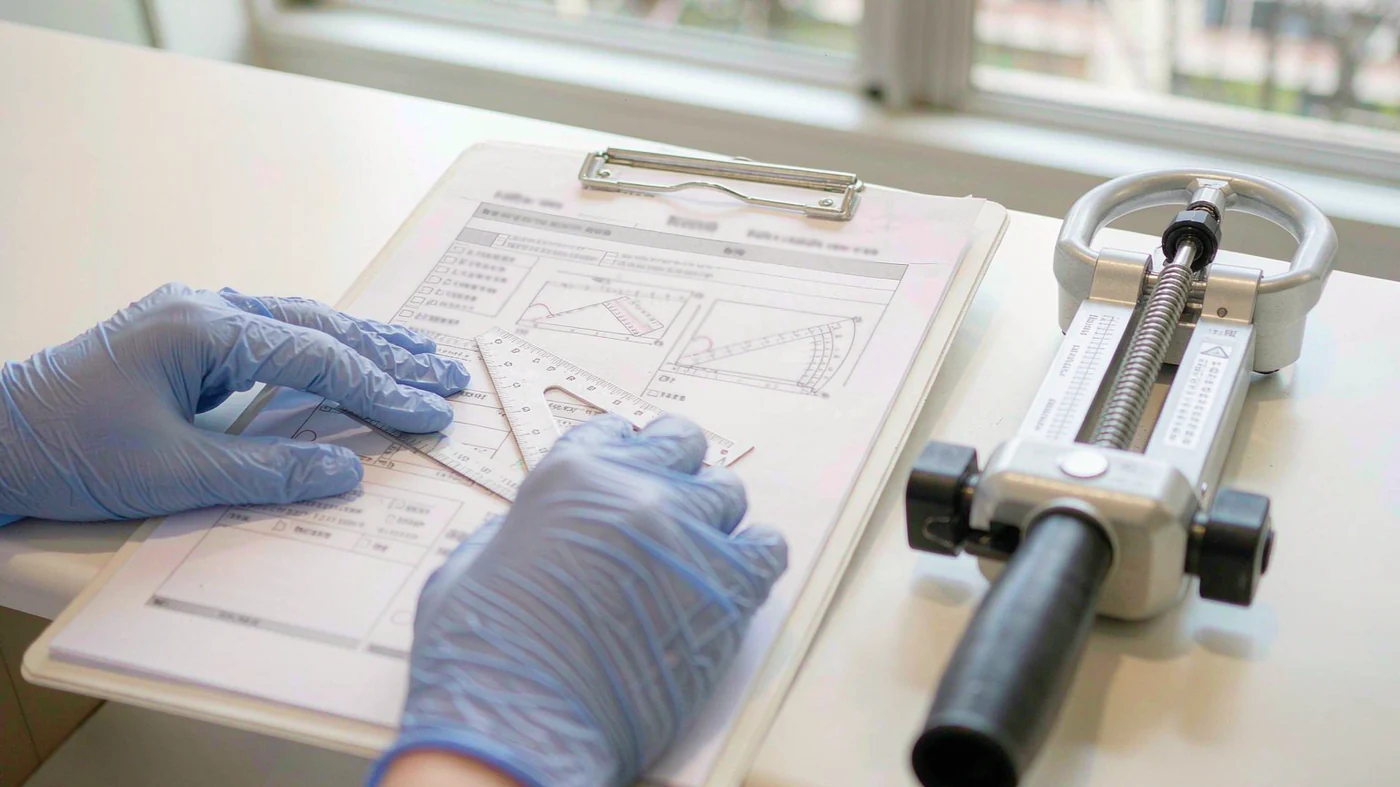
A baseline is a measurement recorded before treatment, used as a starting point for later comparison. Medical history and a follow-up plan provide context but are not measurements themselves.
A diagnosis report names your condition. A baseline shows how you are doing right now, in numbers you can check: how far you walk, how you rate pain during one set activity, what your blood pressure was on that day, what a blood count was on that date in that lab.
For example, teams providing blood-forming stem cell transplants for cancer check blood counts repeatedly during recovery [1]. This example does not establish a testing panel for private-clinic cell injections or infusions.
Why baselines matter
Safety
Baseline records help clinicians interpret later symptoms and test results. Missing records must not delay medical assessment of a new or worsening symptom. Ask the team which changes need an urgent call and how to reach help outside clinic hours.
Fair comparison
Compare the same activity under similar conditions. Less pain after a new painkiller or a quieter day is not enough to attribute improvement to treatment. Record medicine changes and activity levels alongside the result; a before-and-after record cannot by itself separate treatment effects from other causes.
Records alone do not prove a treatment works. A Japanese clinic filing or a trial registration is not, by itself, evidence of clinical benefit. In the United States, the FDA warns about unapproved regenerative medicine products and reports of blindness, tumor formation, and infections [2]. FDA requirements apply to the United States, not Japanese clinic authorization. Ask for the evidence and regulatory status of the specific product and procedure where you will be treated.
Baseline measurements and supporting records
These 8 groups organize measurements and the records needed to interpret them. Let the treating team confirm what fits your case and procedure.
| Group | What to record | Why it helps later |
|---|---|---|
| Identity and diagnosis context | Full name, date of birth, date of assessment, diagnosis and stage, affected side or site, main goal in your own words | Avoids mix-ups and shows which joint, eye, or site later results belong to |
| Medical history and medicines | Current prescription and nonprescription medicines, supplements, allergies with reactions, past procedures, major conditions, infections, bleeding history | Helps the team judge safety and make sense of later symptoms or lab changes |
| Vital signs and general status | Blood pressure, heart rate, temperature, breathing rate, oxygen saturation where measured, weight, pregnancy status where relevant | Gives a safety reference if fever, chest symptoms, or other reactions show up |
| Laboratory baselines | Only the tests your treating team requests, each with date, laboratory, method, and unit | Lets you compare the same test in the same laboratory when you can |
| Condition-specific function | For a joint: pain during a set activity, walking distance or time, stairs, range of motion, swelling; for other conditions: the function the team plans to track | Shows whether daily life itself changed |
| Symptoms and daily life | Pain score tied to an activity, sleep interruption, work limits, use of walking aids or pain medicines | Keeps you from comparing a day with medicine to a day without it and missing the difference |
| Imaging baseline | The most relevant recent study plus its written report, with acquisition date and body part | Lets the doctor compare the same structure over time instead of guessing from memory |
| Follow-up plan | Which measures repeat, when, by whom, and what counts as a safety signal | Makes clear who to call and what to do if a new symptom appears |
This table is a preparation guide, not a test order and not a statement of Japanese legal requirements.
Diagnosis and affected site
Write the exact diagnosis instead of a vague label. “Right knee osteoarthritis” identifies the site more clearly than “joint pain.” Add when it started, which side or spinal level it affects, and what you already tried. Record the dates and duration of any benefit in your own case, without treating that history as a prediction of future benefit.
If more than one spot hurts, track each one on its own. A better right knee says nothing about the left knee. And a later scan of the left side cannot be compared with a right-side baseline.
Ask what finding would change the plan or why a proposed baseline is needed for your case.
Medicines and supplements
Bring a full list of everything you take, even things you only use sometimes. Include dose, how often you take it, and the last dose if you stopped. Add why you take each one. For allergies, write the reaction too. The product name alone is not enough.
Include supplements explicitly. In the United States, 60.2% of adults age 20 and older used a dietary supplement in the past 30 days, and 38.7% used two or more, in NHANES data collected during August 2021–August 2023 [3]. These figures describe the general population, not stem-cell patients or the safety of supplements. Send product names, ingredient-panel photos, doses, frequency, and recent changes before assessment, and ask whether any item needs special instructions.
Do not stop or change a prescription on your own to “prepare” a baseline. A baseline taken after you changed medicines yourself does not show your usual state, and it can mislead later comparison. Ask the prescribing clinician and the treatment team for written instructions.
A general outline of the stem cell treatment process in Japan shows where record review, assessment, and follow-up fit.
Vital signs on the day
Core vital signs include blood pressure, heart rate, breathing rate, and temperature [4]. Record what your team measures, using the report’s units: mmHg for blood pressure, beats per minute for pulse, breaths per minute for breathing, and °C or °F for temperature.
Add the setting: arm and position for blood pressure, whether pulse was measured at rest, and how temperature was taken. If oxygen saturation is measured, record the percentage and whether supplemental oxygen was used. For weight, keep the unit and use the same scale when possible. A format-only example is “2026-10-02, 09:10, right arm, sitting, 128/78 mmHg”; it is not a target or an interpretation of your blood pressure.
Tell the team about pregnancy status where relevant and about new illness, surgery, infection, vaccination, or medicine changes since you last sent records.
Laboratory test details
Only track the lab tests the treating team asks for. Do not order a wide panel yourself just to fill a checklist.
For each result, keep these details:
- what was tested and the result with its unit
- the collection date, not the translation or upload date
- the laboratory and method, when the report shows them
- the reason the team asked for it, if they gave one
Use the collection date to tell how recent a result is. When possible, use the same laboratory and method for follow-up, and keep the units and reference ranges. Matching units alone does not ensure that two methods are comparable; ask the team to interpret differences. “Hemoglobin 138 g/L, collected 2026-10-02, Lab X” is a format-only example, not a target value for you.
Blood counts are one repeat check your team may request in some settings. Transplant follow-up, for example, tracks new blood cells with repeated counts [1]. Ask which lab values, if any, your team will repeat and when.
Pain, movement, and daily tasks
Tie each rating to one clear situation with 3 data points: a 0–10 pain score, the exact activity, and what aid or medicine you used. So instead of “pain 6 out of 10,” write “right knee pain 6 out of 10 when walking on flat ground for about 10 minutes, without a cane, yesterday evening.” Note what pain medicine you took that day and when. A score with medicine cannot be fairly matched to a score without it unless you write both down.
The right function test follows your main problem:
- For knee or hip problems: walking time or distance before you stop, stairs, getting up from a chair, range of motion if measured, swelling, use of a brace or cane
- For back or neck problems: how long you can sit or stand, sleep interruption, and the location and timing of existing numbness
- For neurological conditions: the exact scale or task your neurologist uses
- For breathing or fatigue complaints: what activity brings symptoms on and how long recovery takes
A diary is not a substitute for urgent care. Difficulty breathing, sudden severe pain, or sudden weakness can be emergency warning signs; seek immediate medical help through the local emergency service rather than waiting for a scheduled comparison [5].
Ask if the clinic uses a named questionnaire or scale, which version, and who will run it the same way next time. If the scale changes, ask how the new results will be compared with the baseline.
Symptoms and sleep
Record how symptoms affect sleep, work, and daily tasks: the number of pain-related awakenings, how far you can carry shopping, or how long you can sit at a desk. Use the same observation period at follow-up, such as awakenings per night or sitting time in minutes.
Also write what you hope to do again. A plain goal like “walk to the station without stopping” gives the next visit something clear to check. It does not promise treatment will get you there.
Imaging and other studies
Keep the most relevant recent study and its written report, plus older ones that show change over time. For each study note 3 data points: acquisition date, body part and side, and imaging method. The original image files count when the doctor must compare structures instead of only reading the written conclusion.
Do not assume you need a new scan only because time passed. Tell the doctor about changes in symptoms, injury, surgery, or treatment, and ask whether existing imaging answers the current clinical question. The doctor should decide whether another study is needed and what finding could change the plan.
Recording for fair comparison
A solid baseline entry answers 7 questions:
- What was measured and on which side or site?
- When was it measured, including time of day where it matters?
- How was it measured, including device, scale version, and who measured it?
- In what unit and under what conditions, such as with or without pain medicine or a walking aid?
- What was the exact result, including the report or image file name?
- Where is the original kept, and who else has a copy?
- When and how will it be repeated?
Photos of medicine labels and ingredient panels help, yet photos cannot prove what is inside a product or that it is safe. Keep the original reports. A typed summary on its own is easy to get wrong. Store copies where you can find them at follow-up, and confirm how the clinic stores, shares, and protects your health data.
A worked example of a baseline record
This is an illustrative recording exercise, not a patient case or a treatment result. For a knee-pain diary, you could write: “2 October 2026, 18:00; right knee; pain 6/10 after 10 minutes of walking on flat ground; no cane; medicine name, dose, and last-dose time recorded separately.” At follow-up, use the same pain scale and record whether the activity, aid, or medicine changed. Do not repeat an activity that is unsafe or beyond your clinician’s advice just to match the example.
If a report was translated in March but the sample was collected in January, enter January as the collection date and retain both versions. If a unit or date is missing, mark it as unknown and ask the issuing laboratory or clinic; do not guess. These examples show a recording method, not firsthand clinical experience.
When to re-baseline
Ask the team whether to update a baseline if:
- the team considers the last entry outdated for your case
- you had surgery, injury, infection, a hospital stay, or a big medicine change
- pain, movement, or daily function clearly changed since the last entry
- the team changed the method, scale, laboratory, or imaging view
- the first baseline was taken under different conditions, such as with different pain control
Ask the clinic what age window each required test must fall in, and whether that window counts from the consultation, collection, or procedure date. Send changes soon instead of waiting until procedure day.
What to ask first
Bring these questions to pin down which measurements your case needs, and get the answers in writing:
- Which baseline measurements do you require for my condition and proposed route, and why does each one matter?
- Which questionnaire or scale will you use, and will the same version be used at follow-up?
- Which laboratory and imaging studies need updating, and what are the acceptable dates?
- How will you store my baseline, who can access it, and how long will you keep it?
- What is the follow-up schedule, which measures repeat when, and which symptoms should I report right away?
- Is the proposal standard care, a clinical trial, or a private clinic service, and what is its regulatory status where I will be treated?
- What are the known and uncertain risks for someone with my history, and what is the after-hours plan?
If the clinic cannot name the scale version, the acceptable test dates, or the after-hours contact in writing (see the 7 questions above), treat that as a gap before you agree to anything.
The bottom line
Record actual measurements with dates, units or scales, and conditions; keep diagnosis, medicines, imaging, and follow-up instructions alongside them. Agree with your team which results will be repeated and when. A baseline supports comparison, not a guarantee of benefit, and filing or registration alone is not proof that a treatment works.
If you are preparing baseline records for care in Japan, confirm the required list with the treating team before you travel.
References
- National Cancer Institute, “Stem Cell Transplants in Cancer Treatment.” Blood-forming stem cell transplantation for cancer and blood-count monitoring during recovery. https://www.cancer.gov/about-cancer/treatment/types/stem-cell-transplant (checked 2026-11-13)
- U.S. Food and Drug Administration, “Important Patient and Consumer Information About Regenerative Medicine Therapies.” U.S. regulatory and safety information about unapproved regenerative products. https://www.fda.gov/vaccines-blood-biologics/consumers-biologics/important-patient-and-consumer-information-about-regenerative-medicine-therapies (checked 2026-11-13; page states content current as of 04/08/2024)
- U.S. Centers for Disease Control and Prevention, National Center for Health Statistics, “Dietary Supplement Use: United States, August 2021–August 2023,” NCHS Data Brief No. 561 — 60.2% of adults age 20 and older used any dietary supplement in the past 30 days; 38.7% used two or more; NHANES data. https://www.cdc.gov/nchs/products/databriefs/db561.htm (checked 2026-11-13)
- U.S. National Library of Medicine, MedlinePlus Medical Encyclopedia, “Vital signs” — vital signs reflect heartbeat rate, breathing rate, temperature, and blood pressure; page lists standard units (mmHg, breaths per minute, beats per minute, °C/°F). https://medlineplus.gov/ency/article/002341.htm (checked 2026-11-13)
- U.S. National Library of Medicine, MedlinePlus Medical Encyclopedia, “Recognizing medical emergencies.” Emergency warning signs and seeking immediate help. https://medlineplus.gov/ency/article/001927.htm (checked 2026-11-13)




