
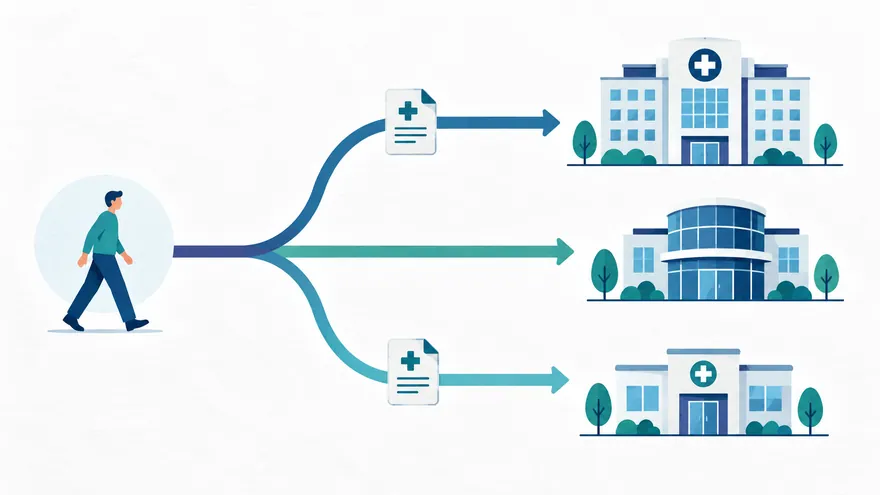
Not necessarily. Japan does not have one referral rule for every hospital or regenerative medicine program. The requirement depends on where you plan to go and, in some cases, which department will see you.
Keio University Hospital, for example, normally requires a referral for a new-patient appointment. The University of Tokyo Hospital has its own process for patients who live outside Japan. Overseas patients are asked to work through a medical coordinator or facilitator and provide a referral along with up-to-date medical information.[1][2]
Private regenerative medicine clinics can be easier to contact directly. That does not mean you can simply walk in and receive treatment. A clinic may ask for medical records first so a doctor can review your diagnosis, medicines, previous treatment, and any health issues that could affect the procedure.
Hematopoietic stem cell transplantation is a separate matter. If you have leukemia, lymphoma, multiple myeloma, or another serious blood disorder, care is normally handled through a hematology or transplant center. These cases usually involve specialist records and a formal transplant assessment.[3]

Where a Referral Is More Likely to Be Required
| Type of Care | Typical Situation |
|---|---|
| University hospital | A referral is commonly required for a standard new-patient appointment. |
| Large specialist hospital | Requirements can vary by department and diagnosis. |
| International patient service | The hospital may ask for a referral, medical records, and help from an approved coordinator. |
| Hematology or transplant center | Specialist records and a formal medical assessment are usually part of the intake process. |
| Private regenerative medicine clinic | You may be able to contact the clinic yourself, although medical screening is still common. |
| Clinical research | Participation depends on the study’s eligibility rules. |
Do not check only the hospital name. Look at the department you actually want to visit. Orthopedics may have a different intake process from neurology, hematology, cardiology, oncology, or a second-opinion service.
What Happens If You Do Not Have a Referral?
The answer depends on the provider. A hospital may refuse to make a standard new-patient appointment, offer another intake route, charge an extra fee, or direct you to another medical facility. A private clinic may simply ask you to send your records for review.
Keio says that a referral is required for its initial consultation process. Its current guidance also explains that someone who arrives without one may still be seen that day, may be asked to book another appointment, or may be advised to visit another healthcare center instead.[4]
Private clinics tend to be more flexible at the first-contact stage, but they still need enough information to decide whether a consultation or treatment makes sense. This usually means your diagnosis, current medicines, previous treatment, infection risks, and other medical conditions. The stem cell therapy indications and contraindications guide looks at these screening issues in more detail.
What Should Be in the Referral Letter?
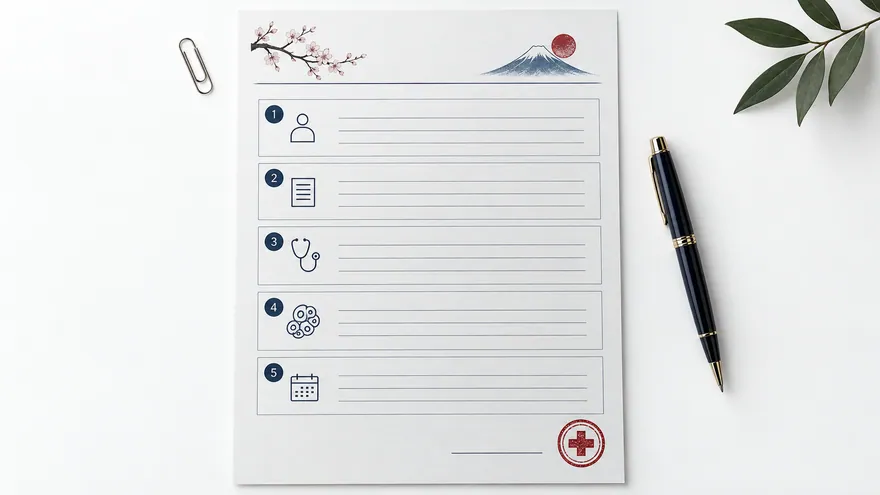
A referral does not have to be long. What matters is that the receiving doctor can quickly understand your diagnosis, your current condition, what has already been tried, and why you are being referred.
- Diagnosis: use the most specific diagnosis available. “Grade III osteoarthritis of the right knee” is more useful than simply writing “knee pain.”
- Current condition: include major symptoms, disease stage, limits on daily activity, and whether the condition is stable or getting worse.
- Medical history: note important operations, complications, hospital admissions, and other conditions that may affect treatment.
- Previous treatment: list relevant medicines, rehabilitation, injections, surgery, chemotherapy, radiotherapy, or other treatments, along with the response where known.
- Current medicines and allergies: include drugs such as anticoagulants, antiplatelet medicines, steroids, immunosuppressants, diabetes medicines, and cancer treatments when relevant.
- Important test results: this may include MRI, CT, X-ray, blood tests, pathology, bone marrow results, cardiac testing, or neurological investigations.
- Reason for referral: say clearly what you want the Japanese specialist to assess.
Your doctor does not need to state that stem cell treatment is definitely required. A neutral request is often more appropriate:
Please evaluate this patient and advise whether regenerative medicine or another treatment option is appropriate.
Some hospitals accept referrals from general practitioners. For a complicated condition, a letter from the specialist already treating you can be more helpful. Depending on the diagnosis, that might be an orthopedic surgeon, neurologist, hematologist, oncologist, or cardiologist.
Also check how recent the referral needs to be. There is no Japan-wide expiry rule. Hospitals can set their own requirements. Keio’s FAQ gives one example: in the situation it describes, a patient returning after more than 6 months needs a new referral before making another appointment.[5]
What Records Should You Send?
The hospital needs enough information to see what the diagnosis is, how you are doing now, and what treatment you have already had.
Depending on your condition, you may be asked for:
- your referral letter or latest specialist summary;
- recent blood-test results;
- MRI, CT, or X-ray reports;
- the original imaging files, if the specialist wants them;
- operation reports;
- pathology or bone marrow reports, where relevant;
- a current list of medicines and allergies;
- recent discharge summaries; and
- records showing previous treatments and how you responded to them.
An imaging report and the actual image files are not the same thing. A specialist may want both, so ask before sending your documents.
Keio recommends providing the referral and other medical information before the appointment. According to its guidance, sending records in advance gives the doctor time to review them and may allow some examinations to be arranged earlier instead of requiring another visit.[6]
Do not translate hundreds of pages unless the hospital actually asks for them. First find out whether English records are accepted, whether Japanese translation is needed, whether PDFs are acceptable, and whether the hospital wants the original imaging files.
The stem cell treatment process in Japan explains how record review, additional testing, treatment planning, consent, and follow-up usually fit together.
If You Are Traveling to Japan for Treatment
For overseas patients, receiving your records is only the beginning. It does not mean treatment has been approved.
A hospital will normally review the documents first. If the department believes it can help, it may offer an in-person consultation or ask for more information. Even after you arrive, further examination, blood tests, imaging, or other checks can affect the final treatment decision.
The University of Tokyo Hospital publishes a four-step process for overseas patients. It starts with a medical coordinator or facilitator. The hospital then coordinates with the relevant department. If the department can accept the case, expected medical costs and possible hospitalization are discussed, followed by arrangements for the patient’s arrival.[7]
The hospital also asks overseas patients to provide a referral and medical information from the institution currently treating them.[8]
For that reason, avoid booking expensive non-refundable travel simply because someone has said you “may be eligible.” Try to get the hospital’s position in writing first. The medical travel guide for stem cell treatment in Japan covers records, travel timing, accommodation, costs, and follow-up.

A Referral Letter and a Medical Stay Visa Are Different Documents
Your referral tells the Japanese medical team about your health and why you are seeking care. Visa documents deal with your entry into Japan and how long you may stay.
Japan’s Ministry of Foreign Affairs lists periods of stay of 90 days, 6 months, or 1 year under the Medical Stay Visa system, depending on the patient’s circumstances. Where the rules allow it, a multiple-entry medical visa may be valid for up to 3 years.[9]
For a multiple-entry medical visa, each visit generally needs to be 90 days or less, and the patient must present a Medical Treatment Plan from a doctor in Japan. If hospitalization is expected to last longer than 90 days, a Certificate of Eligibility is required through the relevant immigration process.[10]
You may therefore be dealing with several separate documents:
- a referral from your doctor at home;
- acceptance or planned-care documents from the Japanese hospital;
- a Medical Treatment Plan, when required;
- a Certificate of Eligibility, when required; and
- the visa itself.

Check the Regulatory Route for the Treatment
When looking at regenerative medicine in Japan, it helps to separate medical treatment provided under the Act on the Safety of Regenerative Medicine from products approved for marketing under the PMD Act.
| Route | What It Covers | Important Limitation |
|---|---|---|
| Act on the Safety of Regenerative Medicine | Regenerative medicine provided in covered medical practice or research | Being provided under this framework does not by itself mean that a product has marketing approval or that clinical benefit has been proven. |
| PMD Act | Marketing approval of specific regenerative medical products after regulatory review | Approval applies to a particular product and indication. It does not mean every stem cell treatment is approved. |
PMDA describes these as separate regulatory frameworks.[11]
The Act on the Safety of Regenerative Medicine was amended, and the revised law took effect on May 31, 2025.[12]
Covered regenerative medicine is also divided into Class I, Class II, and Class III. These are regulatory risk classes. A higher or lower class is not a simple score for how well a treatment works. The current jRCT search system lists regenerative medicine research under these three classes.[13]
If a clinic says it has a regenerative medicine plan, ask for the exact treatment name, medical institution, regulatory class, and public record. The Japan regenerative medicine registration and compliance guide explains the difference between a regenerative medicine provision plan and product approval.
What Does “Approved in Japan” Actually Mean?
“Approved in Japan” can sound reassuring, but it is too vague on its own. Ask for the exact product name and the condition for which that product is approved.
PMDA’s English approved-product page currently covers new regenerative medical products from April 2015 through May 2026.[14]
The category includes more than what people casually call “stem cell therapy.” It can include different cell- and tissue-based products as well as gene therapies. So the existence of approved regenerative medical products in Japan does not amount to blanket approval for every commercial stem cell treatment.
Japan also has a conditional and time-limited approval pathway for some regenerative medical products. PMDA publishes review information for products that have received this type of approval.[15]
If a provider tells you that a treatment is approved, ask for:
- the exact product name;
- the approved indication;
- whether your diagnosis matches that indication;
- the type of approval; and
- any limits on where or how the product can be used.
The regenerative medicine overview provides more background on these product-specific and condition-specific routes.
If the Treatment Is Offered as Clinical Research
If a provider describes the treatment as clinical research, ask for the study registration so you can check it yourself.
Japan’s jRCT is an official system for clinical research information under the Clinical Trials Act and the Act on the Safety of Regenerative Medicine. Its search system separates clinical trials, regenerative medicine research, and other clinical studies.[16]
Useful details include:
- the official study title;
- the jRCT or other registration number;
- the research institution;
- the principal investigator;
- the current recruitment status;
- the inclusion and exclusion criteria;
- the treatment schedule;
- the follow-up period; and
- any costs participants are expected to pay.
A registry entry confirms that study information has been registered. It does not prove that the treatment works, that the study has been completed, or that you personally qualify.
Ask for the Treatment Details Before You Pay
Terms such as “MSC therapy,” “Japanese stem cells,” or “advanced regenerative treatment” do not tell you enough to compare one treatment with another. Ask the provider to spell out exactly what is being offered.
| What to Check | What to Ask For |
|---|---|
| Cell or product | The exact product or cell type, tissue source, and whether the cells come from you or a donor |
| Processing | Whether the cells are cultured or otherwise processed, and where that work is done |
| Administration | How the treatment is given, how many administrations are planned, and whether a procedure or anesthesia is involved |
| Regulatory status | Whether it is an approved product, a regenerative medicine plan, registered research, or another stated route |
| Evidence | Human studies that match your disease, cell type, administration route, and the outcomes you care about |
| Cost | An itemized total, cancellation rules, and what happens if treatment or cell processing cannot go ahead |
| Follow-up | Who reviews your results, what will be measured, and who you should contact if there is a complication after you return home |
If you are comparing your own cells with donor-derived cells, the autologous vs. allogeneic stem cell guide explains how the two sources differ.
If the cells will be cultured or processed, ask where this happens and what happens if the batch does not pass quality checks. The CPC and cell processing center guide covers questions patients can ask about cell processing.
Be wary of impressive-looking success percentages without context. If a clinic says that “90% of patients improved,” find out who those patients were, what actually improved, what the result was compared with, and how long the improvement lasted.
A lower pain score, for example, does not necessarily mean someone can walk farther or function better. In the same way, an improvement measured after two weeks tells you much less about whether the benefit is still there a year later.
The International Society for Stem Cell Research advises patients to find out whether an intervention is established or experimental, look at the supporting evidence and alternatives, and be cautious about broad claims, testimonials, and statements suggesting little or no risk.[17]
For treatment-specific safety questions, see stem cell therapy safety in Japan. The stem cell treatment costs in Japan page also explains why it is useful to separate medical review, testing, collection, processing, administration, and follow-up instead of looking only at one headline price.
When comparing providers, use the same basic checks. The guide to comparing stem cell hospitals in Japan looks at the treatment itself, regulatory records, physician oversight, evidence, cell processing, cost, and follow-up.

What to Take Home After Treatment
If you do receive treatment in Japan, ask for a written treatment summary before you leave. It should contain enough information for your doctor at home to understand what was done.
- your diagnosis;
- the treatment date;
- the exact product or cell type;
- the cell source;
- how the treatment was administered;
- important medicines used during treatment;
- any immediate complications;
- warning signs that need urgent medical attention;
- the follow-up schedule; and
- contact details that your doctor at home can use if questions come up.
This matters because the doctor who treats you in Japan may not be the person caring for you a few weeks or months later.
Bottom Line
You may or may not need a referral for stem cell or regenerative medicine care in Japan. The answer depends on the hospital, department, and type of treatment. Keio requires one in its standard new-patient pathway, while the University of Tokyo Hospital asks overseas patients to work through a coordinator and submit a referral and medical information before the department reviews the case.
Before arranging travel, contact the exact department or clinic you plan to visit. Ask what records they want, whether a referral is required, and whether your case has been reviewed before you book anything expensive. If a regenerative medicine treatment is being offered, also get the exact product or procedure name and check which regulatory route applies.
Where treatment is provided
GINZA NOA CLINIC, Ginza, Tokyo
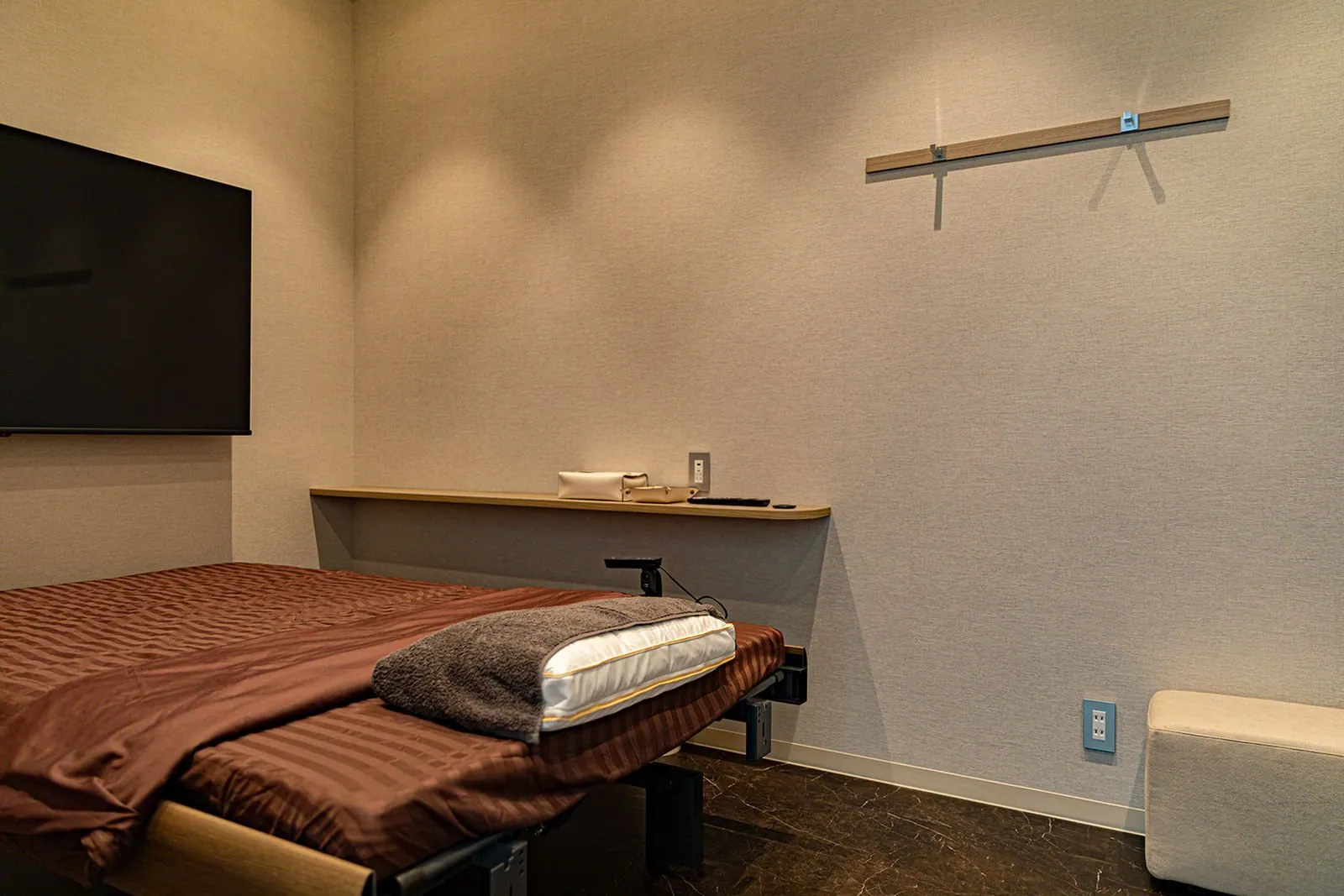
This article was written and medically reviewed at GINZA NOA CLINIC. The photographs below were taken inside the clinic in Chuo-ku, Tokyo.


Royal Crystal Ginza 3F, 5-4-6 Ginza, Chuo-ku, Tokyo 104-0061
3 min from Tokyo Metro Ginza Station (Exit B6); 5 min from JR Yurakucho Station
In-house CPC, facility number FC3250034
WhatsApp +81-8070161366 · LINE +81-8075357788
Medically reviewed by Ryosuke Tanabe, MD (Director, GINZA NOA CLINIC) with Kotaro Yoshimura, MD, PhD (Professor of Plastic Surgery, Jichi Medical University) as technical advisor. Last reviewed 30 September 2026. Every treatment carries risks — ask what they mean for your case at the consultation. Registration and credentials · How we review content