
Short answer: yes, if you and your clinician cannot discuss your diagnosis, treatment choices, risks, and aftercare in a language you both understand well. Arrange a qualified medical interpreter for those discussions, including consent. If you can communicate directly with the treating clinician and understand the key documents, a separate interpreter may not be needed. Simple booking or address checks may need less support. In a Japanese survey, 47.4% of respondents who did not use Japanese in daily life reported low understanding of conversations with their doctor [1].
This article gives general information only and is not personal medical advice. Decisions about treatment, travel, and language support should be made with your own doctors and the treating hospital in Japan.
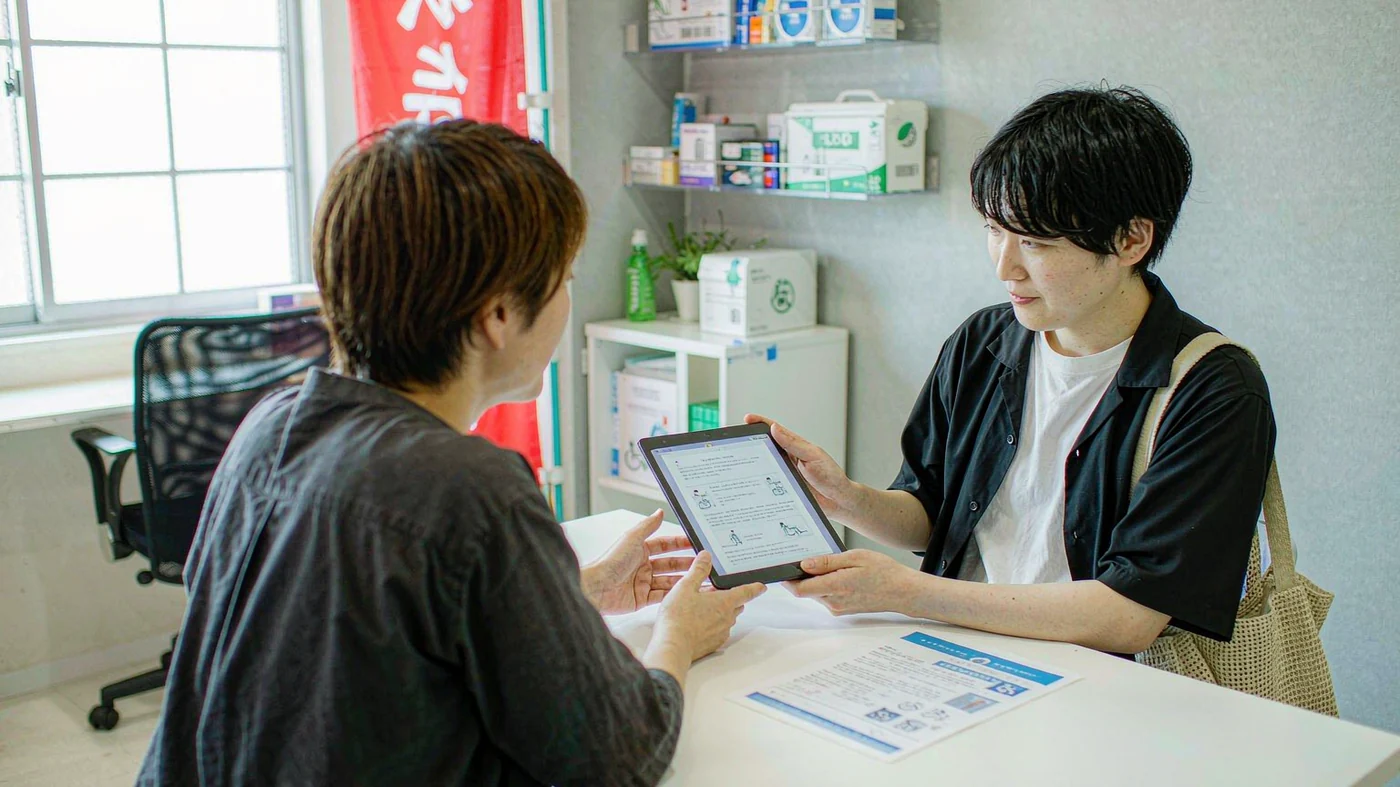
Medical fluency matters more than travel fluency
Being able to order food or check into a hotel does not tell you whether you can explain an allergy, compare treatment options, or question a consent form. Judge your need for an interpreter by the medical discussion, not by everyday conversation.
Japan’s Ministry of Health, Labour and Welfare hospital manual addresses medical-interpreter training, certification, and fees. Its fee guidance distinguishes patients covered by Japanese public insurance from visiting patients receiving private care [2]. This does not tell you what a particular stem cell treatment package includes. Ask the treating clinic to confirm interpreter coverage and charges in writing.
What goes wrong without clear communication
The US Agency for Healthcare Research and Quality (AHRQ) describes communication-related safety risks for patients with limited English proficiency. Its guide, last reviewed in 2020, cites an older US estimate of nearly 25 million people, or 8.6%, with limited English proficiency. It also describes a six-hospital study in which reported adverse events involving these patients were more likely to involve physical harm than events involving English-speaking patients [3]. These are historical US findings, not current population figures or estimates of risk at Japanese stem cell clinics.
A survey by Juntendo University researchers, conducted from February 2022 to May 2023, collected 363 replies from 4,962 people invited, a 7.3% response rate. There were 337 valid responses about respondents’ or their children’s visits to medical institutions in Japan. Low self-reported comprehension was recorded in 47.4% of respondents who did not use Japanese in daily life, compared with 26.1% of those who used only Japanese. The groups were defined by daily language use, not by a direct test of the language used in each consultation [1].
Compared with the Japanese-only group, those using Japanese alongside other languages and those not using Japanese had adjusted odds ratios of 4.16 and 4.73, respectively, for wanting professional interpretation. These are odds of expressing a preference, not measures of treatment benefit. The low response rate, self-reported answers, and cross-sectional design limit the findings; they do not establish causation or show how often stem cell medical travelers need an interpreter [1].
High-risk moments
AHRQ identifies medication reconciliation, informed consent, surgical care, and discharge as communication-sensitive processes [4]. For a stem cell consultation, prepare to discuss:
- Your medical history. Symptoms, medicines, supplements, allergies, and previous procedures.
- The diagnosis and proposed procedure. Which condition is being treated, whether the cells are your own or a donor’s, and whether delivery is into a joint, a vein, or another site. These details describe different parts of the medical plan.
- Informed consent. What is proposed, expected benefits and uncertainties, risks, alternatives including no treatment, and costs. Do not sign while questions or language barriers prevent you from understanding the explanation.
- Aftercare instructions. Doses, wound care where tissue was taken, warning signs that mean “come back now,” and when to check in again. All of it has to travel home with you.
Interpretation can reduce misunderstanding. It cannot eliminate communication errors or make a procedure risk-free.
When you need an interpreter
Use the actual demands of your appointment to decide. The same person may manage a booking call comfortably but need help with a discussion of risks.
| Arrange qualified interpretation if communication is difficult | Less support may be enough |
|---|---|
|
A booking call or an address check can manage with less. But “English help at the front desk” is no promise that your talk with the doctor will be interpreted. |
A check before a consent appointment
Try explaining the proposed procedure in your own words: which cells are involved, how they will be given, what remains uncertain, and what follow-up requires. Use your questions about choosing a stem cell hospital in Japan to prepare. If you cannot ask these questions or understand the answers in the consultation language, arrange interpretation.
For example, you may understand the word “injection” but not be able to ask where it will be given or which symptoms require urgent help. Take those exact questions into the interpreted appointment. Ask the clinician to check your understanding; do not rely on a nod or a signature as reassurance.
Trained interpreters and informal help
Being bilingual is not the same as being qualified to interpret a medical discussion. Look for medical vocabulary, accurate and impartial interpretation, and confidentiality. AHRQ’s review describes a greater risk of clinically consequential errors with ad hoc interpreters, such as untrained relatives, friends, or staff [3]. Its PSNet patient-safety review also reports fewer errors, and fewer clinically significant errors, with professional interpreters than with ad hoc interpreters [5].
| Option | Possible role | What to watch for |
|---|---|---|
| Qualified medical interpreter (in person, video, or phone) | Medical interpretation for consultations, consent, procedures, and discharge | You have to book ahead; confirm which visits the fee covers |
| Bilingual friend or family member | Knows you; there when you need them | May lack medical vocabulary, omit details, or affect what you feel able to disclose |
| Translation app | Handy for signs and short phrases | Do not rely on an unchecked app alone for consent, risks, or aftercare; ask the clinic how accuracy and privacy will be handled |
| Your child as interpreter | May speak both languages, but should not carry the responsibility for interpreting your medical decisions | US FDA research-consent guidance says a child should not interpret for a parent, even if fluent; arrange a qualified adult interpreter instead [6] |
A US HHS language-access letter describes qualified interpretation in terms of accuracy, impartiality, specialized vocabulary, and confidentiality [7]. These are useful questions to ask an interpreter provider, not a statement of Japanese clinic rules or a guarantee that interpretation is free in Japan.
Consent in a language you understand
For US FDA-regulated research, 21 CFR 50.20 requires consent information in language understandable to the participant or their representative [8]. FDA guidance discusses language level, medical terms, and a translator’s fluency in both languages [6]. The US Common Rule also requires understandable consent information for research within its scope [9]. These are US research standards, not a statement of the law governing a private Japanese consultation.
For your appointment in Japan, ask:
- Will interpretation cover the full consent discussion with the treating doctor?
- Will consent forms and key documents (diagnosis summary, procedure description, risks, costs, discharge instructions) be available in a language I read well, or orally interpreted line by line?
- Can I ask questions as I go and hear the answers back, instead of signing first and asking later?
Written translation and spoken interpretation serve different needs. A translated form alone does not let you ask the treating doctor questions. If either the documents or the discussion remain unclear, request clarification before signing.
What to confirm before you travel
Ask for language support to be listed separately in the medical quote. Check coverage at each planned step of stem cell treatment in Japan, including record review, consultation, any cell collection, the procedure, and follow-up. AHRQ describes a US hospital improvement project that identified initial assessment and discharge as important points for interpreter use [3].
- Which language, for which visits, and how — in the room, by video, or by phone?
- Who actually interprets the doctor’s talk, and what medical training do they have?
- Will the interpreter convey the full discussion impartially, including alternatives and a decision not to proceed?
- Does that cover consent, the procedure, and discharge, or just the first chat?
- Which papers get translated, which cost extra, and will the clinic take your English records as they are?
- Who provides language support if the appointment overruns, the interpreter cancels, or you have a follow-up question after returning home?
- How do they charge, per visit, per hour, or per day? Is there a minimum? What if plans change? Line the answer up against a full breakdown of stem cell treatment costs in Japan before you compare quotes.
Write your questions down before the visit. During the interpreted discussion, explain the answers back in your own words so the clinician can correct misunderstandings. Coordinate language arrangements with the records, travel, and follow-up planning covered in the medical travel guide for stem cell treatment in Japan.
Still unsure what to confirm before you travel?
Ask which visits have language support and how it is charged. Confirm an appropriate way to share any medical records before sending them.
Contact the support teamWhat an interpreter cannot do
Understanding a treatment is not evidence that it works.
Understanding is not effectiveness
Even a fully interpreted consultation may leave you with unanswered questions about a treatment’s evidence or risks. Use the discussion of how safety is assessed for stem cell therapy in Japan to prepare questions for the clinician, not as proof that a particular procedure is safe.
Paperwork is not proof
Japan has separate frameworks for the provision of regenerative medicine under the Act on the Safety of Regenerative Medicine and for product commercialization under the PMD Act [10]. Filing a provision plan is not product marketing approval or proof of efficacy. Ask which route applies to the proposed intervention; the distinction between registration and approval routes for regenerative medicine in Japan matters before you pay.
Use the interpreted time to ask about the exact disease and stage, cell type and source, delivery route, and whether the intervention is approved for this use or experimental. Ask separately whether you will pay privately; payment status does not establish approval or effectiveness. For any claimed human benefit, ask about study phase, participant numbers, comparison groups, outcomes, follow-up, and adverse events. Clinical trials test medical approaches in people; a trial listing alone does not establish effectiveness [11].
The bottom line
A medical interpreter is necessary when a language barrier prevents a clear, two-way medical discussion. For a stem cell visit in Japan, arrange qualified interpretation for diagnosis, treatment choices, consent, and aftercare unless you and the treating clinician can communicate adequately without it. Confirm document support and fees before traveling. Interpretation helps you make an informed decision; it does not validate the treatment.




