
What Stem Cell Treatment Has Japan Approved?
AMCHEPRY, also known as raguneprocel, contains immature dopamine-producing nerve cells made from donor-derived induced pluripotent stem cells. Japan’s regulator lists the product as approved in March 2026.[3]
The approval runs for 7 years and comes with further effectiveness assessment. Treatment also has to be carried out at appropriate institutions with experienced Parkinson’s specialists and neurosurgeons.[4]
How Do the Different Options Compare?
| Option | What to establish | What matters for your decision |
|---|---|---|
| AMCHEPRY | Specialist eligibility assessment and current hospital access | Conditional approval, surgery and ongoing monitoring |
| A clinical trial | Current recruitment status and entry criteria | The study design, possible comparison group and follow-up commitments |
| A private stem cell procedure | The exact cells, dose, route and legal basis | Published human Parkinson’s evidence for that same procedure |
| An exosome treatment | What the preparation contains and what human evidence supports it | It is not a transplant of dopamine-producing nerve cells |
The terms autologous and allogeneic stem cells only tell you whether the cells come from you or from a donor. They do not tell you whether a treatment will improve Parkinson’s symptoms.
Exosomes are particles released by cells. Kyoto University’s Center for iPS Cell Research and Application has raised concerns about commercial exosome treatments. There is research interest in exosomes, but that is not proof that an exosome injection treats Parkinson’s disease.[5]
Not sure what a clinic is actually offering?
Send the treatment name or the clinic’s public page. Our support team can help you sort out the basic facts and prepare questions to take to your neurologist.
What Do the Japanese Trial Results Show?
The Kyoto University study gives us real patient data, but it was a very small study. That limits how confidently those results can be applied to other patients.[6]
| Study measure | Reported finding | How to interpret it |
|---|---|---|
| Patients treated | 7 | A small early study, not a reliable population-wide success estimate |
| Age range | 50–69 years | Describes these participants, not a universal treatment age limit |
| Follow-up | 24 months | Does not establish lifelong benefit or safety |
| Effectiveness assessment | 6 patients | Different from the total number treated |
| Off-medication movement scores | 4 of 6 patients improved | Improvement on a clinical examination, not proof of cure |
The trial was open-label and had no randomized control group. Both patients and clinicians knew the treatment had been given. That makes it harder to separate the treatment effect from other influences.[7]
“4 of 6 improved” should not be turned into a promised 67% success rate. A person with different symptoms, treatment history, or other health problems may have a very different outcome.
Who Might Be Considered for Treatment?
The approved indication focuses on movement symptoms that are not adequately controlled by existing medicines, including levodopa. A poor overall response does not always mean levodopa has no effect at all; proposed post-marketing criteria include a measurable response. Dementia risk, serious illness, and previous advanced treatments can also affect eligibility.[8]
For the records-review stage of treatment planning in Japan, it helps to prepare these six items:
- Your diagnosis, year of diagnosis and symptom history.
- Every current medicine, including dose and timing.
- A symptom diary showing when medication helps and when symptoms return.
- Available brain-imaging reports and cognitive assessments.
- Details of previous surgery, stimulation devices or infusion treatments.
- One main goal, such as reducing time spent unable to move comfortably.
What Does Treatment and Follow-Up Involve?
AMCHEPRY is placed into the putamen on both sides of the brain using stereotactic surgery. The regimen also includes tacrolimus to suppress immune responses, with blood-level monitoring. As a general rule, tapering starts after about 1 year and continues over 12 weeks, although treatment can be extended.[9]
What Risks Should You Discuss?
No serious adverse events were reported during the early trial’s 24-month follow-up. There were, however, 73 mild or moderate events. That is reassuring to a point, but it does not mean the treatment is risk-free or that rare complications have been ruled out.[10]
ISSCR advises patients to ask for consent documents they can actually understand and to get an independent medical opinion. It also emphasizes long-term monitoring because transplanted cells can remain in the body for years.[11]
How Much Does Stem Cell Therapy for Parkinson’s Cost in Japan?
Japan’s May 2026 pricing documents list ¥55,306,737 for an 18-vial set of AMCHEPRY. That is the product price. It is not the full hospital bill, and it is not necessarily what every patient would pay out of pocket.[12]
| Cost category | What the written estimate should clarify |
|---|---|
| Assessment | Consultation, record review, imaging and eligibility tests |
| Treatment | Cell product, surgery, anesthesia and hospital stay |
| Follow-up | Medicines, blood tests, scans and repeat appointments |
| Travel support | Interpretation, accommodation, caregiver travel and return visits |
| Additional care | Extra hospitalization, complication management and cancellation terms |
ISSCR also recommends checking for costs that are easy to miss, including emergency care, before traveling abroad for treatment.[13]
Does the quoted price cover the full treatment plan?
Tell us which treatment you are comparing and which charges are unclear. We can help you prepare a short list of cost questions to take back to the provider before you pay a deposit.
Should You Compare Deep Brain Stimulation?
If medication still helps but you have troublesome fluctuations, discuss deep brain stimulation, or DBS, with a movement-disorder specialist. DBS can help selected patients with movement symptoms. It generally works best for symptoms that respond to levodopa, although medication-resistant tremor can also respond.[14]
DBS is not a one-off procedure. It involves implanted equipment, programming, and ongoing follow-up.[15]
The Japanese cell-therapy study did not show that transplantation is better than DBS. There was no randomized head-to-head comparison, so the study cannot support that conclusion.[16]
What Should You Check Before Choosing a Provider?
- The exact treatment description and its regulatory status.
- The hospital’s written response after reviewing your case.
- A consent document explaining benefits, risks and alternatives.
- An itemized estimate with cancellation and refund terms.
- A follow-up plan naming the responsible medical team.
Testimonials, vague cell descriptions, claims that one treatment can fix many unrelated diseases, and promises of “no risk” are all warning signs identified by ISSCR.[17]
Finally
AMCHEPRY is not a simple infusion. It requires specialist screening, stereotactic brain surgery, immunosuppression, and ongoing monitoring. The treating hospital has to confirm both eligibility and access.
Prepare the practical questions before you plan the trip.
Tell us your preferred language and whether you need help understanding the treatment, preparing consultation questions, or sorting out travel details. Medical eligibility and access still need to be confirmed by the treating hospital.
Where treatment is provided
GINZA NOA CLINIC, Ginza, Tokyo
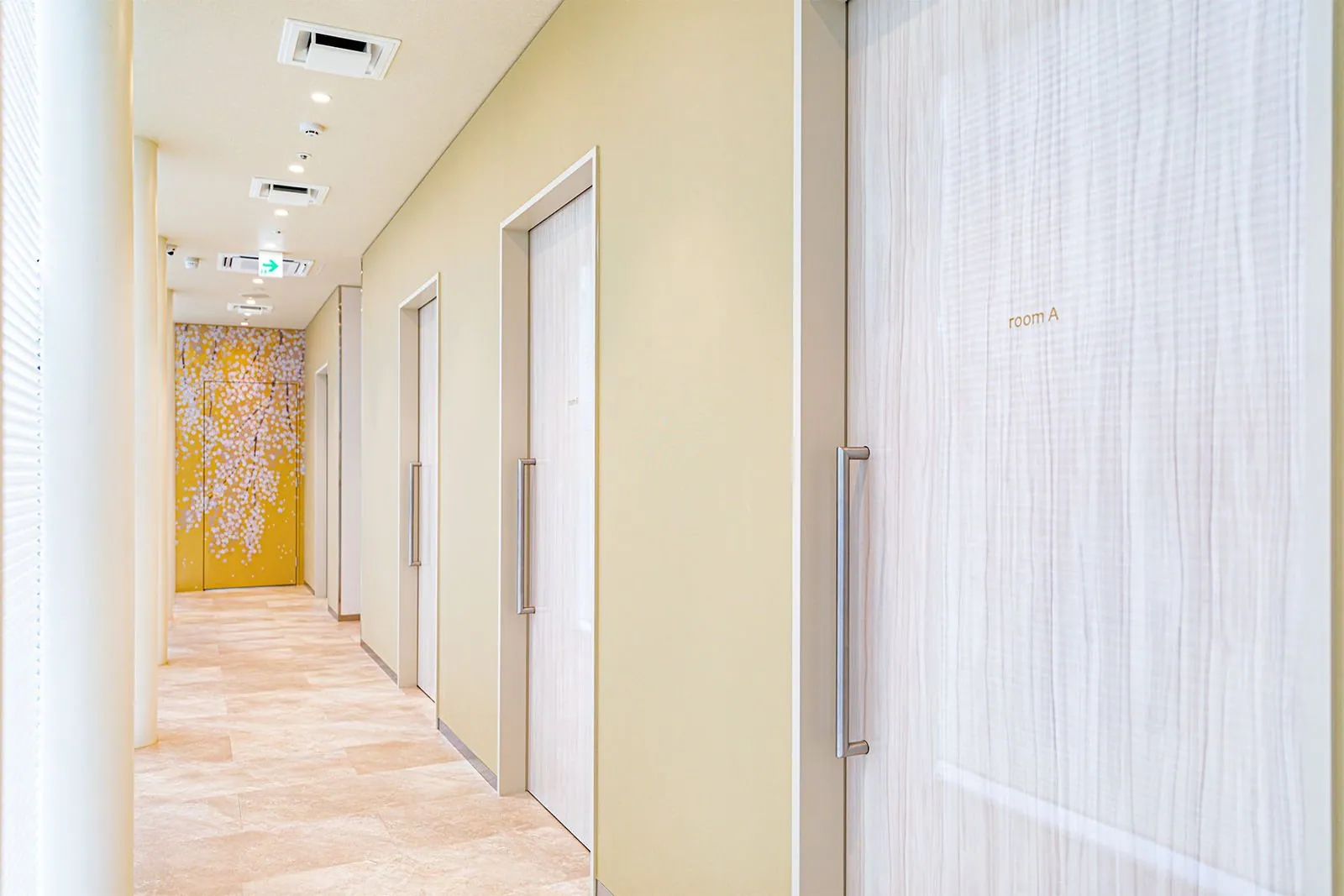
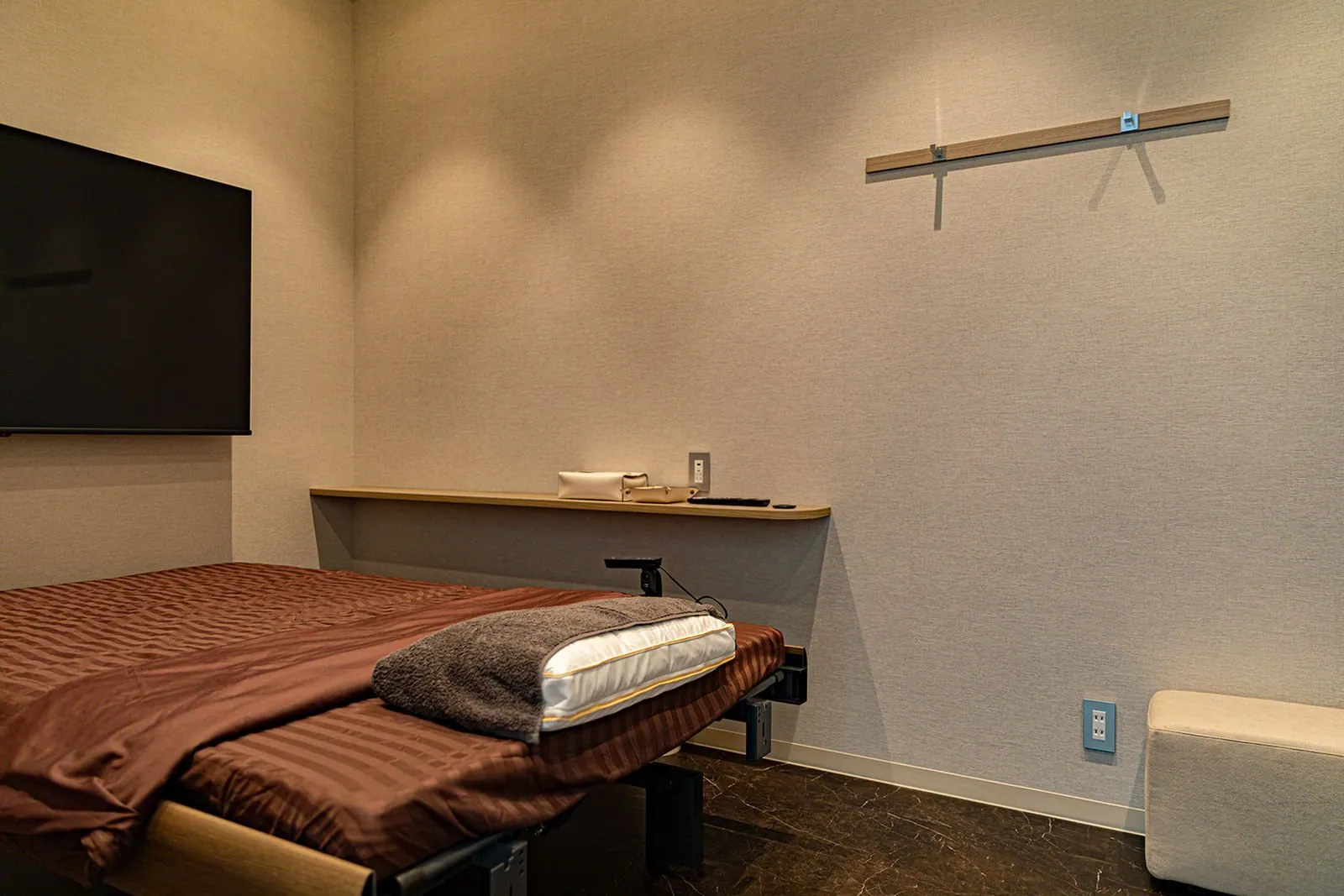
This article was written and medically reviewed at GINZA NOA CLINIC. The photographs below were taken inside the clinic in Chuo-ku, Tokyo.

Royal Crystal Ginza 3F, 5-4-6 Ginza, Chuo-ku, Tokyo 104-0061
3 min from Tokyo Metro Ginza Station (Exit B6); 5 min from JR Yurakucho Station
In-house CPC, facility number FC3250034
WhatsApp +81-8070161366 · LINE +81-8075357788
Medically reviewed by Ryosuke Tanabe, MD (Director, GINZA NOA CLINIC) with Kotaro Yoshimura, MD, PhD (Professor of Plastic Surgery, Jichi Medical University) as technical advisor. Last reviewed 30 September 2026. Every treatment carries risks — ask what they mean for your case at the consultation. Registration and credentials · How we review content