
Fat collection by liposuction can use local anesthesia, including a tumescent solution that numbs the collection area. Local anesthesia may be enough on its own; sedation may be added, or general anesthesia may be selected, depending on the procedure and the patient’s needs. The fact that fat is being collected for a later treatment does not, by itself, tell you which anesthesia you will receive 002985.htm.
Here, fat collection means removing fat through small skin openings with a thin suction tube called a cannula, rather than discussing every form of cosmetic body contouring. Liposuction can also be used to obtain fat for grafting 002985.htm. If collection is part of a cell-treatment plan, the collection, processing, and treatment steps need to be understood separately. Numbing the collection site is not evidence that the later treatment is effective.
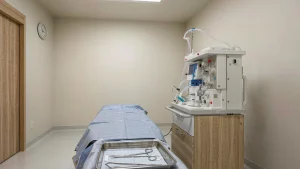
Which anesthesia options are available?
| Option | What it does | What to confirm |
|---|---|---|
| Tumescent local anesthesia | A solution containing numbing medicine is injected into the area before fat is removed. It may provide all the anesthesia needed 002985.htm. | Whether local alone is the actual plan, which area will be treated, and how the team will check that it is numb. |
| Local anesthesia with sedation | The area is numbed and additional medicine makes you drowsy. Some liposuction techniques, such as super-wet liposuction, often require sedation or general anesthesia 002985.htm. | What level of sedation is planned, who gives it, and who monitors you. |
| General anesthesia | You are asleep during the procedure. The NHS describes this as the usual approach for cosmetic liposuction, not a rule for every small collection Liposuction. | Why it is suitable for your procedure and what recovery and discharge arrangements are needed. |
| Epidural anesthesia | An option sometimes used for liposuction on the lower part of the body Liposuction. | Whether it is relevant to your operation at all. It is not a requirement simply because fat is being collected. |
These sources describe liposuction generally. They do not establish how often each option is used for small fat collections at a particular clinic. Ask for your own plan rather than assuming that “small harvest” means local anesthesia or that “liposuction” always means being asleep.
What is in tumescent anesthesia?
The fluid typically contains lidocaine to numb the area, epinephrine to narrow blood vessels and reduce bleeding, and a salt solution that helps with fat removal. Although the salt solution may be described as an IV solution, in this technique the mixture is injected into the tissue being treated; that is different from giving fluids through a vein 002985.htm.
Tumescent and super-wet techniques use different amounts of injected fluid. MedlinePlus describes tumescent fluid volumes of up to three times the amount of fat being removed, while the super-wet technique uses roughly equal volumes. These are descriptions of surgical techniques, not instructions for calculating your own fluid or drug dose 002985.htm.
Lidocaine absorption can be delayed. A 2002 literature review reported blood levels peaking 4 to 12 hours after tumescent injection with epinephrine; in a few patients, levels had not begun to fall when observation ended at 23 hours. The reports involved small numbers of patients. They illustrate why monitoring and discharge instructions matter, not a universal observation period or a safe dose for everyone 11865385.
How is the anesthesia plan chosen?
Ask the clinician to explain the plan in relation to the collection site, the amount to be removed, any other procedure being performed, and your health history. MedlinePlus notes that the location and extent of liposuction affect whether a hospital stay is needed, and identifies heart or lung problems, high blood pressure, diabetes, medicine allergies, and substance use as issues to assess beforehand 002985.htm.
Do not rely on a fixed “small harvest” volume or duration. Get the expected amount and appointment length from the treating team. For comparison only, the NHS describes cosmetic liposuction as taking 1 to 3 hours, with most patients staying overnight. Those figures should not be presented as the schedule for a limited collection Liposuction.
Will you be awake or feel pain?
Local anesthesia alone
You remain awake while the treated area is numbed. The injection can be uncomfortable, but the clinician should check that the anesthetic is working before starting. Tell the team if you feel pain rather than assuming you must tolerate it Local anaesthesia.
Local anesthesia with sedation
Sedation is intended to make you relaxed and drowsy; it is not the same as general anesthesia. Do not assume the word “sedation” guarantees that you will be fully asleep Local anaesthesia. Ask what you may be aware of and whether the clinic’s fasting, monitoring, and escort instructions change when a sedative is added.
General anesthesia
You are unconscious during the procedure, with the anesthesia team monitoring you and supporting your breathing. Afterwards, possible effects include drowsiness, nausea, a sore throat, and confusion or memory problems. The NHS advises having someone collect you and stay with you for at least 24 hours, and avoiding driving during that period General anaesthesia.
Safety and preparation
Local anesthesia does not make liposuction risk-free. Risks include bleeding, infection, blood clots, fat embolism, fluid imbalance, injury to nearby tissues or organs, and reactions to or overdose of lidocaine 002985.htm. Ask how the team calculates the total anesthetic dose, what monitoring is provided, and what happens if the planned approach is not adequate.
Bring a current medicine list and tell the clinician about:
- Heart or lung conditions, high blood pressure, and diabetes.
- Medicine allergies and any previous problem with anesthesia.
- Prescription medicines, nonprescription products, and supplements.
- Tobacco, alcohol, and recreational drug use.
These details belong in the preoperative assessment, not just in an appointment enquiry 002985.htm General anaesthesia. Get individualized instructions on eating, drinking, and medicines. Do not stop a prescribed medicine or choose your own fasting schedule based on this article.
Arrange transport even if you are having local anesthesia alone. NHS guidance advises someone else driving you home after local or regional anesthesia; being awake does not automatically make driving appropriate Local anaesthesia.
Recovery after collection
Separate recovery from anesthesia from healing at the collection site. General anesthesia can affect you for around 24 hours, while the wound and surrounding tissue have their own recovery course General anaesthesia. Liposuction can cause bruising, swelling, numbness, and soreness regardless of how the area was anesthetized 002985.htm.
The following are general cosmetic-liposuction estimates, not promises or mandatory waiting periods for a small collection. Your clinician should specify dressing care, whether compression is needed, and when you can return to work, exercise, and driving.
| Recovery item | Published general estimate |
|---|---|
| Starting to feel better | About 1 to 2 weeks in MedlinePlus’s general liposuction guidance 002985.htm. |
| Stitch removal | About a week in NHS guidance, unless the stitches dissolve Liposuction. |
| Gentle exercise | Around 3 to 4 weeks in NHS cosmetic-liposuction guidance Liposuction. |
| Strenuous activity | NHS guidance advises avoiding it for 10 to 12 weeks and checking with the surgeon Liposuction. |
| Numbness and swelling | Numbness may settle in 6 to 8 weeks; swelling can take up to 6 months to settle in the NHS cosmetic-surgery account Liposuction. |
Contact the treating clinic promptly for severe pain or unexpected symptoms rather than treating the table as reassurance that any symptom is normal Liposuction. Before leaving, obtain written instructions explaining which symptoms require emergency care and whom to contact after hours.
A consultation scenario
Suppose an appointment message says “local anesthesia,” but the paperwork also mentions a calming medicine. This is an illustrative situation, not a patient case or a claim of clinical experience. Ask the clinician: “Is this local anesthesia alone, or local anesthesia with sedation? Does that change my preparation, monitoring, or arrangements for going home?”
Ask the team to put the answer in your written instructions. Do not infer the anesthesia plan from an appointment label, and do not assume an explanation of collection also explains the later cell treatment.
If collection is part of treatment in Japan
Ask the clinic which legal framework applies to the exact treatment. Japan’s MHLW describes procedures under the Act on the Safety of Regenerative Medicine for treatment plans, review committees, and cell-processing facilities Index. When checking the cell-processing arrangements, request the relevant facility and plan details rather than accepting a general claim of compliance.
Product marketing approval is a distinct regulatory matter described by PMDA. A filed treatment plan should not be treated as product approval or proof that a treatment works for your condition 0003. Ask whether the proposed intervention is an approved product for your condition, a research intervention, or a clinic service under a filed plan.
The collection and anesthesia risks need to be explained separately from the safety of the later cell treatment. Ask what cells will be used, how they will be processed and administered, what evidence supports the intended benefit, and what follow-up is provided. This is about understanding distinct decisions, not assuming every clinic must use exactly two consent forms.
In the United States, the FDA’s consumer warning describes unapproved regenerative products, including fat-derived stromal vascular fraction, and reports of blindness, tumor formation, and infections associated with unapproved products. It also states that a trial listing or firm registration does not establish lawful marketing. Participation in a trial is not product approval, and this U.S. warning is not a ruling on the legal status of a particular Japanese service Important patient and consumer information about regenerative medicine therapies.
Questions to take to your appointment
- Where will the fat be collected, how much is planned, and how long should the appointment take?
- Is the plan local anesthesia alone, local with sedation, or general anesthesia, and why is it suitable for me?
- Which drugs will be used, who calculates and gives them, and who monitors me during recovery?
- What are my written instructions for fasting, medicines, transport, and supervision at home?
- What symptoms require urgent or emergency help, and what transfer arrangements are available?
- If cells will be used later, what is the treatment’s regulatory status and evidence for my condition?
Confirm the treating facility and follow-up arrangements before making travel commitments.
If the clinic cannot clearly explain the anesthesia, monitoring, and emergency arrangements, pause before consenting.
Need help arranging an appointment?
The independent patient support team can help with appointment enquiries, not medical advice. Start with a general question; do not send your full medical history in the first message. Your treating clinician must confirm the anesthesia plan.
The bottom line
Fat collection can be performed with local anesthesia, sometimes with sedation, or with general anesthesia. Tumescent local anesthesia may be sufficient, but the method for your collection must be confirmed by the treating clinician 002985.htm. Obtain written preparation and discharge instructions, and assess any later cell treatment on its own evidence. This guide provides general information, not a personal anesthetic recommendation.




