
Repeat imaging should be considered when new or worsening symptoms need investigation, a known finding is due for follow-up, treatment response or healing needs checking, a procedure requires updated detail, or the original images did not answer the clinical question. The decision depends on what another scan could change, not simply how old the last scan is.
If symptoms and examination findings are stable, your clinician may be able to use the existing images. Do not cancel scheduled surveillance just because you feel well. This article is general information, not personal medical advice; the clinician assessing your history and examination should decide whether and when to repeat imaging.
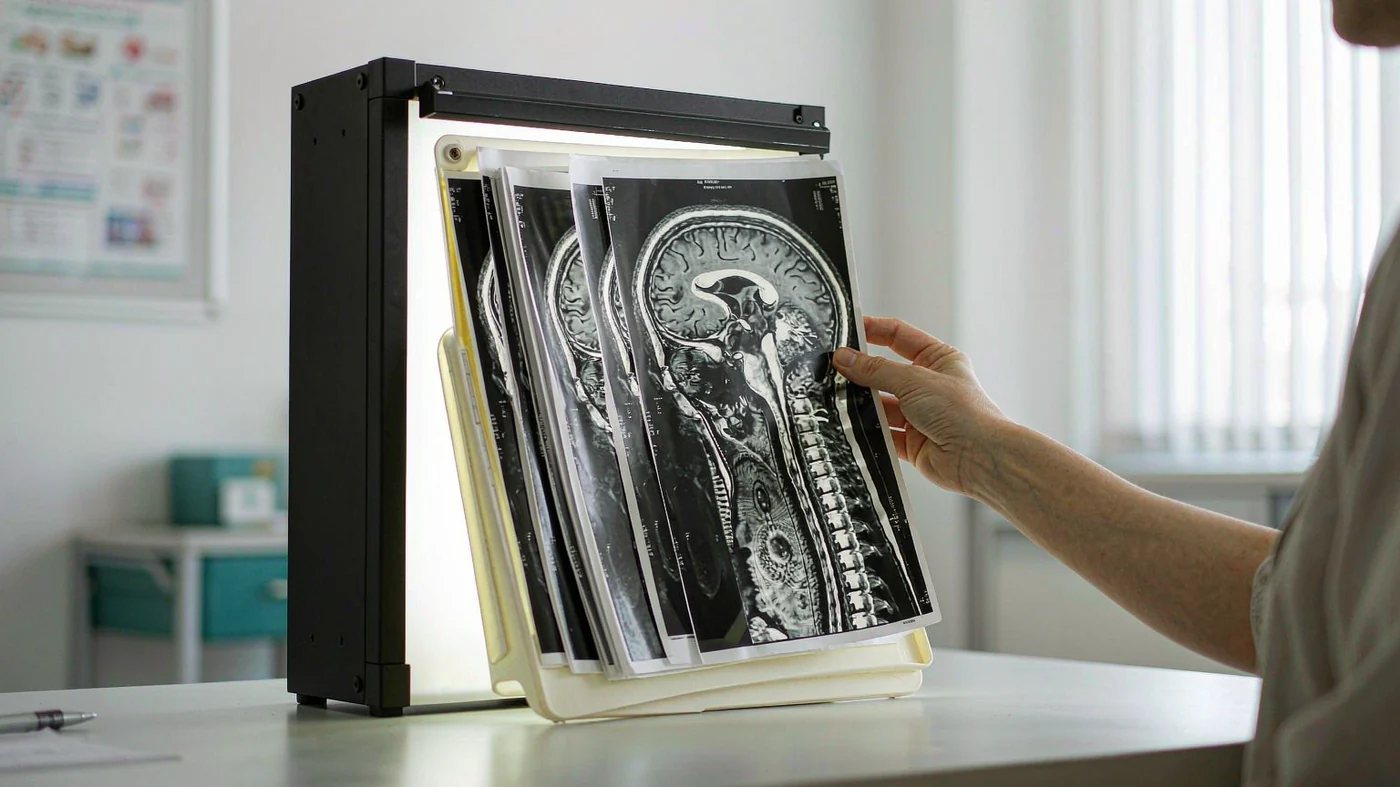
What Would Another Scan Change?
Before booking, ask your clinician to name the decision the scan will support: whether to change treatment, investigate a different diagnosis, check a known finding, or plan a procedure.
Ask: “What would you do differently if the scan shows improvement, no change, or worsening?”
If the result would not change care or follow-up, ask whether reviewing the previous images or reassessing your symptoms could answer the question first.
When a Repeat Scan May Help
| Situation | What needs answering |
|---|---|
| New injury, new symptoms, or clear worsening | Does the previous diagnosis still explain the problem? |
| Before an injection or surgery | Do existing images show the correct area, side, and detail for the planned procedure? |
| After a planned treatment or healing period | Has the finding changed enough to alter treatment or activity advice? |
| Scheduled monitoring of a known finding | Is there a change that requires different follow-up or treatment? |
| Incomplete or unsuitable original images | Would additional views or a different test answer the unresolved question? |
New symptoms warrant clinical assessment, not automatically the same scan again. Explain what changed, where it changed, and when. Urgent warning signs are listed below.
Scheduled monitoring is different from scanning simply for reassurance. A specialist may arrange imaging for a known nodule, aneurysm, or cancer even when symptoms have not changed. Screening also has its own eligibility rules and potential harms: the National Cancer Institute describes false-positive results, additional procedures, and overdiagnosis in lung screening. Those screening schedules are not a general timetable for repeating an MRI or CT for pain [1].
How Soon Should Imaging Be Repeated?
There is no single interval for every body part, diagnosis, or scan. For routine follow-up, ask for a date tied to the condition being monitored or the treatment being assessed. For a change in symptoms, ask whether you need an earlier examination rather than waiting for that date.
- What finding are we checking against the baseline?
- What change are we expecting by the proposed scan date?
- Which symptoms should bring the review forward?
- If the scan is unchanged, what happens next?
When discussing an old scan, give its date and describe what has happened since. Ask whether its coverage and image quality are adequate for today’s decision. Age alone does not explain why a replacement is needed.
When Can Another Scan Wait?
Waiting may be appropriate when your clinician finds no concerning change, the previous study still answers the clinical question, and no scheduled monitoring is due. Agree on a review point and the symptoms that should prompt earlier contact.
Do not use “the pain is the same” as a reason to skip follow-up for a known finding. Conversely, persistent pain does not by itself tell you which scan, if any, will help. Ask whether a new examination or review of the existing images is the next step.
What Risks Matter Before Another Scan?
MRI and ultrasound do not use ionizing radiation. The FDA advises considering them when medically appropriate, but they are not interchangeable with CT or X-ray for every question [2] [3].
The following figures are illustrative U.S. estimates, not a personal dose calculation or a limit on how many scans you can have.
| Scan or comparison | Approximate effective dose |
|---|---|
| Chest X-ray, single PA view | 0.02 millisieverts |
| Head CT | 2 millisieverts |
| Chest CT | 7 millisieverts |
| Abdominal CT | 8 millisieverts |
| Low-dose lung CT for screening | 1.5 millisieverts |
| Whole-body CT | 10 to 20 millisieverts |
| Natural background radiation over one year | 3 millisieverts |
The FDA provides the chest X-ray and diagnostic CT examples and notes that actual doses can vary by a factor of two or three with patient size, equipment, and technique. The NCI provides the low-dose lung CT, whole-body CT, and background-radiation comparisons [4] [1].
The FDA estimates that a 10-millisievert exposure could add roughly a 1 in 2,000 lifetime risk of fatal cancer. This is a population-level estimate with uncertainty at low doses, not a prediction for an individual. The reason for repeating CT should justify the exposure; radiation concerns alone should not delay a medically necessary examination [4].
Another risk is finding something unrelated that leads to more tests or an invasive procedure. NCI notes that whole-body CT has not been shown to be effective screening for healthy people. This is different from targeted imaging to investigate a symptom or monitor a known condition [1].
If contrast is proposed, mention previous contrast reactions and kidney disease. NCI describes rare allergic reactions and kidney problems with CT contrast, particularly in people with impaired kidney function. A blood test may be used to assess kidney function; it does not predict an allergic reaction [1].
Should You Repeat the Same Test?
Ask what the previous scan could not show before choosing a replacement. MRI generally provides better soft-tissue contrast than CT, while CT is usually better for bone. MRI also requires screening for implants and metal, and contrast-enhanced MRI has its own risks [3].
Ultrasound has a long safety record, but the FDA still recommends prudent use with exposure kept as low as reasonably achievable. “No ionizing radiation” does not mean a test should be repeated without a medical reason [2].
Bring the original images or arrange a portal transfer, along with the written radiology report. Ask the receiving service which file format it accepts. If you have only phone photos or screenshots, ask how to obtain the original study so the clinician can arrange a comparison with the previous images.
Do You Need New Images Before Planned Treatment?
Before arranging regenerative care or another elective treatment, ask whether the existing images are adequate to assess eligibility and any proposed procedure. Request the specific reason for a repeat: a missing area, unsuitable views, a clinical change, or a detail needed for planning.
Confirm who will review the study and whether you still need an in-person examination or additional tests. A remote image review before travel is preliminary. It does not replace an examination, establish that a treatment is effective, or guarantee that treatment will be offered.
Planning an initial review? Ask the patient support team which imaging files and reports to provide. A clinician must decide whether further imaging is needed.
Ask About Imaging RecordsPrepare for the Repeat-Imaging Discussion
Write down the previous scan date, the symptom changes since then, treatments tried, and any planned procedure. Bring reports, original images, operation notes if relevant, and a list of implants, medicines, allergies, kidney problems, and any possibility of pregnancy.
A Practical Appointment Checklist
If you have been told that your MRI is “too old,” ask: “Is a new scan needed because my symptoms changed, because the images lack a required detail, or because a follow-up is due?” This is a discussion prompt, not a reason to overrule a clinical recommendation.
- Who will compare the new study with the previous images?
- When and how will I receive the result?
- Who should I contact if I have not received it?
- What is the plan if we do not repeat the scan now?
When Not to Wait for Routine Imaging
Seek emergency care for chest pain or pressure, trouble breathing, sudden speech difficulty or weakness, a sudden severe headache, loss of bladder or bowel control with new neurological symptoms, major trauma, or heavy bleeding. Fever with signs of infection and rapidly worsening weakness or numbness also need urgent assessment. Do not wait for a routine scan appointment.
The next step is to agree on the question, the timing, and who will act on the result. Keep scheduled monitoring unless your clinician changes the plan, and bring the previous images so a new study can be interpreted in context.
References
- National Cancer Institute — Computed Tomography (CT) Scans and Cancer (accessed 2026-11-13)
- U.S. Food and Drug Administration — Ultrasound Imaging (accessed 2026-11-13)
- U.S. Food and Drug Administration — MRI Benefits and Risks (accessed 2026-11-13)
- U.S. Food and Drug Administration — What Are the Radiation Risks from CT? (accessed 2026-11-13)




