
Start with jRCT and UMIN-CTR, cross-check ClinicalTrials.gov, and use the MHLW clinical research portal for combined discovery. The historical counts in the table have different snapshot dates and should not be compared as current inventories. Confirm the live record and contact the study team.
Applications are made through the listed investigator or trial office; some institutions also offer enquiry forms. Eligibility screening, referral requirements and documentation are protocol-specific. Screening may take weeks, but there is no universal 5–11-week enrolment window or 24–48-month follow-up requirement.
The cited June 2026 MHLW snapshot lists 6,828 provision plans: 85 research and 6,743 treatment plans. These are administrative categories, not participant counts. A treatment-plan filing is not a clinical-trial authorization or evidence of efficacy.
Which of the four you’re looking at
Four systems run side by side, each under its own regulator.[6] Filing rules for three of them are in how regenerative medicine is registered and policed in Japan.
| System | Legal basis | Review and filing | Public record | Patient pays |
|---|---|---|---|---|
| Approval trial (chiken) | PMD Act | PMDA filing plus ethics review | jRCT | Nothing for the trial drug or device |
| Specified clinical research | Clinical Trials Act | Certified Review Board plus MHLW | jRCT | Protocol-specific; confirm sponsor funding and patient charges |
| Regenerative plan (research) | ASRM Act | Specially Certified Committee plus MHLW or regional bureau | jRCT | Protocol-specific; confirm sponsor funding and patient charges |
| Regenerative plan (treatment) | ASRM Act | Specially Certified or Certified Committee plus regional bureau | e-Saiseiiryo | Full price, out of pocket |
Approval trials
Sponsors must file the trial plan with the PMDA at least 30 days before the planned start date[7], which is Article 80-2 of the Pharmaceuticals and Medical Devices Act.[8]
Specified clinical research
The Clinical Trials Act took effect on 1 April 2018.[9] A study lands here in two situations: you use an unapproved product or go off-label, or a licensed company funds the work.
As of 1 July 2021, 101 hospitals nationwide had a Certified Review Board.[10]
The 2025 amendment pulls off-label use out of the specified category when the risk is no higher than the approved dose and route. Requirements for non-specified research depend on the design and applicable framework; ethics review alone is not a complete description of all obligations, and registry choice is not determined solely by that label.[4]
Regenerative plans on the research track
The Act on the Safety of Regenerative Medicine took effect on November 25, 2014. The June 2026 total is a reported administrative snapshot, not a cumulative measure from which a valid annual or monthly growth rate can be inferred.
| Class | What it covers | Committee | Filed with |
|---|---|---|---|
| Class I | iPS/ES and other high-risk cell technologies; specified gene therapies. Classification of donor-derived cells depends on the product and use | Specially Certified Committee | MHLW |
| Class II | Cultured autologous somatic cell products | Specially Certified Committee | Regional bureau |
| Class III | Somatic cell products that aren’t biologically altered | Certified Committee | Regional bureau |
Plans split into a treatment track and a research track, and the research track goes through jRCT. As of 30 June 2026 the research side held 85 plans: 11 Class I, 41 Class II, 33 Class III. Treatment held 6,743, made up of 8 Class I, 2,463 Class II and 4,272 Class III.[5]
Treatment is 98.8% of the total. Inside it, 63.4% is Class III (4,272 ÷ 6,743), Class II takes 36.5%, and Class I is 0.12%. Class II treatment plans outnumber Class II research 60 to 1 (2,463 ÷ 41), Class III 129 to 1 (4,272 ÷ 33), and treatment overall 79 to 1 (6,743 ÷ 85).
| Region | Treatment plans | Research plans | Certified committees |
|---|---|---|---|
| Kanto-Koshinetsu | 3,600 | 54 | 93 |
| Kinki | 1,378 | 14 | 25 |
| Kyushu | 649 | 7 | 21 |
| Tokai-Hokuriku | 514 | 7 | 15 |
| Chugoku-Shikoku | 287 | 1 | 7 |
| Tohoku | 165 | 0 | 4 |
| Hokkaido | 150 | 2 | 2 |
Kanto-Koshinetsu alone holds 53.4% of the treatment plans, 63.5% of the research plans and 55.7% of the committees. Those 6,828 plans spread across 167 committees work out at 41 each, and the 85 research plans at 0.5 each. Only 80 of the 167 can clear a Class I or Class II plan, which is 47.9% of the total. The other 87 take Class III only.[5]
A clinic that skips the filing breaks the law: up to a year in prison or a 1 million yen fine for Class I (Article 60), up to 500,000 yen for Class II and III (Article 62). Committee certification lasts 3 years. The renewal has to be filed between 90 and 60 days before it lapses. Cell processing permits run 5 years.[12]
Act No. 51, published 14 June 2024, brought both this Act and the Clinical Trials Act into line on 31 May 2025. It moved in-vivo gene therapy without processed cells into Class I, and added site inspection plus conflict-of-interest duties for committees.[13]
Self-pay treatment dressed up as research
The same MHLW snapshot lists 3,671 domestic cell-processing facilities, including 85 permitted and 3,586 notified facilities. These legal categories reflect facility type and applicable rules, not comparative quality or an automatic signal of unlawful research.
Nineteen processing facilities hold accreditation abroad: 13 in South Korea, 3 in Taiwan, China, 1 in mainland China, 1 in Austria and 1 in Greece. The processing side sits in cell processing facilities in Japan.
Where the public registers live
jRCT is a principal Japanese registry for relevant clinical trials and specified research, with Japanese and English records. It does not contain every Japanese regulatory record; treatment provision plans and other study records may sit in separate systems.
| Register | Run by | Size | What’s in it | Language |
|---|---|---|---|---|
| jRCT | MHLW | 15,106 records (30 July 2025) | Approval trials, specified clinical research, research-track regenerative plans | Japanese and English |
| Clinical research portal | MHLW | Searches jRCT and UMIN-CTR together | The same, plus observational studies | English interface |
| UMIN-CTR | University of Tokyo Hospital | 50,787 records (1 June 2023) | Investigator-led trials, observational studies | Mostly Japanese |
| ClinicalTrials.gov | US National Institutes of Health | 9,903 Japan-related, 1,257 recruiting | Multinational and domestic trials | English |
jRCT
jRCT moved from jrct.niph.go.jp to jrct.mhlw.go.jp on 25 March 2025. Filter on “recruitment status” and “trial category” first; those 2 fields save you reading entry criteria you’ll never pass.[14]
The 15,106 figure comes from the WHO ICTRP registry profile archived on 30 July 2025.[15]
UMIN-CTR
At 50,787 records this is the biggest of the four. The official dataset pulled on 1 June 2023 lists 16,315 registering institutions, an average of 3.1 trials each.[2]
ClinicalTrials.gov and the WHO platform
A search run on 8 October 2026 turned up 1,257 recruiting studies among the 9,903 with a Japanese site, which is 12.7%. The rest have finished, paused, or not opened yet.[3]
Adding “stem cell” to the filter leaves 22 of the 9,903, or 0.22%.[3] The WHO platform aggregates the national registries, which is the quickest way to see whether the same study runs elsewhere too.[15]
The fields that decide whether you get in
Diagnosis and severity
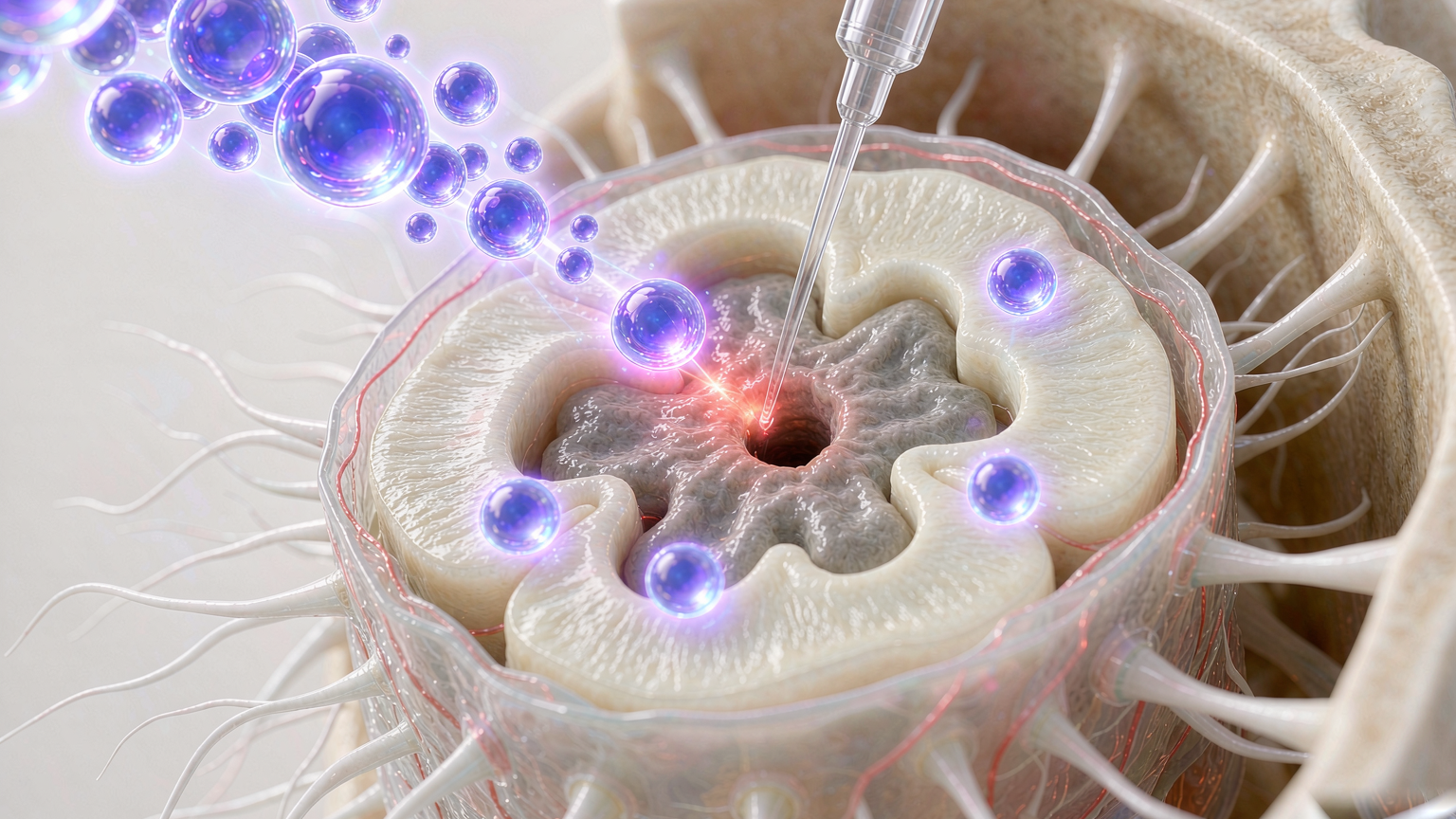
Keio ran a spinal cord trial that Nature Medicine published on 21 July 2026. It took people with C4 to C6 injuries, complete (AIS grade A), in the subacute phase, aged 26 to 66. All 4 participants were men.[16]
Each participant got a single injection of 2 million iPS-derived neural stem and progenitor cells into the spinal cord, about 8 million cells across the trial.[16]
Staging has to be exact. A grade A trial turns away an AIS grade B diagnosis at step one. Indications and contraindications sets out the classification.
Age and prior treatment
Kyoto’s Parkinson’s trial enrolled seven participants aged 50–69 for bilateral transplantation. Fourteen treated hemispheres should not automatically be counted as fourteen separate operations. Age eligibility must be read from the protocol, rather than inferred from the enrolled patients’ age range.
Prior treatment gets written up as “standard therapy failed or wasn’t tolerated”. That means 3 things on paper: drug names, doses, and why each one stopped. Missing lines like these tend to surface as an exclusion in weeks 1 to 3 of screening.
The time window
The cited spinal-cord protocol used a transplant window of 14–28 days after injury. Passing day 28 can make a patient ineligible for that protocol, but does not by itself define the clinical transition to chronic spinal-cord injury.
Cancer trials have their own version. Two phrasings show up constantly:
Within 4 weeks of failing first-line treatment.
Five half-lives after the last dose.
Exclusion criteria
Most rejections come down to 3 things.
You’re already in another interventional trial, or you were within the past month. You need long-term immunosuppression, or some medication has to stop first. Or you have active infection, another cancer, or serious heart or lung problems.
Pregnancy, breastfeeding and contraception requirements appear in nearly every protocol. One more line matters if you live abroad: whether the trial takes non-residents. That line usually sits in the notes section, not the entry criteria.
Follow-up length and screen-out rate
The Keio trial followed participants for 2 to 4 years. Tacrolimus ran for 6 months and was fully stopped by month 9.[16]
Between December 2021 and November 2023 the team screened 7 and enrolled 4, about 57%. Across 23 months that averages 5.75 months per enrolment.[16]
From search to enrolment
Records first
Commonly requested records include a diagnosis letter, treatment or discharge summaries, relevant recent laboratory results and imaging in DICOM format. The site decides what is required and how recent it must be; an omitted scan does not cause a predictable universal 2–4-week delay.
Two checklists cover the timing and the paperwork itself: how recent your medical records need to be and which medical records to send.
Finding the trial office and coordinator
Use the investigator or research-office contact in the registry. A hospital’s central switchboard can help locate the coordinator, but response time cannot be predicted from the route alone.
Ask whether a referral from your treating doctor is required and whether overseas referrals are accepted. The requirement is institutional and protocol-specific; a letter from a partner hospital is not a universal condition.
Overseas applicants start with a remote screen. A remote consultation before you travel filters out obvious mismatches, and clinics can review your MRI before you book flights.
Screening and consent
Screening may include blood counts, chemistry, infection testing and organ-function assessments relevant to the intervention. Ask the coordinator for the actual screening window and visit schedule rather than assuming a 1–3-week standard.
Consent should allow enough time to explain the research, uncertainties, alternatives, expenses, injury arrangements and withdrawal rights. Use a qualified interpreter when needed; no standard 60–120-minute duration applies to every trial.
Duties and exit after enrolment
Participation is voluntary. A participant can stop treatment or withdraw without losing ordinary care, but previously collected data may be retained for study integrity and legal obligations. Optional safety follow-up and permission for further data collection should be discussed separately. Visit counts depend on the protocol, not a universal quarterly schedule.
What foreign patients need on top
Language and medical interpreters
Consent forms and information sheets default to Japanese. You’ll want an interpreter in 3 places: the outpatient explanation, the consent meeting, and the inpatient stay.
Booking is the moment to settle 3 things: is there an English consent form, can they provide a medical interpreter, and does the quote already include interpreter fees.
Medical stay visa and guarantor
The medical stay visa needs 2 documents: a letter of guarantee from a guarantor organisation recognised by the Japanese mission abroad, and a certificate of scheduled treatment from the receiving hospital.[18]
Stay length runs up to 6 months, or about 180 days, depending on the condition. Past 90 days the assumption is inpatient care. You’ll also need a Certificate of Eligibility.[19] Multiple-entry visas last up to 3 years with 90 days per stay.
A four-year follow-up does not imply living in Japan for four years. Visa validity, permitted length of each stay and the study’s visit schedule are separate. Do not estimate required entries by dividing follow-up months by a maximum stay. Confirm requirements with the hospital and Japanese mission.
Public health insurance won’t help
Short-stay visitors fall outside public health insurance. For residents under 70 the standard co-pay is 30%,[20] but that line doesn’t apply to you. The detail sits in insurance cover for foreign patients and the medical travel guide.
Residents on a trial have domestic insurance behind them, so ordinary care still runs through it. With a short-stay visa you have none, so whatever the trial classes as ordinary care comes at full price. Get the research budget to spell out its coverage item by item at the consent stage.
Who pays
| System | Trial drug, cells and special tests | Ordinary care | Travel and lodging |
|---|---|---|---|
| Approval trial | Free to the participant | Under insurance rules, and can run alongside the trial | Generally self-paid |
| Specified clinical research | Protocol-specific; confirm sponsor funding and patient charges | Under insurance rules | Generally self-paid |
| Regenerative plan (research) | Mostly covered by research funds | As set out in the protocol | Generally self-paid |
| Patient-requested therapy | Unapproved drug portion self-paid | Insured portion billed normally | Self-paid |
| Regenerative plan (treatment) | Full price, out of pocket | Not covered | Self-paid |
Payment alone does not establish whether an intervention is legitimate research or commercial treatment. Research funding, routine-care charges and some access pathways differ. Obtain written details of sponsor coverage, patient charges, injury compensation and the legal pathway before consent. Example: U.S. rules allow certain authorized investigational-drug charges
Self-pay courses run 1 to 3 million yen. At about 20 yen to the yuan that’s 50,000 to 150,000 yuan, with the 2 million yen midpoint near 100,000 yuan.
That band normally covers culture and 1 to 2 infusions, though what counts as included varies by clinic. Flights, lodging and follow-up imaging sit outside it, and those are the lines that turn into hidden costs. An itemized quote has to spell out 3 things: whether the clinic bills cell preparation separately, whether you get 1 infusion or 3, and whether follow-up scans come bundled.
The same technique can swing by more than double between clinics, usually on those 3 items. What stem cell treatment costs in Japan breaks them down.
Where the money comes from can differ even inside one study. In the Keio spinal cord trial the cell product came from a ready-made line supplied by Kyoto University’s iPS Cell Research Institute, research funds covered it, and participants paid nothing.[16]
Human data so far
Kyoto University Hospital’s Parkinson’s trial
Kyoto’s seven-person Parkinson’s trial reported 73 mild-to-moderate adverse events over the 24-month observation period and no serious adverse events. That is about 10.4 events per participant across follow-up, not three events per participant per month; events may recur in the same person. Original Nature paper
Of the 6 who completed assessment, 4 improved on the OFF-state motor score (66.7%) and 5 improved on the ON-state score (83.3%). Group averages were 9.5 points (20.4%) and 4.3 points (35.7%), with 18F-DOPA uptake up 44.7% on average.[17]
Keio’s spinal cord trial
Four participants came back for 2 to 4 years of follow-up, and no tumours appeared. The median motor score gain at week 52 was 13 points, ranging from 10 to 40, and 2 people moved from grade A to grades C and D.[16]
Two of four spinal-cord participants improved from AIS A to C or D. Because there was no concurrent randomized control, comparisons with the reported historical recovery rates of 12.0–15.4% are hypothesis-generating, not a reliable 3.2–4.2-fold treatment effect. Original trial
Both trials together come to 11 human participants. The authors themselves write that efficacy still needs confirmation in later trials.[16]
Three more pages cover specific disease areas: regenerative options for Parkinson’s, regenerative research on spinal cord injury and clinics offering stem cell treatment in Japan.
Routes when you don’t fit the trial
Four routes open up: 3 treatment pathways and 1 window for filing policy requests.
Patient-requested therapy
Japan created this route in fiscal 2016, with the core clinical research hospital writing the implementation plan. Those hospitals need at least 10 clinical departments and 400 beds, and the MHLW has approved them under Article 4-3 of the Medical Care Act since fiscal 2015.
From filing to approval the standard timeline is about 6 weeks, or 42 days.[21] By 1 June 2026 the MHLW had approved only 5 techniques, spread across 21 hospital entries, which is 4.2 implementation points per technique. All 5 are oncology.[22][23]
Their jRCT numbers are jRCTs031190104, jRCTs031220736, jRCTs032230015, jRCTs041230105 and jRCTs031230544.[22] Seventy-nine hospitals nationwide run a consultation desk for this route.[24]
Expanded trials
They carry their own category field in jRCT, so you can pick them out by filtering. The catch is that the product has to be in a main trial in Japan already, and the sponsor has to open the route.[14]
Advanced medical care
You pay for whatever insurance doesn’t cover.[25] The difference from patient-requested therapy is who starts it, and it doesn’t pass through the core clinical research hospital layer.[21]
Requesting an unapproved drug
The MHLW takes requests for unapproved drugs and off-label uses on an ongoing basis. Patients and families can file, not just doctors. Anything accepted moves into the development request process, and it won’t get you treated now.[21]
How to check whether the ad is real
Approval trials and specified clinical research issue a jRCT number, while investigator-led non-specified research issues a UMIN number.
Ask for a registration number
Ask for the registry number and open the record to verify sponsor, intervention, recruitment status and site contact. A missing number or broken link is a reason to investigate, not proof that the offer is self-pay treatment. Conversely, a valid registry record does not establish regulatory approval or efficacy.
Check the plan number in e-Saiseiiryo
If someone says they’re running a regenerative medicine plan, look the number up. e-Saiseiiryo publishes the clinic name, prefecture, manager, the name of the therapy and the reviewing committee. Plan numbers usually start with PB, facility numbers with FC.[12]
Match the disease and the cell type
Match the disease, cell type, processing and route to the actual provision plan or product authorization. MSC, NK-cell and fibroblast interventions cannot borrow one another’s evidence. A filed provision plan is not a product approval.
Contract, consent form and quote
Those 3 documents, side by side, settle 3 lines: cell preparation fees, number of infusions, follow-up imaging. The wider safety picture is in how safe stem cell therapy in Japan is.
Not sure which of the four systems your case falls under?
Send a diagnosis letter and imaging from the last 6 months. We read the file in your language and tell you which system it belongs to, whether any trial is open to you, and whether age, staging or prior treatment is the sticking point.
Request a private consultation
Common questions
Can foreign patients join a Japanese trial?
Foreign residents or overseas patients may be considered where the protocol and institution permit. Language, follow-up feasibility, insurance and visa requirements can limit access. Confirm directly with the trial office; acceptance of non-residents is not guaranteed or always recorded in one standard registry field.
Is there an English version?
jRCT is bilingual. ClinicalTrials.gov is fully English. UMIN-CTR’s English view is a subset of the Japanese one, so odd entries only exist on the Japanese side.
Sources and how the numbers were built
System figures come from the MHLW’s report on the Act on the Safety of Regenerative Medicine, current as of 30 June 2026. jRCT and UMIN-CTR counts come from the WHO ICTRP registry profile of 30 July 2025 and the official dataset snapshot of 1 June 2023, so the two aren’t measured on the same day.
Patient-requested therapy figures come from the MHLW lists published 1 June 2026. We searched ClinicalTrials.gov on 8 October 2026. All clinical results come from peer-reviewed papers.
We calculate ratios, multiples, differences and averages straight from those published figures. The timelines (1 to 2.5 months, 5 to 11 weeks), visit counts (9 to 19) and the self-pay price band (1 to 3 million yen) are typical industry ranges, quoted as reference only.
- [1] WHO ICTRP Registry Profile, Japan Registry of Clinical Trials cdn.who.int/media/docs/default-source/clinical-trials/jrct_registry_profile.pdf
- [2] UMIN Clinical Trials Registry umin.ac.jp/ctr/
- [3] ClinicalTrials.gov clinicaltrials.gov/
- [4] MHLW clinical research portal rctportal.mhlw.go.jp/
- [5] MHLW, status of the Act on the Safety of Regenerative Medicine mhlw.go.jp/content/001590173.pdf
- [6] MHLW, regenerative and cellular medicine and gene therapy mhlw.go.jp/stf/seisakunitsuite/bunya/kenkou_iryou/iryou/saisei_iryou/index.html
- [7] PMDA, Pharmaceuticals and Medical Devices Agency pmda.go.jp/english/
- [8] e-Gov, Pharmaceuticals and Medical Devices Act (Act No. 145 of 1960) elaws.e-gov.go.jp/document?lawid=335AC0000000145
- [9] e-Gov, Clinical Trials Act (Act No. 16 of 2017) elaws.e-gov.go.jp/document?lawid=429AC0000000016
- [10] Maeda H. The Current Status and Future Direction of Clinical Research in Japan From a Regulatory Perspective. Frontiers in Medicine (2021). https://doi.org/10.3389/fmed.2021.816921
- [11] e-Gov, Act on the Safety of Regenerative Medicine (Act No. 85 of 2013) elaws.e-gov.go.jp/document?lawid=425AC0000000085
- [12] e-Saiseiiryo saiseiiryo.mhlw.go.jp/
- [13] e-Gov, Act amending the Act on the Safety of Regenerative Medicine and the Clinical Trials Act (Act No. 51 of 2024) elaws.e-gov.go.jp/document?lawid=506AC0000000051
- [14] jRCT, clinical research submission and disclosure system jrct.mhlw.go.jp/
- [15] WHO, International Clinical Trials Registry Platform who.int/clinical-trials-registry-platform
- [16] Sugai K. et al. An iPSC-derived neural progenitor cell therapy for subacute spinal cord injury: a phase 1 trial with long-term follow-up. Nature Medicine 32, 3438-3448 (2026). https://doi.org/10.1038/s41591-026-04549-6
- [17] Sawamoto N. et al. Phase I/II trial of iPS-cell-derived dopaminergic cells for Parkinson’s disease. Nature 641, 971-977 (2025). https://doi.org/10.1038/s41586-025-08700-0
- [18] Ministry of Foreign Affairs, medical stay visa mofa.go.jp/j_info/visit/visa/medical_stay4.html
- [19] Immigration Services Agency of Japan, Certificate of Eligibility moj.go.jp/isa/applications/procedures/16-1.html
- [20] MHLW, health insurance in Japan mhlw.go.jp/stf/seisakunitsuite/bunya/kenkou_iryou/iryouhoken/iryouhoken01/index.html
- [21] MHLW, patient-requested therapy (patient guidance) mhlw.go.jp/moushideryouyou/
- [22] MHLW, overview of patient-requested therapy techniques mhlw.go.jp/topics/bukyoku/isei/kanja/kikan03.html
- [23] MHLW, hospitals implementing patient-requested therapy mhlw.go.jp/topics/bukyoku/isei/kanja/kikan02.html
- [24] MHLW, hospitals with a patient-requested therapy consultation desk mhlw.go.jp/content/10808000/001428177.pdf
- [25] MHLW, overview of advanced medical care mhlw.go.jp/stf/seisakunitsuite/bunya/kenkou_iryou/iryouhoken/sensiniryo/index.html
- [26] ISSCR, Guidelines for Stem Cell Research and Clinical Translation isscr.org/guidelines
This page pulls together public information. Reading it doesn’t create a doctor-patient relationship, and it isn’t a recommendation for any specific treatment. Whether to join a study is a decision for you and your own doctor, after reading the full protocol. See our medical content policy for how we edit pages like this.